Panel approves referral for bill letting technical colleges seek state health-plan coverage
February 20, 2026 | 2026 Legislature SD, South Dakota
This article was created by AI summarizing key points discussed. AI makes mistakes, so for full details and context, please refer to the video of the full meeting. Please report any errors so we can fix them. Report an error »
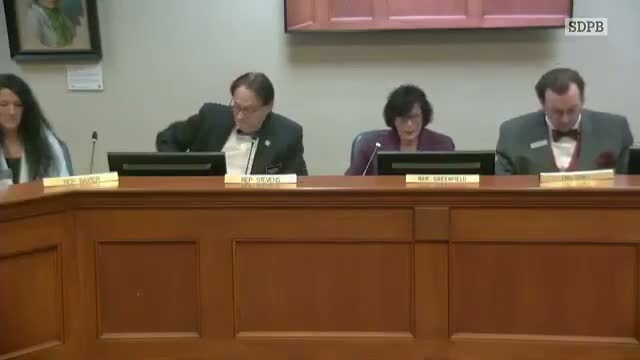
Representative Will Mortensen on behalf of the bill told the House Education Committee the measure would create a pathway for the four state technical colleges to join the state health plan only when terms are acceptable to both the colleges and the human resources commissioner. “This is an entirely cost free way for this state government to support its tech schools,” Mortensen said, arguing the bill merely permits negotiations rather than forcing participation.
Nick Wendell, executive director of the South Dakota Board of Technical Education, said recent premium volatility has strained some colleges and estimated current participation across the system would be roughly 550–600 benefit‑eligible employees (about 1,300–1,350 covered lives). He and the bill’s supporters said the option could reduce premium spikes for smaller standalone pools such as Western Dakota Technical College.
Darren Seeley, commissioner of the Bureau of Human Resources and Administration, urged opposition. He said the state plan is a self‑insured, integrated benefits package administered across agencies and warned that bringing non‑state employees into the system would raise substantial administrative, data‑integration and customer‑service challenges. Seeley drew the committee’s attention to the current per‑employee benefit fund rate — “that rate, for this year is $12,388” — and said adding outside groups could require expanding staff and systems.
Committee members asked about likely enrollment, actuarial analysis and stop‑loss arrangements; Wendell said Western Dakota would bring about 105 employees and that an actuary would need census data to estimate premium impacts. Seeley said the state currently lacks stop‑loss and has built reserves but cautioned that small pools can create large year‑to‑year swings.
After questions and debate on safeguards and fiscal implications, Representative Schwanns offered a substitute motion to send HB 12-79 to House Appropriations “with no recommendation” for additional study. The motion passed on a roll call in committee. The referral preserves options for future negotiation while asking appropriators to examine potential fiscal and administrative effects before the Legislature takes further action.
Nick Wendell, executive director of the South Dakota Board of Technical Education, said recent premium volatility has strained some colleges and estimated current participation across the system would be roughly 550–600 benefit‑eligible employees (about 1,300–1,350 covered lives). He and the bill’s supporters said the option could reduce premium spikes for smaller standalone pools such as Western Dakota Technical College.
Darren Seeley, commissioner of the Bureau of Human Resources and Administration, urged opposition. He said the state plan is a self‑insured, integrated benefits package administered across agencies and warned that bringing non‑state employees into the system would raise substantial administrative, data‑integration and customer‑service challenges. Seeley drew the committee’s attention to the current per‑employee benefit fund rate — “that rate, for this year is $12,388” — and said adding outside groups could require expanding staff and systems.
Committee members asked about likely enrollment, actuarial analysis and stop‑loss arrangements; Wendell said Western Dakota would bring about 105 employees and that an actuary would need census data to estimate premium impacts. Seeley said the state currently lacks stop‑loss and has built reserves but cautioned that small pools can create large year‑to‑year swings.
After questions and debate on safeguards and fiscal implications, Representative Schwanns offered a substitute motion to send HB 12-79 to House Appropriations “with no recommendation” for additional study. The motion passed on a roll call in committee. The referral preserves options for future negotiation while asking appropriators to examine potential fiscal and administrative effects before the Legislature takes further action.
Don't Miss a Word: See the Full Meeting!
Go beyond summaries. Unlock every video, transcript, and key insight with a Founder Membership.
✓
Get instant access to full meeting videos
✓
Search and clip any phrase from complete transcripts
✓
Receive AI-powered summaries & custom alerts
✓
Enjoy lifetime, unrestricted access to government data
30-day money-back guarantee
