Lawmakers hear wide-ranging opposition to proposed UCC changes; bill moved to 40 first day
February 20, 2026 | 2026 Legislature SD, South Dakota
This article was created by AI summarizing key points discussed. AI makes mistakes, so for full details and context, please refer to the video of the full meeting. Please report any errors so we can fix them. Report an error »
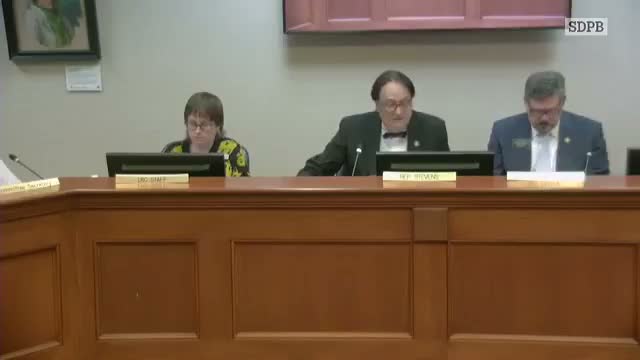
Representative Julie Elk framed HB 12-48 as a property‑rights bill that seeks to clarify ownership of securities held indirectly through brokers and custodians. She told the committee that the Lehman Brothers collapse illustrated how pooled entitlements can delay recovery for investors and said the bill would restore clearer rights for South Dakotans.
Multiple industry witnesses, including the South Dakota Bankers Association, the Uniform Law Commission’s chief counsel and credit‑union and securities trade representatives, opposed the bill. Their testimony emphasized uniformity in the UCC, the role of Article 8 in protecting finality of securities trades and liquidity in modern electronic markets, and the risk that nonuniform state changes could cause cascading failures or increase costs for small investors and financial institutions.
Ben Orzezewski of the Uniform Law Commission explained Article 8’s policy tradeoffs: the current framework supports settlement finality, channels losses to wrongdoing firms and preserves liquidity. He and other opponents warned that changing priority rules could create clawback risk and impair ordinary securities transactions.
Representative Elk rebutted by restating property‑rights concerns and pointing to past market disruptions; stakeholders then questioned the scope and legal consequences. Committee members expressed interest in broader uniform‑law vetting; the committee ultimately moved the bill to the 40 first day to allow more review and coordination with uniform‑law experts.
Multiple industry witnesses, including the South Dakota Bankers Association, the Uniform Law Commission’s chief counsel and credit‑union and securities trade representatives, opposed the bill. Their testimony emphasized uniformity in the UCC, the role of Article 8 in protecting finality of securities trades and liquidity in modern electronic markets, and the risk that nonuniform state changes could cause cascading failures or increase costs for small investors and financial institutions.
Ben Orzezewski of the Uniform Law Commission explained Article 8’s policy tradeoffs: the current framework supports settlement finality, channels losses to wrongdoing firms and preserves liquidity. He and other opponents warned that changing priority rules could create clawback risk and impair ordinary securities transactions.
Representative Elk rebutted by restating property‑rights concerns and pointing to past market disruptions; stakeholders then questioned the scope and legal consequences. Committee members expressed interest in broader uniform‑law vetting; the committee ultimately moved the bill to the 40 first day to allow more review and coordination with uniform‑law experts.
View the Full Meeting & All Its Details
This article offers just a summary. Unlock complete video, transcripts, and insights as a Founder Member.
✓
Watch full, unedited meeting videos
✓
Search every word spoken in unlimited transcripts
✓
AI summaries & real-time alerts (all government levels)
✓
Permanent access to expanding government content
30-day money-back guarantee
