Senate State Affairs advances rulemaking and deference bills; property‑tax constitutional amendment deferred
February 20, 2026 | 2026 Legislature SD, South Dakota
This article was created by AI summarizing key points discussed. AI makes mistakes, so for full details and context, please refer to the video of the full meeting. Please report any errors so we can fix them. Report an error »
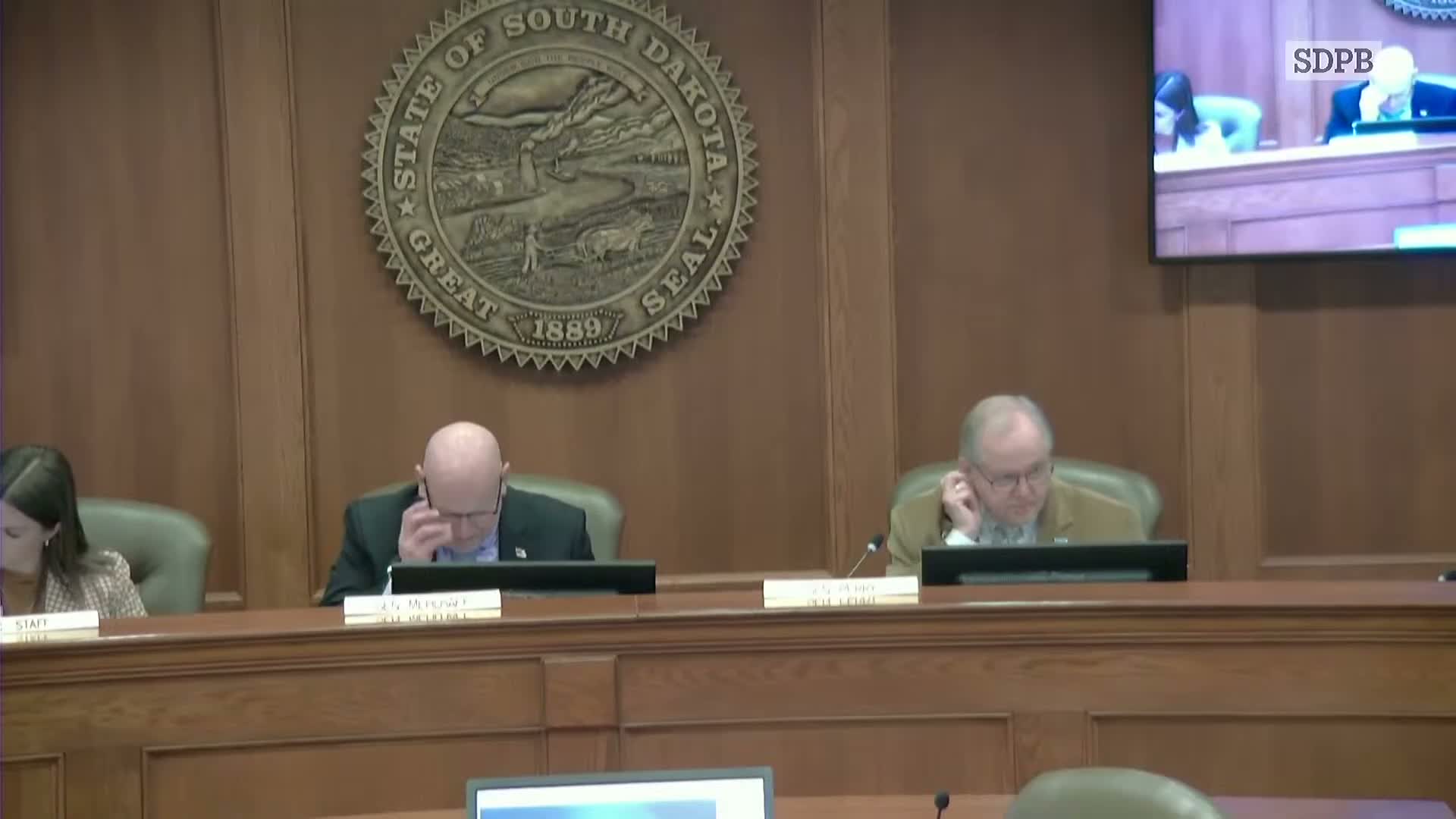
The Senate State Affairs Committee moved several measures forward and deferred others after extended hearings.
SB 133, sponsored by Sen. Sue Peterson, would require economic‑impact analyses for major permanent agency rules; it drew bipartisan proponent testimony from policy groups and the governor's office and passed out of committee unanimously with a do‑pass recommendation and was placed on consent for the floor.
SB 134, also sponsored by Sen. Peterson, would limit judicial deference to state agency statutory interpretations following recent U.S. Supreme Court precedent. Supporters — including the Pacific Legal Foundation, Americans for Prosperity and the Goldwater Institute — said the bill brings consistency to South Dakota's doctrine. The committee approved SB 134 by majority vote and sent it to the floor with a do‑pass recommendation.
SJR505, a proposed constitutional amendment from Sen. Taffy Howard to cap annual assessed‑value growth for owner‑occupied homes at 2% and cap property taxes at 1% of assessed value, prompted lengthy testimony and a split committee. Proponents argued it would protect long‑term homeowners from rapid assessment jumps; opponents (Department of Revenue and local government representatives) warned of inequity, tax shifts, and administrative complexity. A due‑pass motion failed on an even tie and the committee later voted to defer the item for further consideration.
SB 145, concerning municipal authority to act for public health and limits on municipal emergency powers, produced strong opposition from municipal and public‑health groups; the committee adopted a 40‑first‑day motion to remove the bill from immediate consideration.
Committee action leaves SB 133 and SB 134 headed to the Senate floor with do‑pass recommendations, SJR505 deferred for additional work, and SB 145 set aside.
SB 133, sponsored by Sen. Sue Peterson, would require economic‑impact analyses for major permanent agency rules; it drew bipartisan proponent testimony from policy groups and the governor's office and passed out of committee unanimously with a do‑pass recommendation and was placed on consent for the floor.
SB 134, also sponsored by Sen. Peterson, would limit judicial deference to state agency statutory interpretations following recent U.S. Supreme Court precedent. Supporters — including the Pacific Legal Foundation, Americans for Prosperity and the Goldwater Institute — said the bill brings consistency to South Dakota's doctrine. The committee approved SB 134 by majority vote and sent it to the floor with a do‑pass recommendation.
SJR505, a proposed constitutional amendment from Sen. Taffy Howard to cap annual assessed‑value growth for owner‑occupied homes at 2% and cap property taxes at 1% of assessed value, prompted lengthy testimony and a split committee. Proponents argued it would protect long‑term homeowners from rapid assessment jumps; opponents (Department of Revenue and local government representatives) warned of inequity, tax shifts, and administrative complexity. A due‑pass motion failed on an even tie and the committee later voted to defer the item for further consideration.
SB 145, concerning municipal authority to act for public health and limits on municipal emergency powers, produced strong opposition from municipal and public‑health groups; the committee adopted a 40‑first‑day motion to remove the bill from immediate consideration.
Committee action leaves SB 133 and SB 134 headed to the Senate floor with do‑pass recommendations, SJR505 deferred for additional work, and SB 145 set aside.
View the Full Meeting & All Its Details
This article offers just a summary. Unlock complete video, transcripts, and insights as a Founder Member.
✓
Watch full, unedited meeting videos
✓
Search every word spoken in unlimited transcripts
✓
AI summaries & real-time alerts (all government levels)
✓
Permanent access to expanding government content
30-day money-back guarantee
