Panel approves bill limiting liability for officers, clarifying tow authority after crashes
February 20, 2026 | 2026 Legislature SD, South Dakota
This article was created by AI summarizing key points discussed. AI makes mistakes, so for full details and context, please refer to the video of the full meeting. Please report any errors so we can fix them. Report an error »
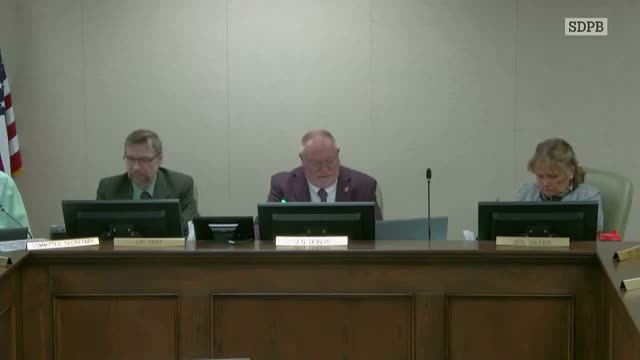
The Senate Transportation Committee on a unanimous voice vote certified House Bill 1188 as amended, a measure that clarifies when law enforcement and state agencies may remove disabled vehicles and spilled cargo from highways and public waters.
Representative Kent Roe, the bill’s sponsor, told the panel the measure is intended to speed hazard removal and protect responders. "Highway Patrol, DOT, sheriffs, or peace officers may arrange tow to garage or place of safety and remove spilled cargo personal property that blocks traffic or creates danger," Roe said during his opening remarks. He said the bill also makes the owner responsible for 100% of removal costs and extends liability protection to officers and removal agencies except in cases of gross negligence or willful misconduct.
Proponents including the South Dakota Sheriff’s Association said the change responds to safety problems, particularly during heavy snow. A representative of the sheriff’s association described scenarios in which truck drivers refuse help because of preexisting contracts with distant tow providers, leaving local officers struggling to clear roads.
Andy Wicks of the South Dakota Professional Towing Association testified the proposal helps reduce exposure to secondary crashes. "The more time you're exposed to hazards, the more possibility it is to have a secondary crash," Wicks said, explaining industry training that emphasizes quick clearance.
Committee members asked whether owners would be charged for officer time or administrative fees; sponsors and proponents said the owner charge would cover private towing and related removal costs but would not add separate charges for routine officer time on scene.
Senator Larson moved a "do pass" recommendation; after roll call the committee recorded seven yeas and zero nays and certified the bill for consent to the floor.
The bill's amended language clarifies who may act (including Highway Patrol, DOT, game, fish and parks personnel, sheriffs and peace officers) and contains hold-harmless language intended to protect responders and towers from liability for routine damage unless there is gross negligence. The committee indicated the measure would proceed to the floor under consent calendar.
Representative Kent Roe, the bill’s sponsor, told the panel the measure is intended to speed hazard removal and protect responders. "Highway Patrol, DOT, sheriffs, or peace officers may arrange tow to garage or place of safety and remove spilled cargo personal property that blocks traffic or creates danger," Roe said during his opening remarks. He said the bill also makes the owner responsible for 100% of removal costs and extends liability protection to officers and removal agencies except in cases of gross negligence or willful misconduct.
Proponents including the South Dakota Sheriff’s Association said the change responds to safety problems, particularly during heavy snow. A representative of the sheriff’s association described scenarios in which truck drivers refuse help because of preexisting contracts with distant tow providers, leaving local officers struggling to clear roads.
Andy Wicks of the South Dakota Professional Towing Association testified the proposal helps reduce exposure to secondary crashes. "The more time you're exposed to hazards, the more possibility it is to have a secondary crash," Wicks said, explaining industry training that emphasizes quick clearance.
Committee members asked whether owners would be charged for officer time or administrative fees; sponsors and proponents said the owner charge would cover private towing and related removal costs but would not add separate charges for routine officer time on scene.
Senator Larson moved a "do pass" recommendation; after roll call the committee recorded seven yeas and zero nays and certified the bill for consent to the floor.
The bill's amended language clarifies who may act (including Highway Patrol, DOT, game, fish and parks personnel, sheriffs and peace officers) and contains hold-harmless language intended to protect responders and towers from liability for routine damage unless there is gross negligence. The committee indicated the measure would proceed to the floor under consent calendar.
Don't Miss a Word: See the Full Meeting!
Go beyond summaries. Unlock every video, transcript, and key insight with a Founder Membership.
✓
Get instant access to full meeting videos
✓
Search and clip any phrase from complete transcripts
✓
Receive AI-powered summaries & custom alerts
✓
Enjoy lifetime, unrestricted access to government data
30-day money-back guarantee
