Senate panel walks through draft S.278, flags delivery and event licensing concerns
February 20, 2026 | Economic Development, Housing & General Affairs, SENATE, Committees, Legislative , Vermont
This article was created by AI summarizing key points discussed. AI makes mistakes, so for full details and context, please refer to the video of the full meeting. Please report any errors so we can fix them. Report an error »
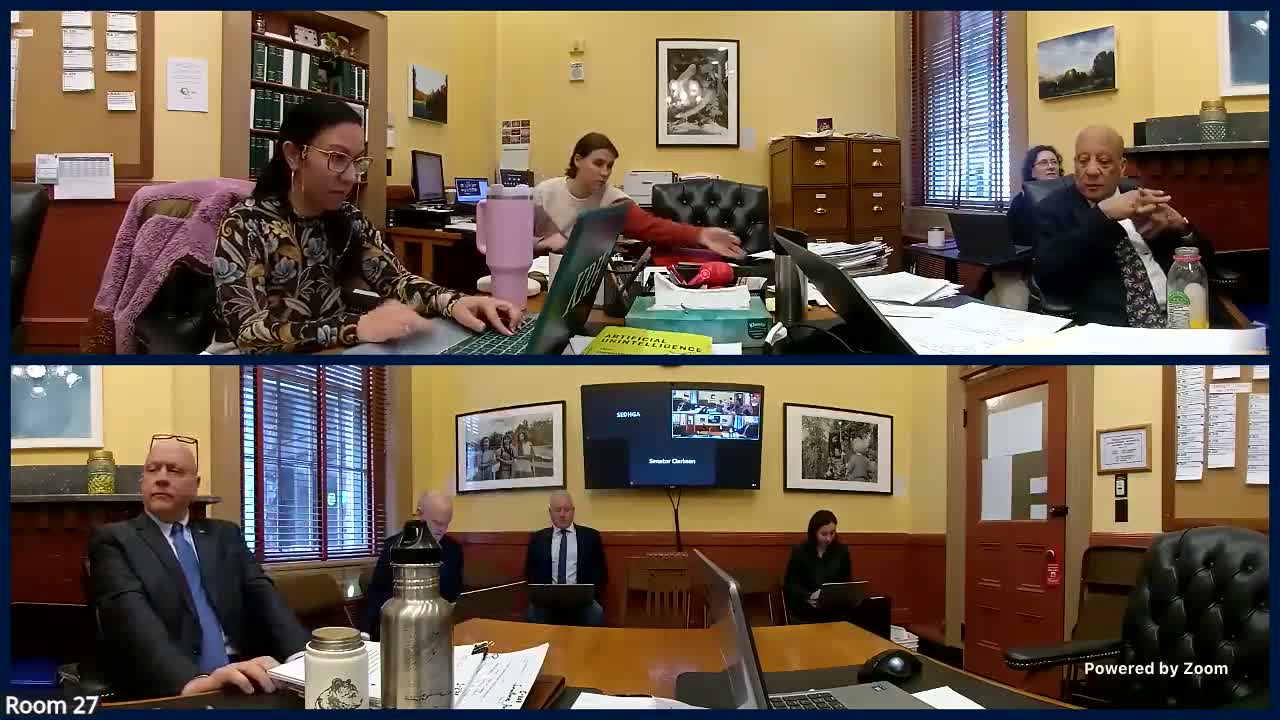
James Pepper, chair of the Cannabis Control Board, walked the Senate Economic Development, Housing & General Affairs Committee through sections of draft 1.1 of S.278, describing proposed delivery and event‑licensing provisions and urging precise statutory language rather than leaving key policy decisions solely to rulemaking.
Pepper said the bill contemplates three delivery models — a retailer‑employee ‘pizza’ model, a wholesaler/'ice‑cream truck' model and an independent‑driver model — and that the draft uses a wholesaler/deliver‑truck approach that would allow cultivators, manufacturers, wholesalers or retailers to apply for a delivery permit. "This model ... would permit anyone with a cannabis license to apply for this permit and make deliveries between the hours of 9 and 5," Pepper said. The draft also proposes a permit fee of roughly $100.
Why it matters: committee members warned the delivery proposal could meaningfully expand retail access and create new points of sale across the state. Pepper estimated the proposal could open "570 new points of sale" if every licensee pursued delivery, which senators said would affect market structure and local control.
Members raised age‑verification and enforcement concerns. Several senators asked whether the state should require the same strict on‑arrival verification used in Massachusetts — including body cameras in some programs — or adopt less intrusive checks similar to how alcohol deliveries are handled. Pepper said Massachusetts' approach is more onerous than Vermont likely wants and urged the committee to set age‑verification guardrails that fit local expectations.
Committee members also pressed a structural question: how the delivery permit would interact with Vermont's existing limit that a licensee operate at a single authorized location. Pepper warned that permitting delivery could be used by vertically integrated operators to establish de facto multi‑location operations for statewide distribution. "You could see someone build regional coverage by locating different parts of their operation in different counties," he said, and recommended the committee be explicit in statute about whether and how deliveries allow activity outside a licensee's primary location.
On event licensing, Pepper explained draft S.217 (moved within the same document) would let any licensed cannabis establishment apply for a permit to host events that could include on‑site consumption. Applications would require a security plan, insurance, local cannabis commission approval and the ability for towns to condition permits (for example, by requiring an EMT at certain events). The board's draft language mirrors many alcohol special‑event rules but expands application eligibility beyond retail licensees.
Next steps: senators asked Pepper and staff (including legislative staffer Tucker) to consult regulators in New York, California, Massachusetts and Maine and return with narrower statutory options that reduce reliance on rulemaking. The committee scheduled additional walkthrough time next week to continue the section‑by‑section review.
Sources: James Pepper, Chair, Cannabis Control Board (walk‑through presentation); committee Q&A. No formal vote was taken.
Pepper said the bill contemplates three delivery models — a retailer‑employee ‘pizza’ model, a wholesaler/'ice‑cream truck' model and an independent‑driver model — and that the draft uses a wholesaler/deliver‑truck approach that would allow cultivators, manufacturers, wholesalers or retailers to apply for a delivery permit. "This model ... would permit anyone with a cannabis license to apply for this permit and make deliveries between the hours of 9 and 5," Pepper said. The draft also proposes a permit fee of roughly $100.
Why it matters: committee members warned the delivery proposal could meaningfully expand retail access and create new points of sale across the state. Pepper estimated the proposal could open "570 new points of sale" if every licensee pursued delivery, which senators said would affect market structure and local control.
Members raised age‑verification and enforcement concerns. Several senators asked whether the state should require the same strict on‑arrival verification used in Massachusetts — including body cameras in some programs — or adopt less intrusive checks similar to how alcohol deliveries are handled. Pepper said Massachusetts' approach is more onerous than Vermont likely wants and urged the committee to set age‑verification guardrails that fit local expectations.
Committee members also pressed a structural question: how the delivery permit would interact with Vermont's existing limit that a licensee operate at a single authorized location. Pepper warned that permitting delivery could be used by vertically integrated operators to establish de facto multi‑location operations for statewide distribution. "You could see someone build regional coverage by locating different parts of their operation in different counties," he said, and recommended the committee be explicit in statute about whether and how deliveries allow activity outside a licensee's primary location.
On event licensing, Pepper explained draft S.217 (moved within the same document) would let any licensed cannabis establishment apply for a permit to host events that could include on‑site consumption. Applications would require a security plan, insurance, local cannabis commission approval and the ability for towns to condition permits (for example, by requiring an EMT at certain events). The board's draft language mirrors many alcohol special‑event rules but expands application eligibility beyond retail licensees.
Next steps: senators asked Pepper and staff (including legislative staffer Tucker) to consult regulators in New York, California, Massachusetts and Maine and return with narrower statutory options that reduce reliance on rulemaking. The committee scheduled additional walkthrough time next week to continue the section‑by‑section review.
Sources: James Pepper, Chair, Cannabis Control Board (walk‑through presentation); committee Q&A. No formal vote was taken.
View the Full Meeting & All Its Details
This article offers just a summary. Unlock complete video, transcripts, and insights as a Founder Member.
✓
Watch full, unedited meeting videos
✓
Search every word spoken in unlimited transcripts
✓
AI summaries & real-time alerts (all government levels)
✓
Permanent access to expanding government content
30-day money-back guarantee
