House Judiciary Committee takes up H.849 to create state cause of action for constitutional violations
February 20, 2026 | Judiciary, HOUSE OF REPRESENTATIVES, Committees, Legislative , Vermont
This article was created by AI summarizing key points discussed. AI makes mistakes, so for full details and context, please refer to the video of the full meeting. Please report any errors so we can fix them. Report an error »
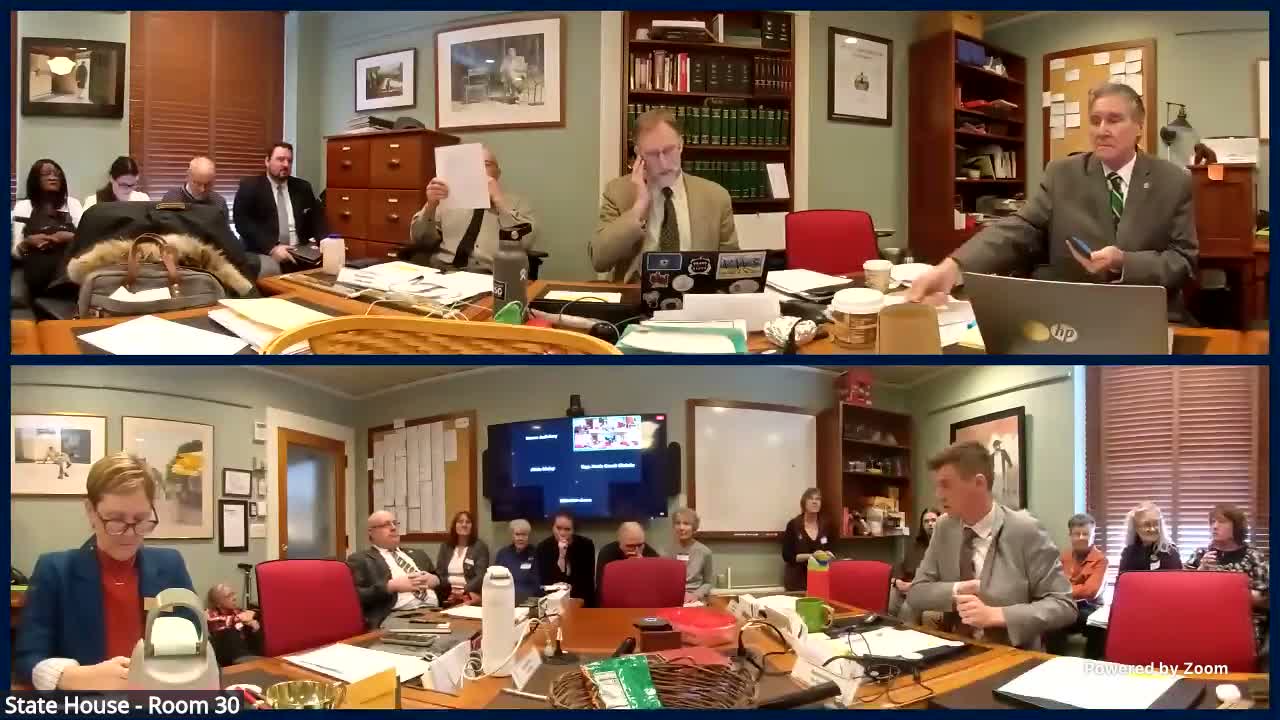
Montpelier — The House Judiciary Committee on H.849 heard a legislative‑counsel walkthrough and testimony from ACLU witnesses on a short‑form bill that would create a state cause of action for money damages and equitable relief against officials who violate the U.S. Constitution.
Hillary Cheddar Ames, legislative counsel, told the committee the draft (version 1.1) would add a new chapter to Title 12 creating a civil action for the deprivation of constitutional rights. “A cause of action is permission to go to court,” Ames said, explaining the draft is modeled on the federal statute commonly known as Section 1983 (42 U.S.C. § 1983) but would extend similar remedies to permit suits against federal officials as well as state and local officials.
The proposal would let “any citizen of the state of Vermont or other person within the jurisdiction of the state of Vermont” bring a claim when an official acting under color of law deprives someone of rights secured by the U.S. Constitution, Ames said, and would make damages and equitable relief — including injunctions and declaratory relief — available.
ACLU witnesses said the bill fills an enforcement gap. Falko Schilling, advocacy director for the ACLU of Vermont, said the organization strongly supports the draft and urged the committee to consider adding attorney‑fee language. “It’s hard to access justice when you can’t access an attorney,” Schilling said, arguing that fee shifting for prevailing plaintiffs would make suits practicable.
Emily Bridal, senior policy counsel at the ACLU national office, told the committee that in the ACLU’s view “H.849 as drafted, in our opinion, is constitutionally sound and should be upheld.” Bridal said the measure aims to fill a practical gap left by federal law and the narrowness of the Bivens line of cases, which in practice provides limited remedies against federal officials.
Legislative counsel and witnesses also warned of likely legal challenges if Vermont extends liability to federal officials. Ames identified two core legal issues: intergovernmental immunity (the federal‑state relationship under the Supremacy Clause) and potential preemption by federal statutes such as the Federal Tort Claims Act and the Westfall Act. Ames said courts have debated whether constitutional claims against federal employees fall outside the FTCA/Westfall channeling rules, and noted the question is unsettled.
Committee members pressed for specifics. Members asked whether noncitizens located in Vermont could bring claims (Ames said persons within the state’s jurisdiction could), whether the state would replicate federal case law, and what remedies and procedures would mirror federal practice. Counsel said modeling the language on §1983 is intended to bring existing jurisprudence to inform state courts, but she cautioned that suits against federal officials may end up removed to federal court under existing statutes and rules.
Witnesses pointed to activity in other states. Bridal listed several states with related proposals — Colorado, Georgia, Maryland, New Mexico, Washington and Wisconsin — and noted that Illinois recently enacted a narrower statute tied to immigration enforcement and that the U.S. has sued to challenge that law.
On remedies, ACLU witnesses recommended importing language that would allow reasonable attorney’s fees and litigation costs comparable to how fees are handled in §1983 cases; legislative counsel said inclusion of attorney‑fee provisions is a policy choice for the committee and can be added to the draft.
The committee did not take a final vote on the bill. Members were told additional witnesses — including a law professor and outside experts — are scheduled to testify next week. The chair adjourned the meeting until 1:00 p.m. Tuesday for continued testimony and discussion.
Hillary Cheddar Ames, legislative counsel, told the committee the draft (version 1.1) would add a new chapter to Title 12 creating a civil action for the deprivation of constitutional rights. “A cause of action is permission to go to court,” Ames said, explaining the draft is modeled on the federal statute commonly known as Section 1983 (42 U.S.C. § 1983) but would extend similar remedies to permit suits against federal officials as well as state and local officials.
The proposal would let “any citizen of the state of Vermont or other person within the jurisdiction of the state of Vermont” bring a claim when an official acting under color of law deprives someone of rights secured by the U.S. Constitution, Ames said, and would make damages and equitable relief — including injunctions and declaratory relief — available.
ACLU witnesses said the bill fills an enforcement gap. Falko Schilling, advocacy director for the ACLU of Vermont, said the organization strongly supports the draft and urged the committee to consider adding attorney‑fee language. “It’s hard to access justice when you can’t access an attorney,” Schilling said, arguing that fee shifting for prevailing plaintiffs would make suits practicable.
Emily Bridal, senior policy counsel at the ACLU national office, told the committee that in the ACLU’s view “H.849 as drafted, in our opinion, is constitutionally sound and should be upheld.” Bridal said the measure aims to fill a practical gap left by federal law and the narrowness of the Bivens line of cases, which in practice provides limited remedies against federal officials.
Legislative counsel and witnesses also warned of likely legal challenges if Vermont extends liability to federal officials. Ames identified two core legal issues: intergovernmental immunity (the federal‑state relationship under the Supremacy Clause) and potential preemption by federal statutes such as the Federal Tort Claims Act and the Westfall Act. Ames said courts have debated whether constitutional claims against federal employees fall outside the FTCA/Westfall channeling rules, and noted the question is unsettled.
Committee members pressed for specifics. Members asked whether noncitizens located in Vermont could bring claims (Ames said persons within the state’s jurisdiction could), whether the state would replicate federal case law, and what remedies and procedures would mirror federal practice. Counsel said modeling the language on §1983 is intended to bring existing jurisprudence to inform state courts, but she cautioned that suits against federal officials may end up removed to federal court under existing statutes and rules.
Witnesses pointed to activity in other states. Bridal listed several states with related proposals — Colorado, Georgia, Maryland, New Mexico, Washington and Wisconsin — and noted that Illinois recently enacted a narrower statute tied to immigration enforcement and that the U.S. has sued to challenge that law.
On remedies, ACLU witnesses recommended importing language that would allow reasonable attorney’s fees and litigation costs comparable to how fees are handled in §1983 cases; legislative counsel said inclusion of attorney‑fee provisions is a policy choice for the committee and can be added to the draft.
The committee did not take a final vote on the bill. Members were told additional witnesses — including a law professor and outside experts — are scheduled to testify next week. The chair adjourned the meeting until 1:00 p.m. Tuesday for continued testimony and discussion.
View the Full Meeting & All Its Details
This article offers just a summary. Unlock complete video, transcripts, and insights as a Founder Member.
✓
Watch full, unedited meeting videos
✓
Search every word spoken in unlimited transcripts
✓
AI summaries & real-time alerts (all government levels)
✓
Permanent access to expanding government content
30-day money-back guarantee
