Subcommittee advances bill widening licensure exemption for radiologic technologists amid safety concerns
February 20, 2026 | 2026 Legislature VA, Virginia
This article was created by AI summarizing key points discussed. AI makes mistakes, so for full details and context, please refer to the video of the full meeting. Please report any errors so we can fix them. Report an error »
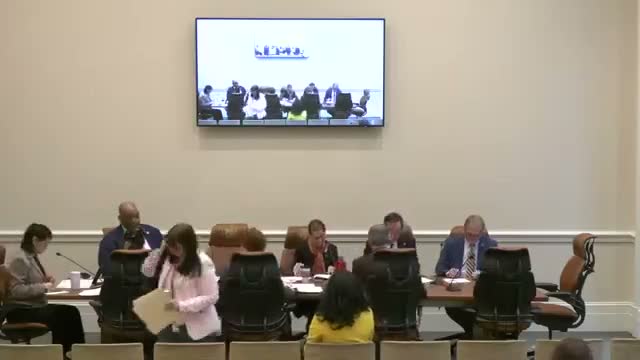
Delegate Kathy Willett, presenting House Bill 452, told the Senate Health Professions Subcommittee that the bill recognizes the modern reality that many hospitals operate as part of systems and would allow certain radiologic technologists employed by those systems to work outside hospital walls under existing supervision arrangements. "We need rad techs today," Willett said, framing the bill as a workforce measure aimed at reducing barriers to care.
Supporters including Scott Johnson of HCA Hospitals and Brent Rawlings of the Virginia Hospital & Healthcare Association urged the subcommittee to recommend the bill, saying it would remove employer-level barriers and preserve supervisory safeguards within accredited systems. Johnson told the panel the change would ‘‘remove barriers’’ and help hospitals staff imaging services more flexibly.
Opponents — including an American Society of Radiologic Technologists (ASRT) representative, students and educators — urged a no vote. An ASRT-affiliated technologist who identified themself as a volunteer and long-time educator argued the bill “would effectively eliminate licensure requirements for many radiologic technologists,” warning that accreditation standards vary and do not uniformly address technologist qualifications. Michelle Whittington, a radiologic technology educator, said limiting licensure would harm training pipelines and patient safety and cited the need for specialized education to limit radiation exposure.
Several students offered testimony opposing the bill. Sonia Patterson, a radiation therapy student, and Alexis Campbell, a radiologic sciences student at Virginia Commonwealth University, asked the subcommittee to vote no, saying the proposal would weaken professional standards and clinical training opportunities.
Delegate Willett and supporters responded that nothing in the bill precludes individuals from pursuing full licensure, that the provision includes a three-year sunset to allow review, and that there have been no documented complaints under the current statutory exception. Willett said the sunset would allow the legislature to repeal the change if problems emerge.
Senator Head asked for clarification that the bill changes which employer (the hospital system rather than the hospital entity) is treated as the employer for the statutory exemption and that protections for patients would remain; presenters agreed the underlying safeguards would continue under the statutory framework described to the committee.
After testimony and questions, the subcommittee voted to recommend HB 452 for reporting to the full committee. The clerk recorded the motion and roll call; the subcommittee reported the bill (roll-call summary reported ayes across the roll calls and a three-year sunset in the bill text). The bill will be scheduled for further consideration by the full committee.
Next steps: HB 452 was recommended for report to the full committee and may be scheduled for a future committee calendar; the three-year sunset language will require the Legislature to review outcomes if the provision is enacted.
Supporters including Scott Johnson of HCA Hospitals and Brent Rawlings of the Virginia Hospital & Healthcare Association urged the subcommittee to recommend the bill, saying it would remove employer-level barriers and preserve supervisory safeguards within accredited systems. Johnson told the panel the change would ‘‘remove barriers’’ and help hospitals staff imaging services more flexibly.
Opponents — including an American Society of Radiologic Technologists (ASRT) representative, students and educators — urged a no vote. An ASRT-affiliated technologist who identified themself as a volunteer and long-time educator argued the bill “would effectively eliminate licensure requirements for many radiologic technologists,” warning that accreditation standards vary and do not uniformly address technologist qualifications. Michelle Whittington, a radiologic technology educator, said limiting licensure would harm training pipelines and patient safety and cited the need for specialized education to limit radiation exposure.
Several students offered testimony opposing the bill. Sonia Patterson, a radiation therapy student, and Alexis Campbell, a radiologic sciences student at Virginia Commonwealth University, asked the subcommittee to vote no, saying the proposal would weaken professional standards and clinical training opportunities.
Delegate Willett and supporters responded that nothing in the bill precludes individuals from pursuing full licensure, that the provision includes a three-year sunset to allow review, and that there have been no documented complaints under the current statutory exception. Willett said the sunset would allow the legislature to repeal the change if problems emerge.
Senator Head asked for clarification that the bill changes which employer (the hospital system rather than the hospital entity) is treated as the employer for the statutory exemption and that protections for patients would remain; presenters agreed the underlying safeguards would continue under the statutory framework described to the committee.
After testimony and questions, the subcommittee voted to recommend HB 452 for reporting to the full committee. The clerk recorded the motion and roll call; the subcommittee reported the bill (roll-call summary reported ayes across the roll calls and a three-year sunset in the bill text). The bill will be scheduled for further consideration by the full committee.
Next steps: HB 452 was recommended for report to the full committee and may be scheduled for a future committee calendar; the three-year sunset language will require the Legislature to review outcomes if the provision is enacted.
View the Full Meeting & All Its Details
This article offers just a summary. Unlock complete video, transcripts, and insights as a Founder Member.
✓
Watch full, unedited meeting videos
✓
Search every word spoken in unlimited transcripts
✓
AI summaries & real-time alerts (all government levels)
✓
Permanent access to expanding government content
30-day money-back guarantee
