Bill to let AGO investigators electronically serve warrants draws debate over authority and guardrails
February 20, 2026 | Legislative Sessions, Washington
This article was created by AI summarizing key points discussed. AI makes mistakes, so for full details and context, please refer to the video of the full meeting. Please report any errors so we can fix them. Report an error »
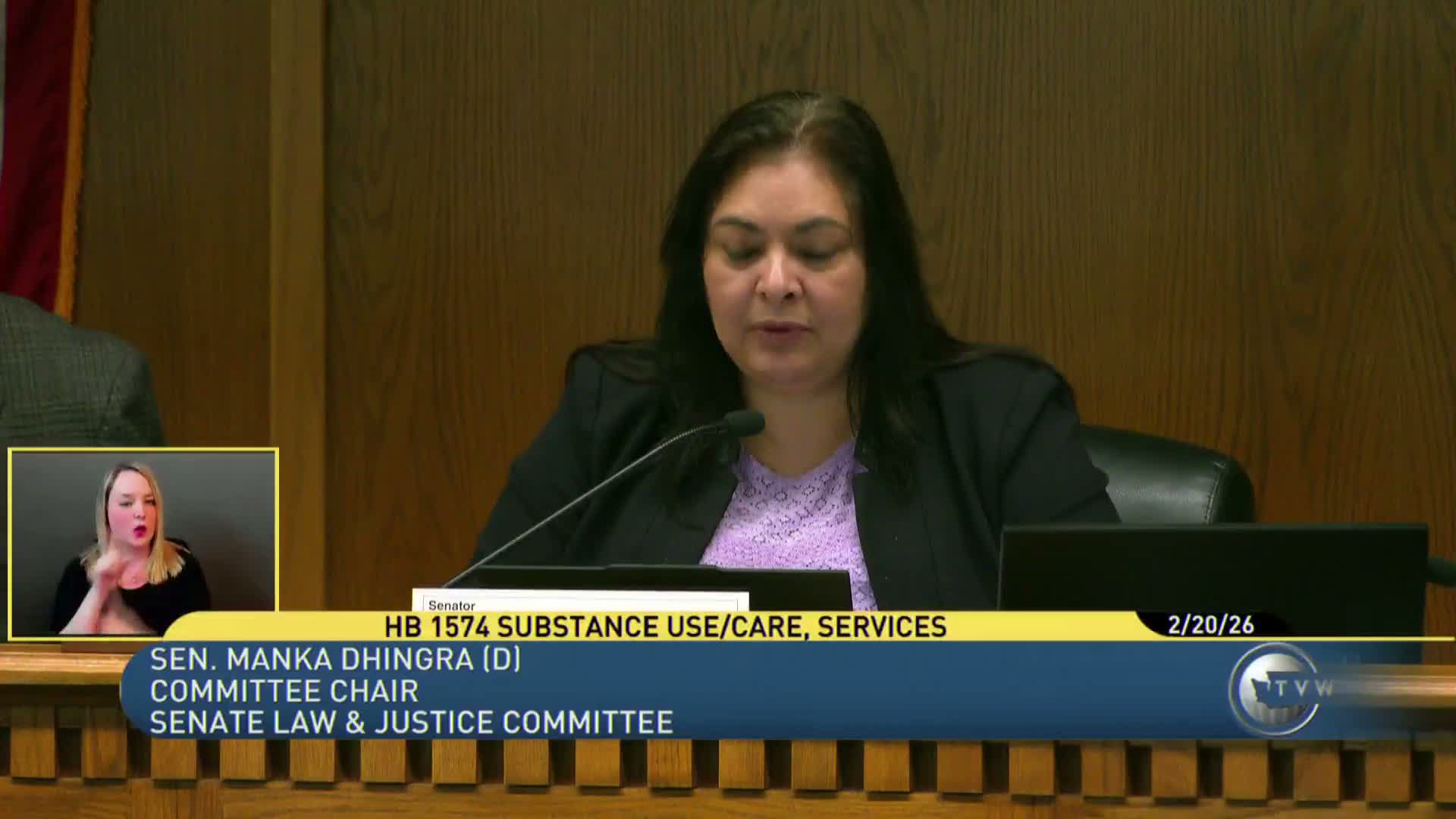
The Senate Law and Justice Committee heard public testimony on Engrossed House Bill 2,156, which would designate certain Attorney General investigators as limited-authority Washington peace officers for the purpose of electronically serving search warrants for business records in economic- and financial-crimes cases.
Tiani Milner, section chief of the AGO's major economic crimes unit, said the bill simply allows investigators to electronically serve judge-signed warrants for bank and business records and stressed investigators would not have arrest powers or firearms. "All this bill does is allow our investigators to hit send on an email that has a PDF of a search warrant attached to it," she told the committee.
Sponsor Representative Edwin O'Bros said the change addresses delays when local law enforcement is unavailable and helps the AGO prosecute organized retail crime, construction fraud and wage theft.
Opponents including the Association of Sheriffs and Police Chiefs expressed concern about blurring the line between the Attorney General's civil and criminal roles and recommended three amendments: require AGO to obtain permission from the primary territorial law-enforcement agency, require deconfliction with local agencies, and prohibit the AGO from both investigating and prosecuting the same criminal matter.
Retail groups and business representatives supported the bill as a coordination and timeliness tool to address pervasive organized retail crime that crosses jurisdictions.
The committee closed the public testimony after multiple agency and association witnesses; no committee vote was taken that day.
Tiani Milner, section chief of the AGO's major economic crimes unit, said the bill simply allows investigators to electronically serve judge-signed warrants for bank and business records and stressed investigators would not have arrest powers or firearms. "All this bill does is allow our investigators to hit send on an email that has a PDF of a search warrant attached to it," she told the committee.
Sponsor Representative Edwin O'Bros said the change addresses delays when local law enforcement is unavailable and helps the AGO prosecute organized retail crime, construction fraud and wage theft.
Opponents including the Association of Sheriffs and Police Chiefs expressed concern about blurring the line between the Attorney General's civil and criminal roles and recommended three amendments: require AGO to obtain permission from the primary territorial law-enforcement agency, require deconfliction with local agencies, and prohibit the AGO from both investigating and prosecuting the same criminal matter.
Retail groups and business representatives supported the bill as a coordination and timeliness tool to address pervasive organized retail crime that crosses jurisdictions.
The committee closed the public testimony after multiple agency and association witnesses; no committee vote was taken that day.
View the Full Meeting & All Its Details
This article offers just a summary. Unlock complete video, transcripts, and insights as a Founder Member.
✓
Watch full, unedited meeting videos
✓
Search every word spoken in unlimited transcripts
✓
AI summaries & real-time alerts (all government levels)
✓
Permanent access to expanding government content
30-day money-back guarantee
