Committee hears wide-ranging testimony on 3D-printing gun bill amid free-speech and safety concerns
February 20, 2026 | Legislative Sessions, Washington
This article was created by AI summarizing key points discussed. AI makes mistakes, so for full details and context, please refer to the video of the full meeting. Please report any errors so we can fix them. Report an error »
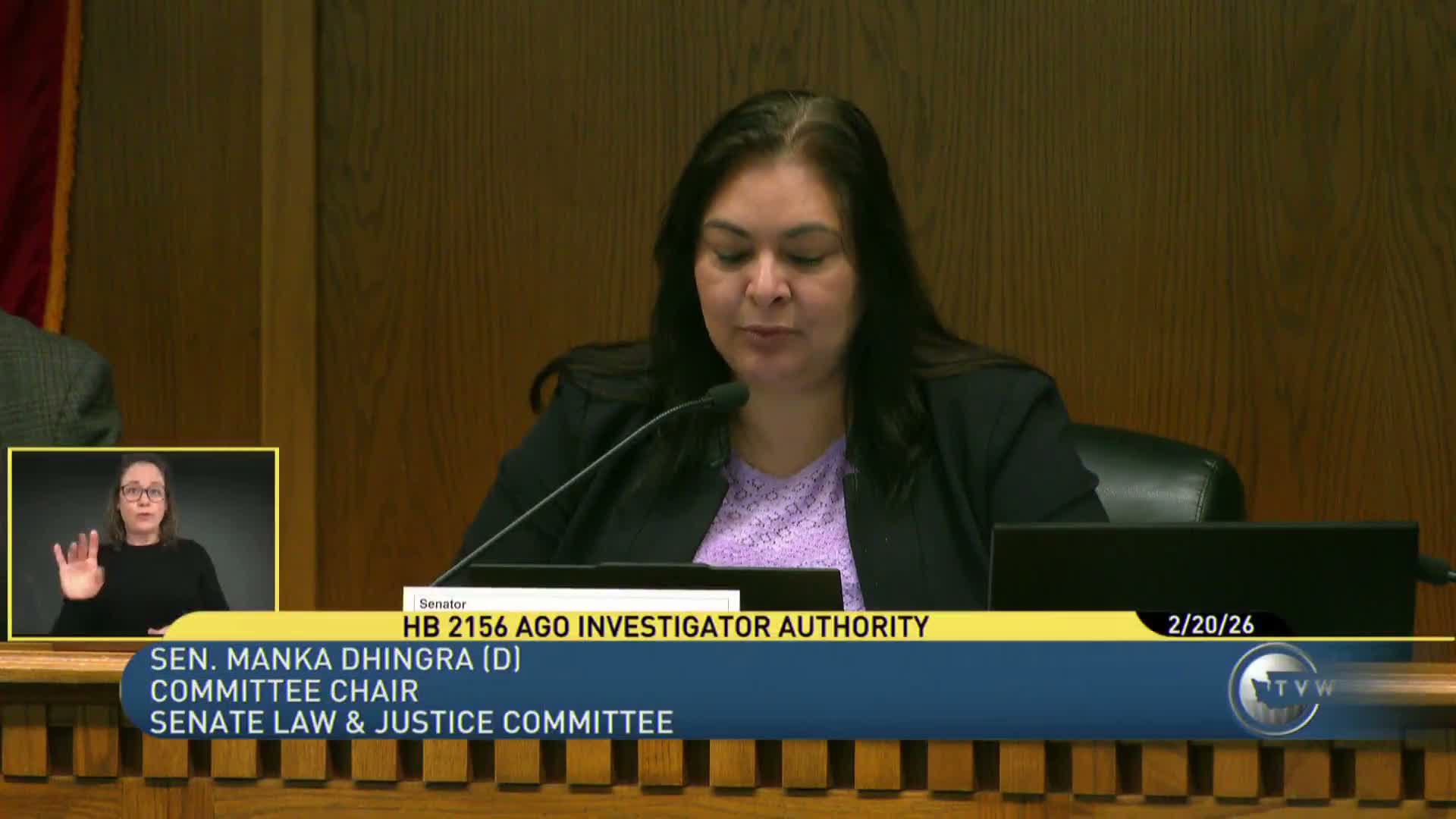
Lawmakers heard more than three hours of public testimony on Engrossed Substitute House Bill 2,320, a measure to expand state restrictions on the manufacturing and distribution of untraceable firearms to include three-dimensional printers, CNC milling machines and digital firearm-manufacturing code.
Representative Usman Saladin, the bill's sponsor, said technology has outpaced prior law and that children and other people who cannot legally obtain firearms can now produce untraceable weapons at low cost. "This is a common sense update to our laws that keeps pace with technology," he said, citing local school incidents and recent seizures.
Proponents included students, parents, medical professionals and gun-violence-prevention groups who said 3D printing creates an unregulated avenue to make ghost guns. Dr. Beth Ebelle, representing Washington pediatricians, said she treats children injured by firearms and called the bill a "necessary step" to reduce harm.
Industry and civil-liberties witnesses opposed aspects of the bill. The National Rifle Association and several 3D-printing hobbyists argued the underlying manufacturing activities are already illegal and that the bill risks overbreadth and First Amendment problems by criminalizing digital files. Technologists warned enforcement may require intrusive searches of private devices and raised questions about distinguishing benign files from weapon code.
Materialise, a 3D-printing firm, said responsible industry controls are possible and highlighted tools that can limit distribution of sensitive files, while other technologists cautioned the bill could hamper legitimate uses of digital manufacturing.
The committee closed the hearing after dozens of witnesses testified; the chair reported roughly 760 individuals signed in pro and about 570 signed in con (not testifying). No committee vote was recorded that day.
Representative Usman Saladin, the bill's sponsor, said technology has outpaced prior law and that children and other people who cannot legally obtain firearms can now produce untraceable weapons at low cost. "This is a common sense update to our laws that keeps pace with technology," he said, citing local school incidents and recent seizures.
Proponents included students, parents, medical professionals and gun-violence-prevention groups who said 3D printing creates an unregulated avenue to make ghost guns. Dr. Beth Ebelle, representing Washington pediatricians, said she treats children injured by firearms and called the bill a "necessary step" to reduce harm.
Industry and civil-liberties witnesses opposed aspects of the bill. The National Rifle Association and several 3D-printing hobbyists argued the underlying manufacturing activities are already illegal and that the bill risks overbreadth and First Amendment problems by criminalizing digital files. Technologists warned enforcement may require intrusive searches of private devices and raised questions about distinguishing benign files from weapon code.
Materialise, a 3D-printing firm, said responsible industry controls are possible and highlighted tools that can limit distribution of sensitive files, while other technologists cautioned the bill could hamper legitimate uses of digital manufacturing.
The committee closed the hearing after dozens of witnesses testified; the chair reported roughly 760 individuals signed in pro and about 570 signed in con (not testifying). No committee vote was recorded that day.
Don't Miss a Word: See the Full Meeting!
Go beyond summaries. Unlock every video, transcript, and key insight with a Founder Membership.
✓
Get instant access to full meeting videos
✓
Search and clip any phrase from complete transcripts
✓
Receive AI-powered summaries & custom alerts
✓
Enjoy lifetime, unrestricted access to government data
30-day money-back guarantee
