Finance, Revenue and Bonding committee approves procedural motions to advance multiple concepts and draft a committee bill
February 14, 2026 | Finance, Revenue and Bonding, House of Representatives, Committees, Legislative, Connecticut
This article was created by AI summarizing key points discussed. AI makes mistakes, so for full details and context, please refer to the video of the full meeting. Please report any errors so we can fix them. Report an error »
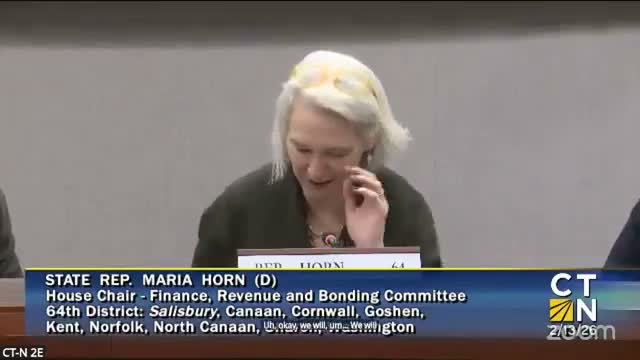
The Finance, Revenue and Bonding committee met for a short, procedural session in which members approved several motions to move work forward on a set of concepts and agenda items.
The chair opened the meeting, noted audio/connectivity issues and proceeded to business. The committee approved a motion to "raise concepts 1 through 16." The chair called for a voice vote and, after a series of responses in the affirmative, said, "Motion carries." The transcript records the motion as having been moved by a senator and seconded by a representative; the transcript does not provide consistent, verifiable spellings for the individuals named.
The committee then voted to draft items 1 through 6 as a committee bill. The chair again took a voice vote; the ayes prevailed and the chair declared the motion carried. A motion to reserve item number 1 for a subject-matter public hearing was also approved; the chair referenced "post bill HB 50 10" as spoken in the record and called for a voice vote, after which the motion carried.
Direct quotes from the proceeding appear in the record. The chair repeated standard procedural prompts, including: "All those in favor, please say aye." and later, "Motion carries."
The committee was tentatively scheduled to meet again on February 18 at 1 p.m.; the chair warned the time may change and asked members to "stay tuned." With no further business, a motion to adjourn was made and the chair closed the meeting.
The meeting was primarily procedural: motions were introduced, voice votes were called, and each motion passed by voice vote with no extended debate recorded in the transcript. Several personal names and spellings appear inconsistently in the transcript; the article reports the motions and outcomes as recorded rather than attributing actions to specific individuals where the record is unclear or inconsistent.
Next steps: items that were approved to be drafted and the reserved public hearing will proceed through committee scheduling and drafting processes; the transcript does not record formal roll-call vote names or a written tally by member.
The chair opened the meeting, noted audio/connectivity issues and proceeded to business. The committee approved a motion to "raise concepts 1 through 16." The chair called for a voice vote and, after a series of responses in the affirmative, said, "Motion carries." The transcript records the motion as having been moved by a senator and seconded by a representative; the transcript does not provide consistent, verifiable spellings for the individuals named.
The committee then voted to draft items 1 through 6 as a committee bill. The chair again took a voice vote; the ayes prevailed and the chair declared the motion carried. A motion to reserve item number 1 for a subject-matter public hearing was also approved; the chair referenced "post bill HB 50 10" as spoken in the record and called for a voice vote, after which the motion carried.
Direct quotes from the proceeding appear in the record. The chair repeated standard procedural prompts, including: "All those in favor, please say aye." and later, "Motion carries."
The committee was tentatively scheduled to meet again on February 18 at 1 p.m.; the chair warned the time may change and asked members to "stay tuned." With no further business, a motion to adjourn was made and the chair closed the meeting.
The meeting was primarily procedural: motions were introduced, voice votes were called, and each motion passed by voice vote with no extended debate recorded in the transcript. Several personal names and spellings appear inconsistently in the transcript; the article reports the motions and outcomes as recorded rather than attributing actions to specific individuals where the record is unclear or inconsistent.
Next steps: items that were approved to be drafted and the reserved public hearing will proceed through committee scheduling and drafting processes; the transcript does not record formal roll-call vote names or a written tally by member.
Don't Miss a Word: See the Full Meeting!
Go beyond summaries. Unlock every video, transcript, and key insight with a Founder Membership.
✓
Get instant access to full meeting videos
✓
Search and clip any phrase from complete transcripts
✓
Receive AI-powered summaries & custom alerts
✓
Enjoy lifetime, unrestricted access to government data
30-day money-back guarantee
