Policy committee advances multiple Orange County Schools policies to first reading; student-wellness and tech wording to be revised
February 20, 2026 | Orange County Schools, School Districts, North Carolina
This article was created by AI summarizing key points discussed. AI makes mistakes, so for full details and context, please refer to the video of the full meeting. Please report any errors so we can fix them. Report an error »
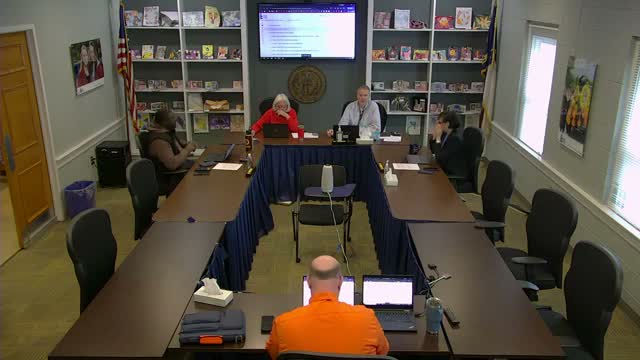
The Orange County Schools policy committee voted by consensus on a slate of policy updates Wednesday, sending more than a dozen items to the full board for first reading while asking staff to return with clearer language on technology use, student wellness and limited-claims authority.
The committee advanced updates to policies including 17-60, 21-25 (confidential information), 32-25 (technology responsible use), 42-40, 51-02 (accreditation references), 72-10 (staff involvement), 73-05 (code of ethics), 73-10/74-30 (substitute-teacher content consolidation), 73-10 and 73-00 series items, 73-10 (harassment/discrimination cross references), and others as part of a bundled first-reading recommendation. Many of the edits were based on model language from the North Carolina School Boards Association (NCSBA).
Why it matters: Several policies contain wording that committee members said could cause confusion in implementation. The committee repeatedly asked for precise phrasing about when district rules apply (for example, whether social-media prohibitions apply to students only on district devices and network) and requested clearer reporting metrics for wellness goals so the board’s future reports are useful and consistent.
Key discussion points and outcomes
- Technology and social media: Speaker 1 asked whether the technology policy’s phrase that student access to social media platforms is “prohibited” meant those sites were blocked on district devices and networks. Speaker 3 said, “I think it’s blocked, but I can verify the message.” The committee asked staff to clarify the draft to say explicitly whether the prohibition applies to district devices and networks and to return with revised wording.
- Student wellness (policy 61-40): Staff said the Student Health Advisory Committee (SHAC) provided the evidence-based goals now shown in an appendix. Members debated specific lines: the draft asks that school nutrition staff “employ at least 3 tools or strategies” (the committee left the suggested number to the experts); another clause asks the district to “gradually replace or modify vending machines over the next [X] years” — committee members asked staff whether to specify a timeline or leave the requirement as a compliance review and return with options. On measuring progress toward physical-activity goals, staff said reporting aligns with state standards and annual attestation, and they will clarify metrics and cadence in the next draft.
- Food safety and classroom events: Staff clarified current practice that foods prepared at home are not allowed for feeding students; commercially prepared or store-bought items with ingredient labels (or items prepared in a commercial kitchen) are required for classroom events. The committee asked staff to add policy language to reflect that practice and to note how teachers receive allergy information via health plans.
- Limited-claims authority: Committee members discussed adding limited settlement authority for the superintendent. A suggested figure of $10,000 was repeated in the discussion; members asked that any use of the authority be followed by prompt notification to the board. Staff will draft specific language and return it to committee.
- Procedural moves: For items with no substantive debate, the committee moved them to first reading by consensus. Several items were merged or had old policies removed and consolidated into updated references; staff were asked to ensure policy references are published so the public can locate related text.
Quotes
“I think it’s blocked, but I can verify the message,” Speaker 3 said when asked whether social-media access in the technology policy was technically blocked on the district network.
On vending machines, Speaker 3 said the draft came from NCSBA and suggested the committee could either specify a timeline or instead reword it to require periodic review for compliance.
Next steps
Staff will revise drafts to: specify whether social-media prohibitions apply to district devices and network, clarify the student-wellness reporting language and vending-machine timeline options, add the district’s food-preparation rule for classroom events and allergy coordination, and draft limited-claims settlement language for the superintendent. The revised policies will return to committee; one item (policy 51-20) will receive a closed-session legal review before coming back.
The committee’s recommendations will be forwarded to the full board for first reading as noted; the meeting adjourned after the chair recapped action items.
The committee advanced updates to policies including 17-60, 21-25 (confidential information), 32-25 (technology responsible use), 42-40, 51-02 (accreditation references), 72-10 (staff involvement), 73-05 (code of ethics), 73-10/74-30 (substitute-teacher content consolidation), 73-10 and 73-00 series items, 73-10 (harassment/discrimination cross references), and others as part of a bundled first-reading recommendation. Many of the edits were based on model language from the North Carolina School Boards Association (NCSBA).
Why it matters: Several policies contain wording that committee members said could cause confusion in implementation. The committee repeatedly asked for precise phrasing about when district rules apply (for example, whether social-media prohibitions apply to students only on district devices and network) and requested clearer reporting metrics for wellness goals so the board’s future reports are useful and consistent.
Key discussion points and outcomes
- Technology and social media: Speaker 1 asked whether the technology policy’s phrase that student access to social media platforms is “prohibited” meant those sites were blocked on district devices and networks. Speaker 3 said, “I think it’s blocked, but I can verify the message.” The committee asked staff to clarify the draft to say explicitly whether the prohibition applies to district devices and networks and to return with revised wording.
- Student wellness (policy 61-40): Staff said the Student Health Advisory Committee (SHAC) provided the evidence-based goals now shown in an appendix. Members debated specific lines: the draft asks that school nutrition staff “employ at least 3 tools or strategies” (the committee left the suggested number to the experts); another clause asks the district to “gradually replace or modify vending machines over the next [X] years” — committee members asked staff whether to specify a timeline or leave the requirement as a compliance review and return with options. On measuring progress toward physical-activity goals, staff said reporting aligns with state standards and annual attestation, and they will clarify metrics and cadence in the next draft.
- Food safety and classroom events: Staff clarified current practice that foods prepared at home are not allowed for feeding students; commercially prepared or store-bought items with ingredient labels (or items prepared in a commercial kitchen) are required for classroom events. The committee asked staff to add policy language to reflect that practice and to note how teachers receive allergy information via health plans.
- Limited-claims authority: Committee members discussed adding limited settlement authority for the superintendent. A suggested figure of $10,000 was repeated in the discussion; members asked that any use of the authority be followed by prompt notification to the board. Staff will draft specific language and return it to committee.
- Procedural moves: For items with no substantive debate, the committee moved them to first reading by consensus. Several items were merged or had old policies removed and consolidated into updated references; staff were asked to ensure policy references are published so the public can locate related text.
Quotes
“I think it’s blocked, but I can verify the message,” Speaker 3 said when asked whether social-media access in the technology policy was technically blocked on the district network.
On vending machines, Speaker 3 said the draft came from NCSBA and suggested the committee could either specify a timeline or instead reword it to require periodic review for compliance.
Next steps
Staff will revise drafts to: specify whether social-media prohibitions apply to district devices and network, clarify the student-wellness reporting language and vending-machine timeline options, add the district’s food-preparation rule for classroom events and allergy coordination, and draft limited-claims settlement language for the superintendent. The revised policies will return to committee; one item (policy 51-20) will receive a closed-session legal review before coming back.
The committee’s recommendations will be forwarded to the full board for first reading as noted; the meeting adjourned after the chair recapped action items.
Don't Miss a Word: See the Full Meeting!
Go beyond summaries. Unlock every video, transcript, and key insight with a Founder Membership.
✓
Get instant access to full meeting videos
✓
Search and clip any phrase from complete transcripts
✓
Receive AI-powered summaries & custom alerts
✓
Enjoy lifetime, unrestricted access to government data
30-day money-back guarantee
