District 21 details K–8 literacy plan and teacher training expansion
February 20, 2026 | Wheeling CCSD 21, School Boards, Illinois
This article was created by AI summarizing key points discussed. AI makes mistakes, so for full details and context, please refer to the video of the full meeting. Please report any errors so we can fix them. Report an error »
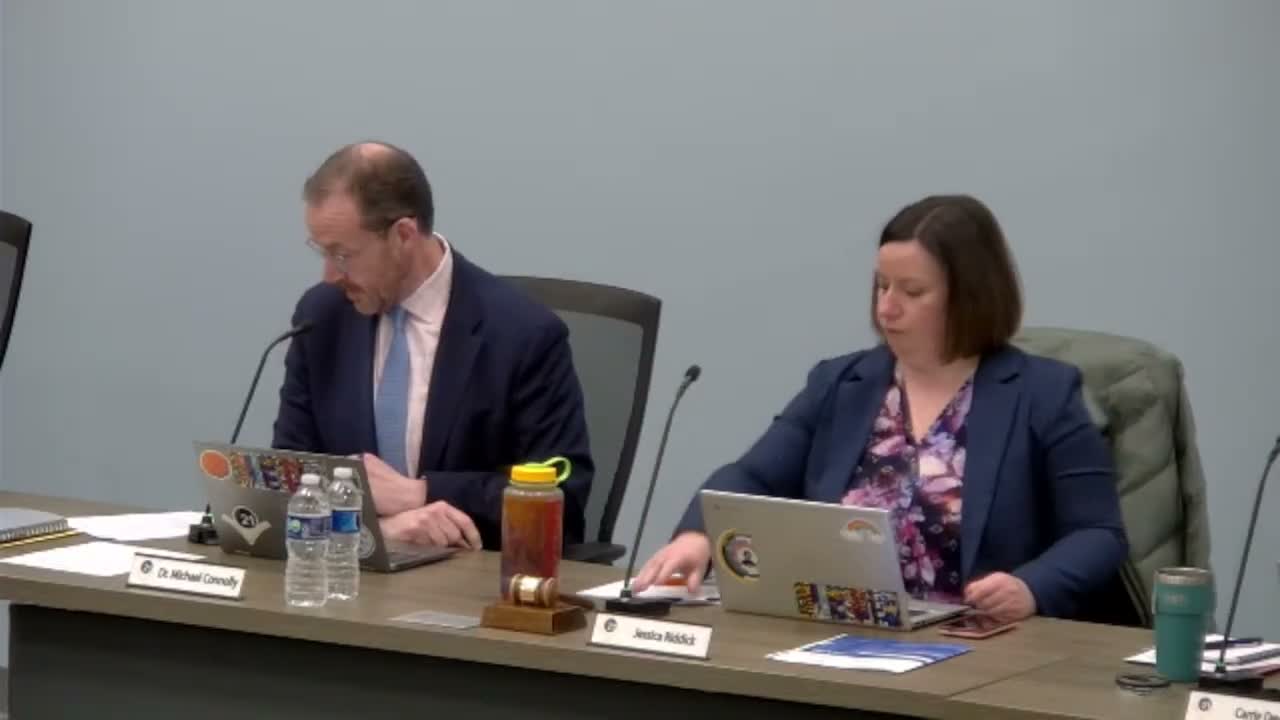
Amy Brother, the district’s director of literacy, told the Board of Education on Feb. 19 that the district is continuing to implement a comprehensive literacy plan introduced in January 2024 and is aligning that work with the new district strategic plan. Brother said the goals include ensuring every student receives “high quality evidence‑based literacy instruction” and that every educator is prepared and continuously supported to deliver such instruction.
Brother described instructional priorities across K–8: systematic, explicit phonics and decoding instruction; vocabulary and comprehension strategies; increased writing instruction and use of scaffolded discussions to build knowledge; and targeted supports for multilingual learners. She highlighted oracy — spoken language development — as especially important for the district’s multilingual population.
To build teacher capacity, Brother said the district has funded LETRS (Language Essentials for Teachers of Reading and Spelling) professional learning for 42 staff members, including interventionists, specialists and K–2 teachers, with plans for a second cohort in May and a third cohort in 2027–28. LETRS is a two‑year, intensive professional learning series that she characterized as bringing the “science of literacy” into teacher practice.
Brother also outlined a literacy curriculum review cycle for kindergarten through fifth grade: district staff narrowed vendor responses to four, will reduce that to three vendor presentations in March, and convene a literacy leadership committee that will use an evaluation tool to review materials. If two resources appear comparable the district will pilot both; otherwise it may designate an early adopter cohort before districtwide implementation in the 2027–28 school year.
Board members asked how the plan supports at‑home reading and differentiation for students who finish assigned reading quickly. Brother said the district promotes at‑home reading programs (Beanstack, in partnership with local libraries) and that differentiation is driven by instructional strategies rather than by adoption of a single program. She noted district efforts to integrate literacy in content areas and to provide teacher professional development tailored to classroom needs.
The board did not vote on materials or program purchases at the meeting; Brother said the next steps are vendor presentations to staff and committee members followed by a data‑driven pilot decision in April.
Brother described instructional priorities across K–8: systematic, explicit phonics and decoding instruction; vocabulary and comprehension strategies; increased writing instruction and use of scaffolded discussions to build knowledge; and targeted supports for multilingual learners. She highlighted oracy — spoken language development — as especially important for the district’s multilingual population.
To build teacher capacity, Brother said the district has funded LETRS (Language Essentials for Teachers of Reading and Spelling) professional learning for 42 staff members, including interventionists, specialists and K–2 teachers, with plans for a second cohort in May and a third cohort in 2027–28. LETRS is a two‑year, intensive professional learning series that she characterized as bringing the “science of literacy” into teacher practice.
Brother also outlined a literacy curriculum review cycle for kindergarten through fifth grade: district staff narrowed vendor responses to four, will reduce that to three vendor presentations in March, and convene a literacy leadership committee that will use an evaluation tool to review materials. If two resources appear comparable the district will pilot both; otherwise it may designate an early adopter cohort before districtwide implementation in the 2027–28 school year.
Board members asked how the plan supports at‑home reading and differentiation for students who finish assigned reading quickly. Brother said the district promotes at‑home reading programs (Beanstack, in partnership with local libraries) and that differentiation is driven by instructional strategies rather than by adoption of a single program. She noted district efforts to integrate literacy in content areas and to provide teacher professional development tailored to classroom needs.
The board did not vote on materials or program purchases at the meeting; Brother said the next steps are vendor presentations to staff and committee members followed by a data‑driven pilot decision in April.
View the Full Meeting & All Its Details
This article offers just a summary. Unlock complete video, transcripts, and insights as a Founder Member.
✓
Watch full, unedited meeting videos
✓
Search every word spoken in unlimited transcripts
✓
AI summaries & real-time alerts (all government levels)
✓
Permanent access to expanding government content
30-day money-back guarantee
