Wheeling CCSD 21 launches boundary redistricting process to rebalance school capacity
February 20, 2026 | Wheeling CCSD 21, School Boards, Illinois
This article was created by AI summarizing key points discussed. AI makes mistakes, so for full details and context, please refer to the video of the full meeting. Please report any errors so we can fix them. Report an error »
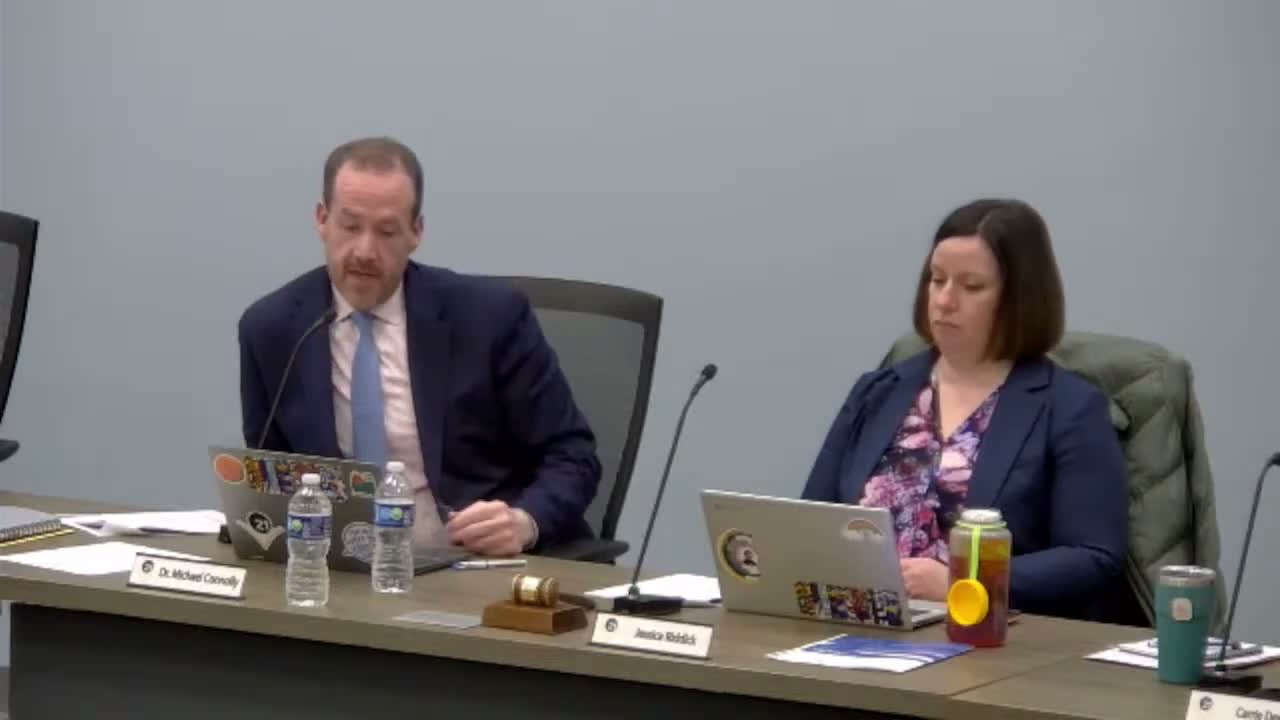
Wheeling CCSD 21 officials formally kicked off a boundary redistricting process on Feb. 19 intended to rebalance enrollment across elementary and middle schools, reduce reliance on portable classrooms and preserve program quality.
Andrew Bishop, a consultant from Wolpert, reviewed demographic and utilization data and said the district’s overall elementary utilization is about 86% while some schools — notably Kilmer — are over 100% utilized. He said the district has identified roughly 327 residential units in planning that could add students and exacerbate imbalances at already impacted schools such as London middle school.
Bishop outlined a public, committee‑centered process: a district criteria survey (available in English, Spanish, Russian and Ukrainian) is open now through March 13; boundary committee applications will also close March 13; the boundary committee will meet three times between April 8 and May 6 to develop options; the district will host open‑house style public meetings in May to gather community feedback; the committee aims to deliver a recommendation to the board in early June for review and possible board action.
Superintendent Dr. Connolly and administrators emphasized that Wolpert will administer committee selection and that the committee will make recommendations — the board retains final decision authority. District staff said they will prepare impact analyses for each option, including transportation cost estimates, changes to hazardous routes, staff migration/FTE impacts and potential grandfathering scenarios for current students.
Board members asked about implementation timing, whether decisions would affect the 2026–27 school year, and options for grandfathering. Administrators said any change would not impact the 2026–27 year and that implementation would be at the earliest for 2027–28; the pace and grandfathering decisions would be for the board to determine based on committee recommendations and impact reports.
The district also described a communications plan with a project webpage, targeted paid social media by ZIP code, multilingual materials and assistance for those who need help accessing the electronic survey.
The board did not take any action at the meeting; the process will continue through community survey and committee review in March–May.
Andrew Bishop, a consultant from Wolpert, reviewed demographic and utilization data and said the district’s overall elementary utilization is about 86% while some schools — notably Kilmer — are over 100% utilized. He said the district has identified roughly 327 residential units in planning that could add students and exacerbate imbalances at already impacted schools such as London middle school.
Bishop outlined a public, committee‑centered process: a district criteria survey (available in English, Spanish, Russian and Ukrainian) is open now through March 13; boundary committee applications will also close March 13; the boundary committee will meet three times between April 8 and May 6 to develop options; the district will host open‑house style public meetings in May to gather community feedback; the committee aims to deliver a recommendation to the board in early June for review and possible board action.
Superintendent Dr. Connolly and administrators emphasized that Wolpert will administer committee selection and that the committee will make recommendations — the board retains final decision authority. District staff said they will prepare impact analyses for each option, including transportation cost estimates, changes to hazardous routes, staff migration/FTE impacts and potential grandfathering scenarios for current students.
Board members asked about implementation timing, whether decisions would affect the 2026–27 school year, and options for grandfathering. Administrators said any change would not impact the 2026–27 year and that implementation would be at the earliest for 2027–28; the pace and grandfathering decisions would be for the board to determine based on committee recommendations and impact reports.
The district also described a communications plan with a project webpage, targeted paid social media by ZIP code, multilingual materials and assistance for those who need help accessing the electronic survey.
The board did not take any action at the meeting; the process will continue through community survey and committee review in March–May.
Don't Miss a Word: See the Full Meeting!
Go beyond summaries. Unlock every video, transcript, and key insight with a Founder Membership.
✓
Get instant access to full meeting videos
✓
Search and clip any phrase from complete transcripts
✓
Receive AI-powered summaries & custom alerts
✓
Enjoy lifetime, unrestricted access to government data
30-day money-back guarantee
