Panel divides on expanding admissibility of child hearsay to under-18s; prosecutors cite trafficking cases, defenders cite constitutional risk
February 20, 2026 | Legislative Sessions, Washington
This article was created by AI summarizing key points discussed. AI makes mistakes, so for full details and context, please refer to the video of the full meeting. Please report any errors so we can fix them. Report an error »
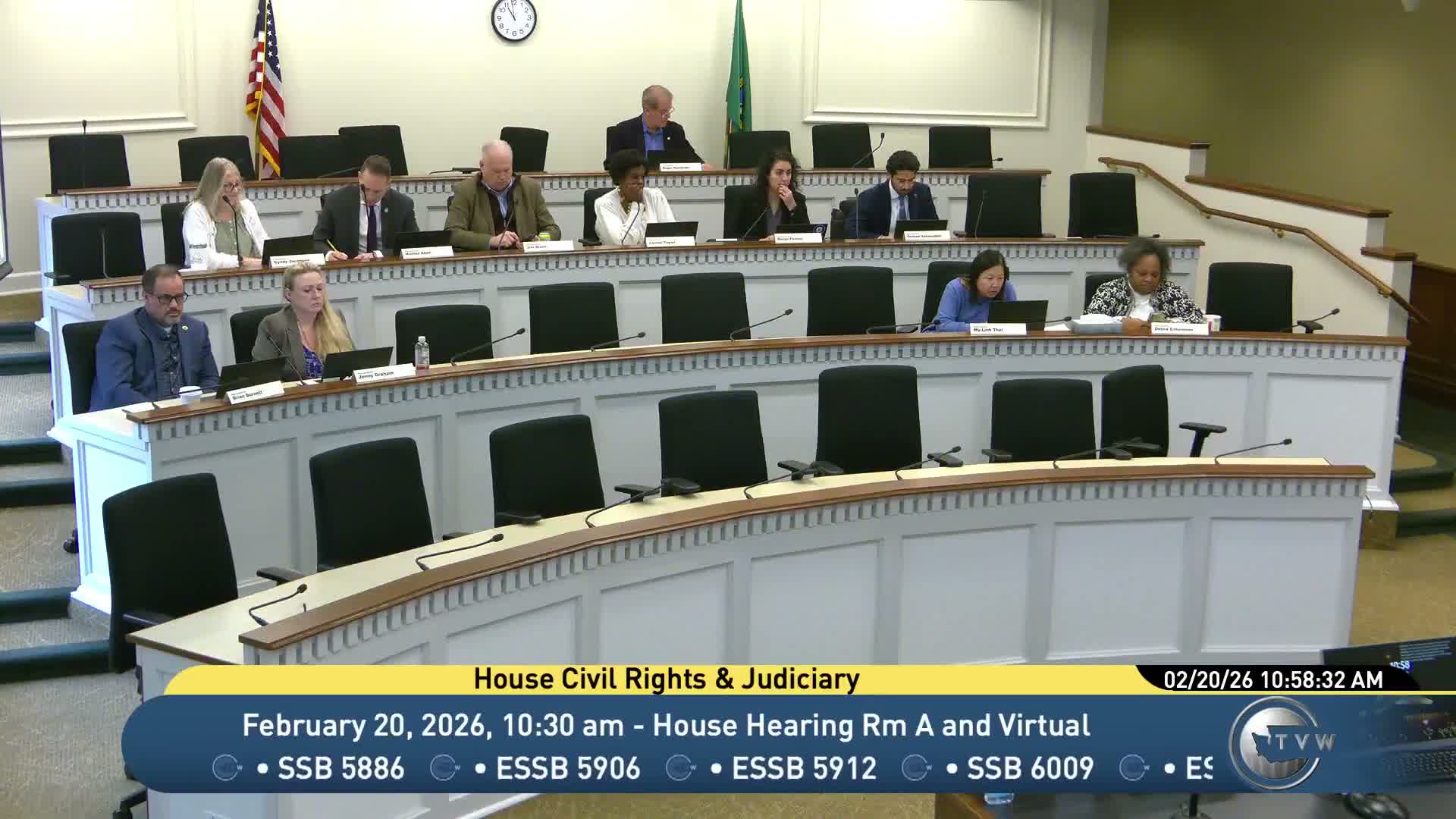
Substitute Senate Bill 5,169 drew extended testimony and partisan questioning on Feb. 26 as prosecutors, forensic interviewers and defenders debated whether to expand the child-hearsay exception.
Staff described the bill’s principal changes: raise the age threshold so hearsay statements by any child under 18 may be admissible in dependency and criminal proceedings (subject to other reliability requirements), broaden the list of offenses that can be described in admissible child statements (including attempted acts and a general expansion to offenses in the chapters concerning exploitation and trafficking), and expand circumstances in which closed-circuit testimony is permitted to include attempted offenses.
Prosecutors and forensic interviewers told the committee the expansion is necessary for effective prosecution of trafficking, homicide and other violent offenses. Corinne Schneff (Pierce County prosecutor) said child-hearsay exclusions currently prevent admission of statements where children witnessed violent crime, and she described patterns in trafficking prosecutions where young witnesses provide evidence of harms to others. Sarah Park (prosecutor) described a six-year-old who provided detailed forensic interview information but could not repeat that detail on the stand; Carrie Arnold (forensic interviewer) and Anita Petro (Benton County prosecutor) described national accreditation standards for forensic interviews, training requirements for interviewers, and the judicial hearing process that tests reliability before a judge admits statements.
Defense and youth-advocate witnesses opposed the expansion. Kate Benward (King County Department of Public Defense) cited Ohio v. Clark and said the Supreme Court’s jurisprudence supports narrow exceptions that target very young children and ongoing emergencies; she warned that raising the age to 18 would make Washington an outlier and invite legal challenges. Alexandra Narvaez (Legal Counsel for Youth and Children) and Sarah Hudson (Washington Defender Association) argued the bill risks diluting confrontation protections and could subject teenagers involved in peer incidents (e.g., student-on-student accusations) to weaker procedural safeguards.
Committee members asked about safeguards to prevent ‘‘weaponizing’’ child testimony, training standards for interviewers, and how judges will continue to apply confrontation and reliability tests. Prosecutors reiterated that the bill does not remove confrontation rights: courts still conduct hearsay hearings, defense counsel may cross-examine witnesses, and judges retain gatekeeping authority.
No vote was taken on SB 5,169. The record shows a clear divide: prosecutors stressed prosecutorial need and trauma-informed interviewing practices, while defenders emphasized constitutional and practical risks of expanding the hearsay exception to older minors.
Staff described the bill’s principal changes: raise the age threshold so hearsay statements by any child under 18 may be admissible in dependency and criminal proceedings (subject to other reliability requirements), broaden the list of offenses that can be described in admissible child statements (including attempted acts and a general expansion to offenses in the chapters concerning exploitation and trafficking), and expand circumstances in which closed-circuit testimony is permitted to include attempted offenses.
Prosecutors and forensic interviewers told the committee the expansion is necessary for effective prosecution of trafficking, homicide and other violent offenses. Corinne Schneff (Pierce County prosecutor) said child-hearsay exclusions currently prevent admission of statements where children witnessed violent crime, and she described patterns in trafficking prosecutions where young witnesses provide evidence of harms to others. Sarah Park (prosecutor) described a six-year-old who provided detailed forensic interview information but could not repeat that detail on the stand; Carrie Arnold (forensic interviewer) and Anita Petro (Benton County prosecutor) described national accreditation standards for forensic interviews, training requirements for interviewers, and the judicial hearing process that tests reliability before a judge admits statements.
Defense and youth-advocate witnesses opposed the expansion. Kate Benward (King County Department of Public Defense) cited Ohio v. Clark and said the Supreme Court’s jurisprudence supports narrow exceptions that target very young children and ongoing emergencies; she warned that raising the age to 18 would make Washington an outlier and invite legal challenges. Alexandra Narvaez (Legal Counsel for Youth and Children) and Sarah Hudson (Washington Defender Association) argued the bill risks diluting confrontation protections and could subject teenagers involved in peer incidents (e.g., student-on-student accusations) to weaker procedural safeguards.
Committee members asked about safeguards to prevent ‘‘weaponizing’’ child testimony, training standards for interviewers, and how judges will continue to apply confrontation and reliability tests. Prosecutors reiterated that the bill does not remove confrontation rights: courts still conduct hearsay hearings, defense counsel may cross-examine witnesses, and judges retain gatekeeping authority.
No vote was taken on SB 5,169. The record shows a clear divide: prosecutors stressed prosecutorial need and trauma-informed interviewing practices, while defenders emphasized constitutional and practical risks of expanding the hearsay exception to older minors.
Don't Miss a Word: See the Full Meeting!
Go beyond summaries. Unlock every video, transcript, and key insight with a Founder Membership.
✓
Get instant access to full meeting videos
✓
Search and clip any phrase from complete transcripts
✓
Receive AI-powered summaries & custom alerts
✓
Enjoy lifetime, unrestricted access to government data
30-day money-back guarantee
