Committee advances bill limiting traffic stops by unmarked cars after contested debate
February 20, 2026 | 2026 Utah Legislature, Utah Legislature, Utah Legislative Branch, Utah
This article was created by AI summarizing key points discussed. AI makes mistakes, so for full details and context, please refer to the video of the full meeting. Please report any errors so we can fix them. Report an error »
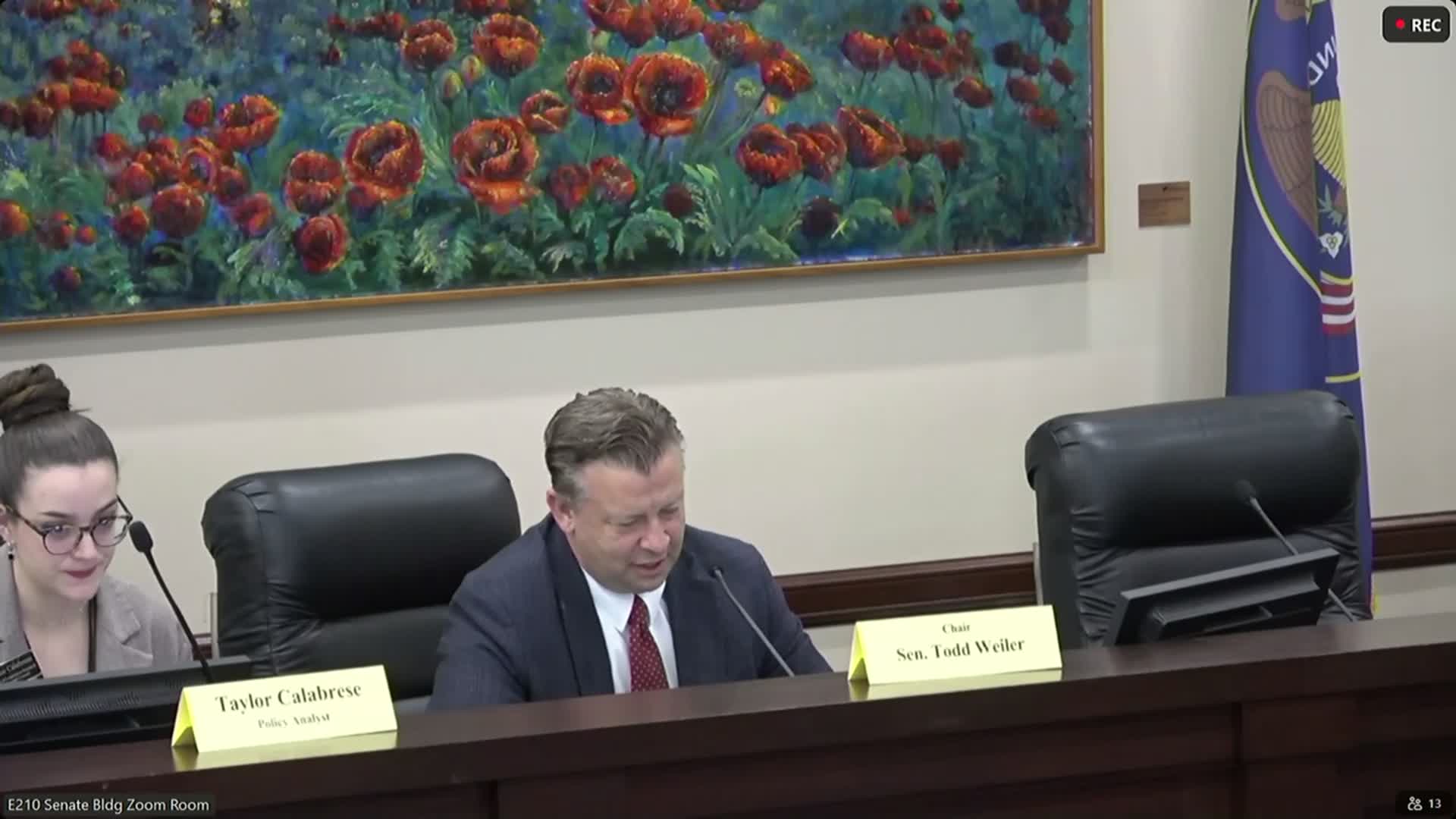
The Senate Judiciary Committee voted 6–1 on Feb. 18 to favorably recommend SB 262, a measure to restrict use of unmarked vehicles for routine traffic enforcement while preserving exceptions for exigent or investigative circumstances.
Senator McKay, sponsor of the bill, said the measure responds to constituent fear and cases of impersonation. "The purpose of the bill is to remove the use of unmarked vehicles for the purpose of traffic enforcement for infractions," he said, describing a constituent who felt unsafe after a stop by what looked like an unmarked vehicle.
Supporters, including policy director Jason Chipman of the Libertas Institute, argued the bill balances safety and enforcement by allowing unmarked stops in emergencies and for undercover investigations. "If the purpose of traffic enforcement is safety, visibility helps," Chipman said.
Law enforcement leaders urged caution. Colonel Greg Hawley (Utah Highway Patrol) said marked cars deter risky driving and voiced opposition to the bill as written because it would limit enforcement tools such as unmarked vans used to detect distracted driving. Sheriff Nathan Curtis and chief and sheriff associations said unmarked vehicles are vital for investigation, school-zone enforcement and protecting informants. "Marked patrol cars are by far the biggest deterrent," Hawley said, but added his office opposed the bill because it would limit certain enforcement projects.
Committee debate focused on technical distinctions (light bars and visibility), rural agencies with limited marked vehicles, and whether a substitute could preserve investigatory capacities. A proposed substitute failed on a 3–4 vote; afterward the committee advanced the original bill 6–1 (Senator Brammer voted no). SB 262 now goes to the Senate floor.
Senator McKay, sponsor of the bill, said the measure responds to constituent fear and cases of impersonation. "The purpose of the bill is to remove the use of unmarked vehicles for the purpose of traffic enforcement for infractions," he said, describing a constituent who felt unsafe after a stop by what looked like an unmarked vehicle.
Supporters, including policy director Jason Chipman of the Libertas Institute, argued the bill balances safety and enforcement by allowing unmarked stops in emergencies and for undercover investigations. "If the purpose of traffic enforcement is safety, visibility helps," Chipman said.
Law enforcement leaders urged caution. Colonel Greg Hawley (Utah Highway Patrol) said marked cars deter risky driving and voiced opposition to the bill as written because it would limit enforcement tools such as unmarked vans used to detect distracted driving. Sheriff Nathan Curtis and chief and sheriff associations said unmarked vehicles are vital for investigation, school-zone enforcement and protecting informants. "Marked patrol cars are by far the biggest deterrent," Hawley said, but added his office opposed the bill because it would limit certain enforcement projects.
Committee debate focused on technical distinctions (light bars and visibility), rural agencies with limited marked vehicles, and whether a substitute could preserve investigatory capacities. A proposed substitute failed on a 3–4 vote; afterward the committee advanced the original bill 6–1 (Senator Brammer voted no). SB 262 now goes to the Senate floor.
View the Full Meeting & All Its Details
This article offers just a summary. Unlock complete video, transcripts, and insights as a Founder Member.
✓
Watch full, unedited meeting videos
✓
Search every word spoken in unlimited transcripts
✓
AI summaries & real-time alerts (all government levels)
✓
Permanent access to expanding government content
30-day money-back guarantee
