Committee holds HB 359 to interim after discussion of preceptor fund and administration
February 20, 2026 | 2026 Utah Legislature, Utah Legislature, Utah Legislative Branch, Utah
This article was created by AI summarizing key points discussed. AI makes mistakes, so for full details and context, please refer to the video of the full meeting. Please report any errors so we can fix them. Report an error »
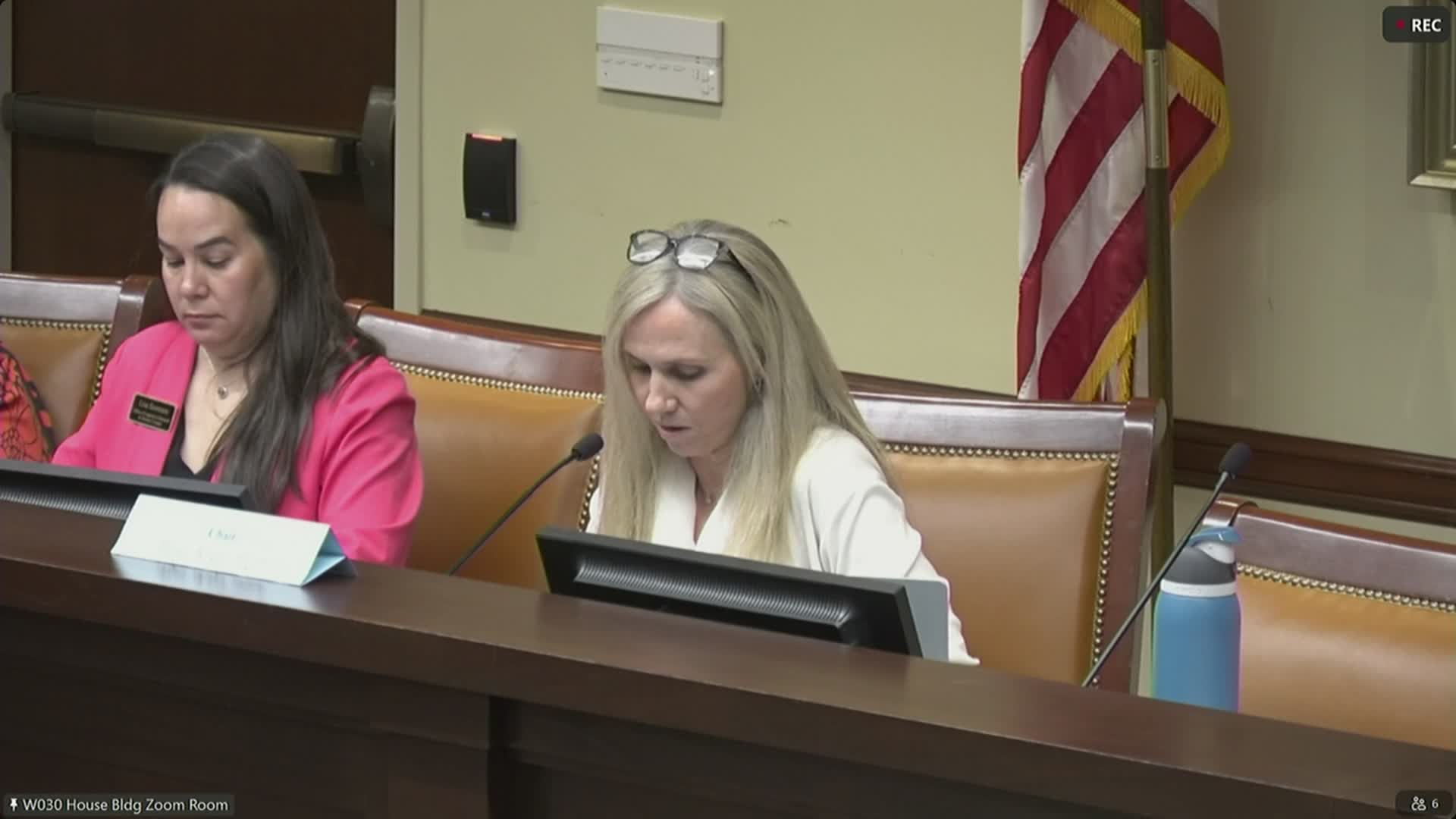
Representative Monson introduced House Bill 359, the Healthcare Preceptor Amendments, as a voluntary plan to expand training capacity by creating a preceptor fund and allowing donations (including opt‑in donations at license renewal) for payments to clinicians who train students. Monson told the committee the bill contains no mandates and is intended to increase the number of clinicians willing to precept students.
Teresa Garrett, co‑lead of the Utah Action Coalition and chair of the Utah Health Workforce Advisory Council’s legislative review subcommittee, urged support, saying Utah faces a growing "preceptor bottleneck." Garrett told the committee the council’s analysis shows that by 2031 the state will need roughly 3,000 more preceptorships — a 57% increase — to meet projected training needs for physicians, physician assistants and advanced practice registered nurses. Garrett said the bill implements a funding mechanism recommended by the advisory body.
Physicians, program directors and educators who testified supported the bill’s intent but flagged practical gaps. Jared Spackman, director of the University of Utah physician assistant program, said PA programs now require large numbers of clinical rotations (the state’s PA programs have combined enrollment of about 150 students and may require up to 1,800 rotations annually) and that financial incentives are a primary driver of preceptor recruitment. Maryann Martin of the Utah Academy of Family Physicians cautioned the bill’s eligibility language could unintentionally exclude some medical schools and said the funding mechanism remains vague. Dr. Jonathan Baird (Rocky Mountain University) and Lindsay Drew (Dean, Nordic College of Osteopathic Medicine) urged continued work to coordinate programs, track competency, and protect training quality.
Committee members pressed on details. Rep. Ward asked whether the "3,000" figure refers to concurrent slots or total annual rotations and whether a preliminary stipend (discussed as roughly $1,000 for about 160 hours/four weeks of precepting) would be adequate in busy clinical settings. The sponsor and witnesses said the figure stems from multiplying required rotation types per learner by program growth and that rulemaking authority would be given to the Department to set application, prioritization, and payment processes.
After discussion and public input requesting more time to resolve eligibility, administrative timing and funding particulars (including an industry request for a delayed effective date to ease administration), Representative Gracious moved to hold HB 359 for interim study to allow additional stakeholder work. The motion passed by voice vote. The sponsor expressed willingness to continue working with programs and stakeholders during the interim.
Next steps: HB 359 was held for interim study; proponents and stakeholders will have an opportunity to refine fund rules, eligibility and administrative timelines before the bill returns to committee.
Teresa Garrett, co‑lead of the Utah Action Coalition and chair of the Utah Health Workforce Advisory Council’s legislative review subcommittee, urged support, saying Utah faces a growing "preceptor bottleneck." Garrett told the committee the council’s analysis shows that by 2031 the state will need roughly 3,000 more preceptorships — a 57% increase — to meet projected training needs for physicians, physician assistants and advanced practice registered nurses. Garrett said the bill implements a funding mechanism recommended by the advisory body.
Physicians, program directors and educators who testified supported the bill’s intent but flagged practical gaps. Jared Spackman, director of the University of Utah physician assistant program, said PA programs now require large numbers of clinical rotations (the state’s PA programs have combined enrollment of about 150 students and may require up to 1,800 rotations annually) and that financial incentives are a primary driver of preceptor recruitment. Maryann Martin of the Utah Academy of Family Physicians cautioned the bill’s eligibility language could unintentionally exclude some medical schools and said the funding mechanism remains vague. Dr. Jonathan Baird (Rocky Mountain University) and Lindsay Drew (Dean, Nordic College of Osteopathic Medicine) urged continued work to coordinate programs, track competency, and protect training quality.
Committee members pressed on details. Rep. Ward asked whether the "3,000" figure refers to concurrent slots or total annual rotations and whether a preliminary stipend (discussed as roughly $1,000 for about 160 hours/four weeks of precepting) would be adequate in busy clinical settings. The sponsor and witnesses said the figure stems from multiplying required rotation types per learner by program growth and that rulemaking authority would be given to the Department to set application, prioritization, and payment processes.
After discussion and public input requesting more time to resolve eligibility, administrative timing and funding particulars (including an industry request for a delayed effective date to ease administration), Representative Gracious moved to hold HB 359 for interim study to allow additional stakeholder work. The motion passed by voice vote. The sponsor expressed willingness to continue working with programs and stakeholders during the interim.
Next steps: HB 359 was held for interim study; proponents and stakeholders will have an opportunity to refine fund rules, eligibility and administrative timelines before the bill returns to committee.
View the Full Meeting & All Its Details
This article offers just a summary. Unlock complete video, transcripts, and insights as a Founder Member.
✓
Watch full, unedited meeting videos
✓
Search every word spoken in unlimited transcripts
✓
AI summaries & real-time alerts (all government levels)
✓
Permanent access to expanding government content
30-day money-back guarantee
