Union County Water donates children’s STEM books to Union County libraries and schools
February 20, 2026 | Union County, North Carolina
This article was created by AI summarizing key points discussed. AI makes mistakes, so for full details and context, please refer to the video of the full meeting. Please report any errors so we can fix them. Report an error »
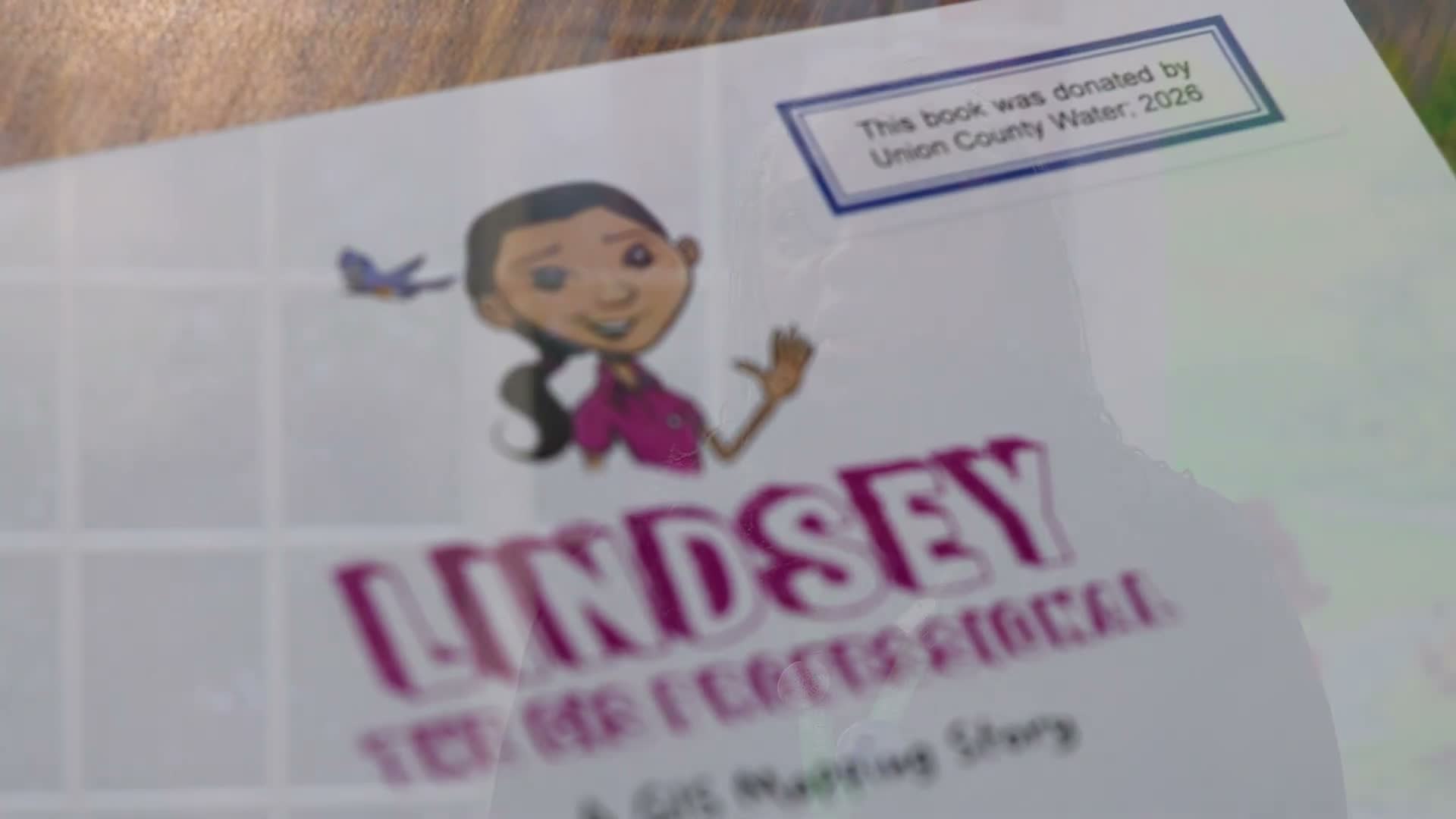
Union County Water partnered with the Union County Library "to present a series of books that we are making available to our patrons," Speaker 1 said, announcing a donation of children’s STEM-focused titles at the library.
The donation includes a copy of the "Lindsay GIS specialist" book and is part of an ongoing program Speaker 2 described as a three-year effort to put donated books into each elementary school and library in the county. "We have done this for 3 years in a row where we have donated books to each elementary school in the county and to the libraries," Speaker 2 said.
Library staff framed the program as part of children’s services designed to build critical thinking and career awareness. Speaker 1 said library programs aim to "give them critical thinking for themselves and give them an idea of what they want to do," and emphasized that the library reaches not only students in classrooms but also homeschool families and other patrons.
Speakers described multiple ways patrons can access the donated materials: via the library website search and the mobile app, from home on a computer or tablet, and in the library at OPAC kiosks. "When you come inside the library, we have something that's called an OPAC, which is our online catalog," Speaker 1 said.
According to Speaker 2, the donations have helped expand outreach: library and water-utility staff now visit classrooms to teach about the wastewater cycle and careers. Speaker 2 said children respond eagerly and demonstrate familiarity with basic water-safety concepts, noting that students ask where their water comes from and what should go down the drain.
Speakers did not provide total counts of books distributed or the precise number of students reached beyond saying copies were placed in each elementary school and library; funding sources were not specified. The presenters said the program will continue classroom visits tied to the donated books.
The donation includes a copy of the "Lindsay GIS specialist" book and is part of an ongoing program Speaker 2 described as a three-year effort to put donated books into each elementary school and library in the county. "We have done this for 3 years in a row where we have donated books to each elementary school in the county and to the libraries," Speaker 2 said.
Library staff framed the program as part of children’s services designed to build critical thinking and career awareness. Speaker 1 said library programs aim to "give them critical thinking for themselves and give them an idea of what they want to do," and emphasized that the library reaches not only students in classrooms but also homeschool families and other patrons.
Speakers described multiple ways patrons can access the donated materials: via the library website search and the mobile app, from home on a computer or tablet, and in the library at OPAC kiosks. "When you come inside the library, we have something that's called an OPAC, which is our online catalog," Speaker 1 said.
According to Speaker 2, the donations have helped expand outreach: library and water-utility staff now visit classrooms to teach about the wastewater cycle and careers. Speaker 2 said children respond eagerly and demonstrate familiarity with basic water-safety concepts, noting that students ask where their water comes from and what should go down the drain.
Speakers did not provide total counts of books distributed or the precise number of students reached beyond saying copies were placed in each elementary school and library; funding sources were not specified. The presenters said the program will continue classroom visits tied to the donated books.
Don't Miss a Word: See the Full Meeting!
Go beyond summaries. Unlock every video, transcript, and key insight with a Founder Membership.
✓
Get instant access to full meeting videos
✓
Search and clip any phrase from complete transcripts
✓
Receive AI-powered summaries & custom alerts
✓
Enjoy lifetime, unrestricted access to government data
30-day money-back guarantee
