Judge and prosecutors urge narrowing of S.B. 186 after warnings it could allow unrelated pleas for juveniles
February 20, 2026 | Judiciary, SENATE, Committees, Legislative , Vermont
This article was created by AI summarizing key points discussed. AI makes mistakes, so for full details and context, please refer to the video of the full meeting. Please report any errors so we can fix them. Report an error »
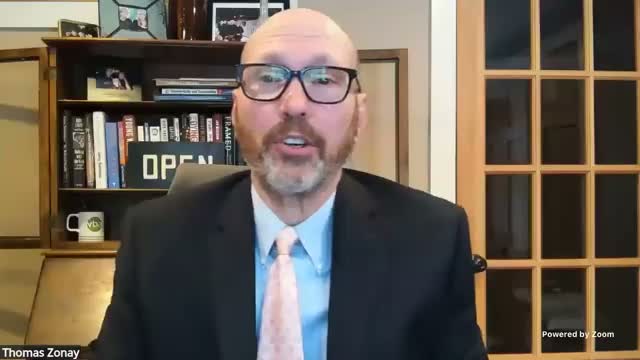
On Feb. 20, the Judiciary Committee took testimony on S.B. 186, a proposal that would allow juveniles charged with certain felony offenses to enter plea agreements in the criminal division to offenses other than the original charge. Tom Zone, chief superior judge, and Kim McManus of the Department of State's Attorneys and Sheriffs told the committee the bill’s current language could broaden criminal-court pleas in ways the committee might not intend.
Tom Zone said he would focus on operational effects rather than policy but warned the statute contains no requirement that a plea be related to the jurisdictional charge. “There’s nothing in the statute that requires a relationship,” Zone said, illustrating a hypothetical in which an aggravated-assault case could be resolved by pleading to an unrelated misdemeanor such as unlawful trespass. He said allowing certain pleas in criminal court can be more efficient, but without a nexus requirement the provision could be used to move matters out of juvenile (family) court that the legislature intended to remain there.
Committee members pressed for clarity about consequences. A member asked whether a juvenile who pleaded in criminal division would retain the privacy protections afforded in family court; Zone replied no, and emphasized the choice rests with the child in consultation with counsel rather than being imposed by the state.
Kim McManus, representing the Department of State’s Attorneys and Sheriffs, echoed concerns about the bill’s wording on page 2. She warned that a strict reading of the current draft could be interpreted to mean a juvenile “could only plead in criminal court to something other than the offense they were charged with,” potentially barring pleas to the originally charged offense when that would be appropriate. McManus recommended statutory language that explicitly allows pleas to the charged offense, “a related offense,” or a “lesser-included offense,” or similar drafting that preserves prosecutorial and defense flexibility while preventing unrelated charges from being used as a substitute.
Senator Felderston asked whether starting all cases in family court and transferring only those requiring criminal jurisdiction would make the bill unnecessary; Zone replied that if that were the practice the bill’s purpose would be moot. Committee members agreed the draft should be tightened to preserve a nexus to underlying conduct and to avoid swallowing the statute’s intent to route many matters to juvenile court.
The committee asked the witnesses to provide suggested language for the committee counsel (and mentioned reaching out to Valerio) and did not take a vote. The record shows the committee will request drafting edits to clarify whether pleas must be to the charged offense, a related offense, or a lesser-included offense and will follow up with witnesses and counsel before further action.
Tom Zone said he would focus on operational effects rather than policy but warned the statute contains no requirement that a plea be related to the jurisdictional charge. “There’s nothing in the statute that requires a relationship,” Zone said, illustrating a hypothetical in which an aggravated-assault case could be resolved by pleading to an unrelated misdemeanor such as unlawful trespass. He said allowing certain pleas in criminal court can be more efficient, but without a nexus requirement the provision could be used to move matters out of juvenile (family) court that the legislature intended to remain there.
Committee members pressed for clarity about consequences. A member asked whether a juvenile who pleaded in criminal division would retain the privacy protections afforded in family court; Zone replied no, and emphasized the choice rests with the child in consultation with counsel rather than being imposed by the state.
Kim McManus, representing the Department of State’s Attorneys and Sheriffs, echoed concerns about the bill’s wording on page 2. She warned that a strict reading of the current draft could be interpreted to mean a juvenile “could only plead in criminal court to something other than the offense they were charged with,” potentially barring pleas to the originally charged offense when that would be appropriate. McManus recommended statutory language that explicitly allows pleas to the charged offense, “a related offense,” or a “lesser-included offense,” or similar drafting that preserves prosecutorial and defense flexibility while preventing unrelated charges from being used as a substitute.
Senator Felderston asked whether starting all cases in family court and transferring only those requiring criminal jurisdiction would make the bill unnecessary; Zone replied that if that were the practice the bill’s purpose would be moot. Committee members agreed the draft should be tightened to preserve a nexus to underlying conduct and to avoid swallowing the statute’s intent to route many matters to juvenile court.
The committee asked the witnesses to provide suggested language for the committee counsel (and mentioned reaching out to Valerio) and did not take a vote. The record shows the committee will request drafting edits to clarify whether pleas must be to the charged offense, a related offense, or a lesser-included offense and will follow up with witnesses and counsel before further action.
View the Full Meeting & All Its Details
This article offers just a summary. Unlock complete video, transcripts, and insights as a Founder Member.
✓
Watch full, unedited meeting videos
✓
Search every word spoken in unlimited transcripts
✓
AI summaries & real-time alerts (all government levels)
✓
Permanent access to expanding government content
30-day money-back guarantee
