Madison County staff flag radio, vehicle and insurance anomalies during sheriff's office budget review
February 20, 2026 | Madison County, Iowa
This article was created by AI summarizing key points discussed. AI makes mistakes, so for full details and context, please refer to the video of the full meeting. Please report any errors so we can fix them. Report an error »
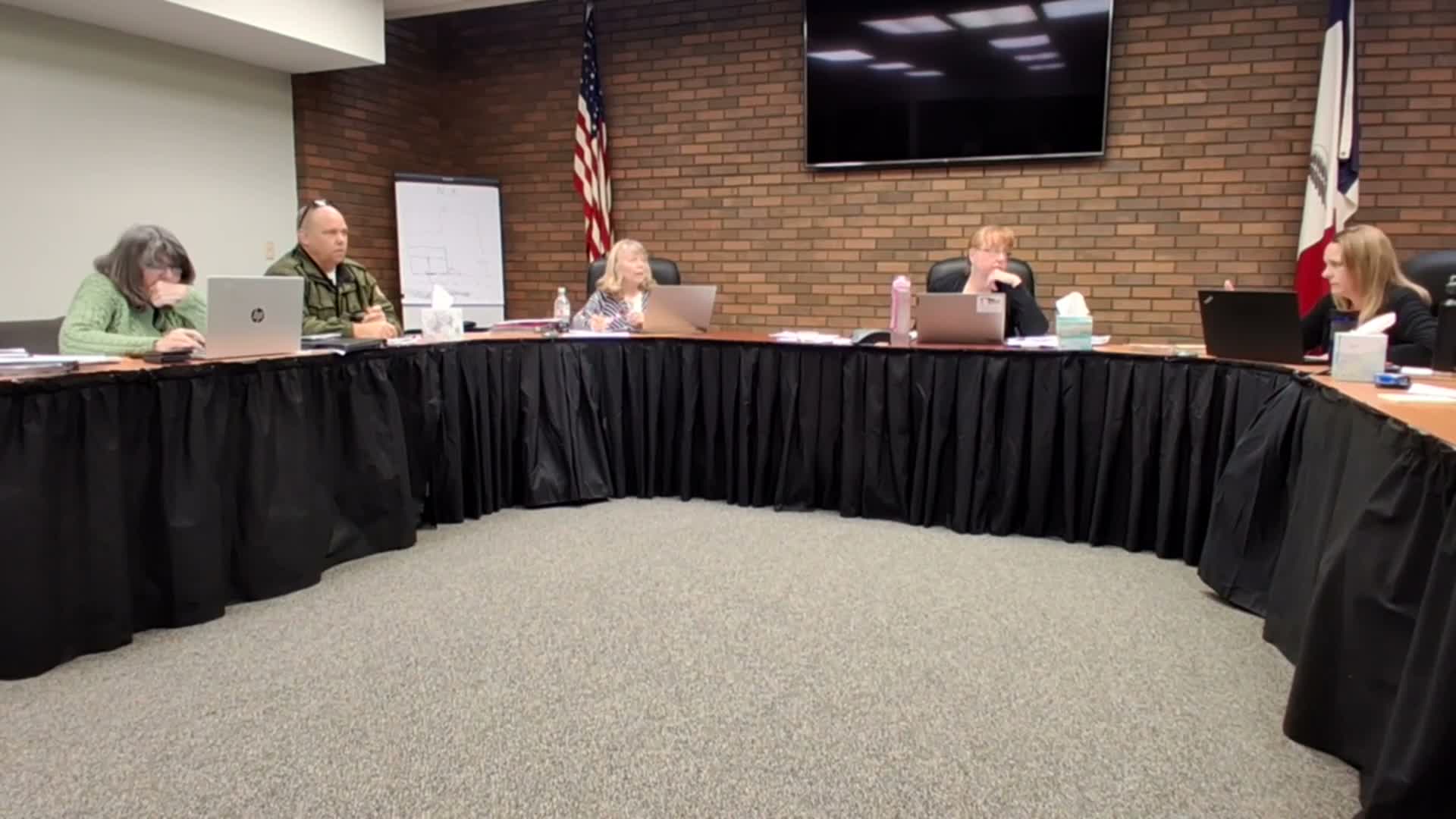
Unidentified meeting participants (Speaker 1, Speaker 2 and Speaker 3) led a line-by-line review of the Madison County sheriff's office draft budget, flagging elevated radio and call-taking costs, a likely misposted insurance payment and plans to split two new patrol-vehicle purchases between the general basic and rural basic funds.
The review focused on several cost centers. "We spent 1000000 dollars on it," Speaker 1 said when describing recent tower work that updated radio connectivity; participants agreed the county's radio platform is current. Yet Speaker 3 and others also pointed to a radio equipment line that showed about $25,000 spent while the current-year budget listed only $1,000. "I think something might have gotten...maybe get credited into the wrong year," Speaker 1 said, noting the insurance payment may have been entered on the expenditure sheet instead of the revenue sheet.
Why it matters: the $25,000 anomaly and new contract fees push several radio- and dispatch-related line items well above prior budgeted amounts, and reconciling those entries will determine whether the county needs to reallocate funds or adjust projections.
Participants attributed some increases to vendor and contract changes. Speaker 2 said fees rose because of fingerprint-scanning vendor charges (Idema) and a new call-taking contract (Zetron and related terminal fees) that moved costs from a budgeted $15,000 toward about $25,000. "It cost us 25,000 already," Speaker 3 said of the call-taking work. Speakers noted other terminal fees (Department of Public Safety and related vendors) as drivers of the jump.
Vehicle purchases and fund splits were confirmed: participants agreed two vehicles will be purchased and costs split between general basic and rural basic funds, with one vehicle charged to each fund as in prior years. Speaker 3 summarized the approach: "Because there's 2 cars they're asking for, basically, 1 will come out of basic, general 1 will come out of the rural."
On jail operations, staff reported lower inmate counts and decreased related costs. Speaker 2 said staffing and population trends reduced food and medical expense projections: "We're everything, like, 6 to 7 now," Speaker 2 said, contrasting the current level with budgeted counts of 10 to 12. The group also discussed inmate communications changes: Speaker 3 noted inmates can now text from jail and families fund accounts for messaging; texts are monitored and charged per message, reducing the use of voice phone cards.
Other notable items included a one-time increase tied to a recommended system purchase (referred to in the meeting as Shieldware) that integrated jail, dispatch and records functions and explained a jump in office equipment maintenance/repair budget percentages. Participants also reviewed education and training allocations and flagged several one-time or annual payments (shieldware/RMS, 911 equipment warranty, and software/service fees).
No motions or formal votes were recorded in the transcript; participants said they would pull records to reconcile the insurance posting and verify the line-item history. Speaker 1 said they would "go ahead and pull up records" to investigate the $25,000 figure. The group closed by noting the review is an annual required process and expressing thanks for the review.
Sources: Draft budget documentation reviewed during the meeting and spoken comments by meeting participants identified only as Speaker 1, Speaker 2 and Speaker 3 in the transcript.
The review focused on several cost centers. "We spent 1000000 dollars on it," Speaker 1 said when describing recent tower work that updated radio connectivity; participants agreed the county's radio platform is current. Yet Speaker 3 and others also pointed to a radio equipment line that showed about $25,000 spent while the current-year budget listed only $1,000. "I think something might have gotten...maybe get credited into the wrong year," Speaker 1 said, noting the insurance payment may have been entered on the expenditure sheet instead of the revenue sheet.
Why it matters: the $25,000 anomaly and new contract fees push several radio- and dispatch-related line items well above prior budgeted amounts, and reconciling those entries will determine whether the county needs to reallocate funds or adjust projections.
Participants attributed some increases to vendor and contract changes. Speaker 2 said fees rose because of fingerprint-scanning vendor charges (Idema) and a new call-taking contract (Zetron and related terminal fees) that moved costs from a budgeted $15,000 toward about $25,000. "It cost us 25,000 already," Speaker 3 said of the call-taking work. Speakers noted other terminal fees (Department of Public Safety and related vendors) as drivers of the jump.
Vehicle purchases and fund splits were confirmed: participants agreed two vehicles will be purchased and costs split between general basic and rural basic funds, with one vehicle charged to each fund as in prior years. Speaker 3 summarized the approach: "Because there's 2 cars they're asking for, basically, 1 will come out of basic, general 1 will come out of the rural."
On jail operations, staff reported lower inmate counts and decreased related costs. Speaker 2 said staffing and population trends reduced food and medical expense projections: "We're everything, like, 6 to 7 now," Speaker 2 said, contrasting the current level with budgeted counts of 10 to 12. The group also discussed inmate communications changes: Speaker 3 noted inmates can now text from jail and families fund accounts for messaging; texts are monitored and charged per message, reducing the use of voice phone cards.
Other notable items included a one-time increase tied to a recommended system purchase (referred to in the meeting as Shieldware) that integrated jail, dispatch and records functions and explained a jump in office equipment maintenance/repair budget percentages. Participants also reviewed education and training allocations and flagged several one-time or annual payments (shieldware/RMS, 911 equipment warranty, and software/service fees).
No motions or formal votes were recorded in the transcript; participants said they would pull records to reconcile the insurance posting and verify the line-item history. Speaker 1 said they would "go ahead and pull up records" to investigate the $25,000 figure. The group closed by noting the review is an annual required process and expressing thanks for the review.
Sources: Draft budget documentation reviewed during the meeting and spoken comments by meeting participants identified only as Speaker 1, Speaker 2 and Speaker 3 in the transcript.
View the Full Meeting & All Its Details
This article offers just a summary. Unlock complete video, transcripts, and insights as a Founder Member.
✓
Watch full, unedited meeting videos
✓
Search every word spoken in unlimited transcripts
✓
AI summaries & real-time alerts (all government levels)
✓
Permanent access to expanding government content
30-day money-back guarantee
