Madison County board pauses sale of Public Health building, orders tests and timelines for reuse or sale
February 20, 2026 | Madison County, Iowa
This article was created by AI summarizing key points discussed. AI makes mistakes, so for full details and context, please refer to the video of the full meeting. Please report any errors so we can fix them. Report an error »
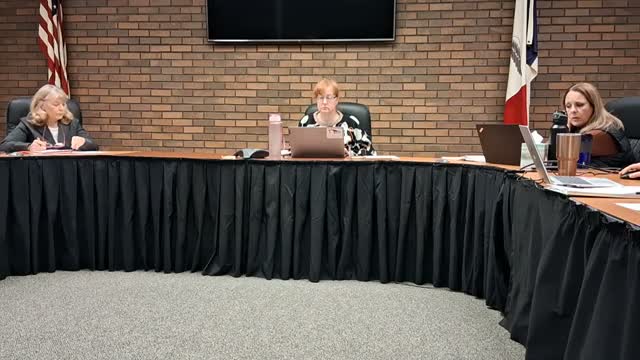
The Madison County Board of Supervisors debated whether to sell the county's Public Health building and directed staff to pursue mold testing, asbestos testing and sewer scoping while finalizing an inventory and a pickup/auction schedule.
Vicki Brenner, who spoke during public comment, urged the board not to rush a sale and alleged there had been a "premeditated plan to infiltrate Madison County government," adding taxpayers had paid "$7,353 for a consulting report" she said may not exist. The board moved to "receive and file" her comments and did not dispute her allegations on the record.
Board members discussed short- and long-term options for housing Veterans Affairs and Department of Human Services (DHS) services. Several supervisors raised concerns that moving Veterans Affairs into the courthouse could reduce privacy and require veterans to walk farther and use non-handicap-accessible restrooms. An alternative under active study is remodeling part of the Elderly Services building so veterans and DHS could have private offices, storage and a conference room.
Staff reported three preliminary mold-testing quotes: Rainbow (Winterset) at $2,013.55, an unspecified nonlocal contractor at about $1,314, and Eocene (West Des Moines) at $2,230. Board members also flagged potential asbestos in the Public Health building and costly, multi-sample asbestos testing. Chip (staff) told the board he would solicit multiple, defined bids so the board can compare comparable scopes for mold, asbestos, duct cleaning and a sewer-camera scope (estimated verbal price range $311
est case to $536 worst case for scoping).
The board agreed to: add "Elderly Services/Public Health" as a standing old-business item; set departmental tagging days (targeted dates discussed around Feb. 9
and a pickup deadline roughly Feb. 20); make an inventory; and prepare a resolution next Tuesday to authorize testing and scoping work pending firm quotes. If items remain unclaimed after the pickup window, the board tentatively plans an auction or disposal.
The supervisors emphasized the need for documentation: a formal inventory of equipment and medical supplies, written contractor quotes that match a clearly defined scope, and a work session to review an ADA report, remodeling priorities and budget impacts before making a final decision on sale or relocation.
Next steps: staff will collect defined contractor scopes and firm quotes for mold and asbestos testing and sewer scoping, prepare an inventory of items in both buildings, circulate a draft resolution and schedule a follow-up work session before the board votes on any sale or contract authorization.
Vicki Brenner, who spoke during public comment, urged the board not to rush a sale and alleged there had been a "premeditated plan to infiltrate Madison County government," adding taxpayers had paid "$7,353 for a consulting report" she said may not exist. The board moved to "receive and file" her comments and did not dispute her allegations on the record.
Board members discussed short- and long-term options for housing Veterans Affairs and Department of Human Services (DHS) services. Several supervisors raised concerns that moving Veterans Affairs into the courthouse could reduce privacy and require veterans to walk farther and use non-handicap-accessible restrooms. An alternative under active study is remodeling part of the Elderly Services building so veterans and DHS could have private offices, storage and a conference room.
Staff reported three preliminary mold-testing quotes: Rainbow (Winterset) at $2,013.55, an unspecified nonlocal contractor at about $1,314, and Eocene (West Des Moines) at $2,230. Board members also flagged potential asbestos in the Public Health building and costly, multi-sample asbestos testing. Chip (staff) told the board he would solicit multiple, defined bids so the board can compare comparable scopes for mold, asbestos, duct cleaning and a sewer-camera scope (estimated verbal price range $311
est case to $536 worst case for scoping).
The board agreed to: add "Elderly Services/Public Health" as a standing old-business item; set departmental tagging days (targeted dates discussed around Feb. 9
and a pickup deadline roughly Feb. 20); make an inventory; and prepare a resolution next Tuesday to authorize testing and scoping work pending firm quotes. If items remain unclaimed after the pickup window, the board tentatively plans an auction or disposal.
The supervisors emphasized the need for documentation: a formal inventory of equipment and medical supplies, written contractor quotes that match a clearly defined scope, and a work session to review an ADA report, remodeling priorities and budget impacts before making a final decision on sale or relocation.
Next steps: staff will collect defined contractor scopes and firm quotes for mold and asbestos testing and sewer scoping, prepare an inventory of items in both buildings, circulate a draft resolution and schedule a follow-up work session before the board votes on any sale or contract authorization.
Don't Miss a Word: See the Full Meeting!
Go beyond summaries. Unlock every video, transcript, and key insight with a Founder Membership.
✓
Get instant access to full meeting videos
✓
Search and clip any phrase from complete transcripts
✓
Receive AI-powered summaries & custom alerts
✓
Enjoy lifetime, unrestricted access to government data
30-day money-back guarantee
