Committee hears split testimony on bill to allow housing in commercial zones
February 20, 2026 | Legislative Sessions, Washington
This article was created by AI summarizing key points discussed. AI makes mistakes, so for full details and context, please refer to the video of the full meeting. Please report any errors so we can fix them. Report an error »
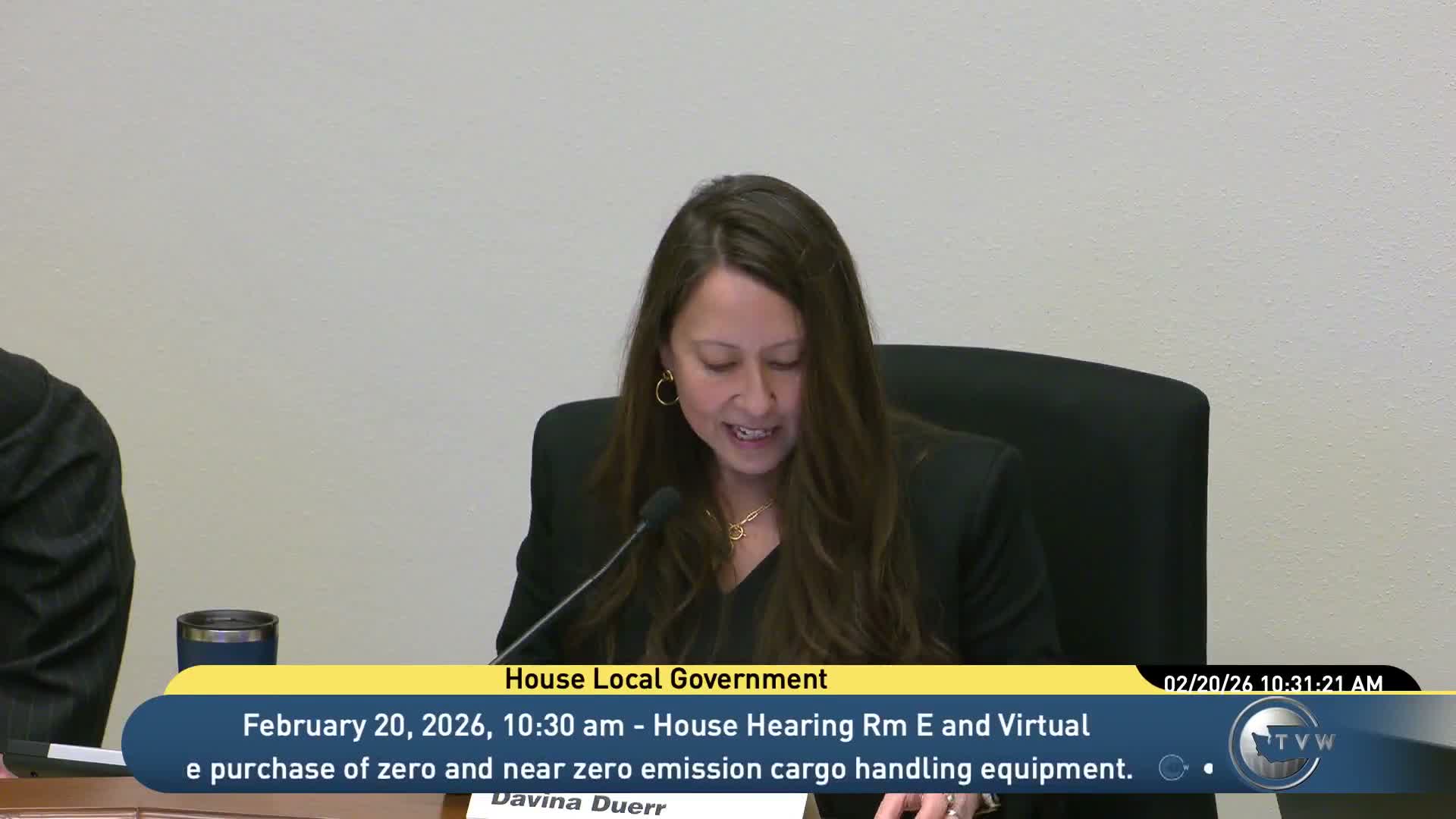
Senators and witnesses told the House Local Government Committee on Feb. 20 that Engrossed Second Substitute Senate Bill 6,026 would unlock underused commercial corridors for housing, but city officials warned the measure could weaken neighborhood retail and require substantial local implementation work.
Sen. Emily Alvarado, the bill's prime sponsor, said the measure aims to "make it easier to build the housing that our state and communities need" by legalizing residential uses in many commercial and mixed‑use zones and by limiting local requirements that mandate ground‑floor commercial space. Alvarado told the committee the bill includes a range of exemptions for areas that the sponsor said are important for placemaking, including transit‑oriented station areas, business improvement areas, historic properties and main streets, and tax incremental financing zones. She also described a pathway for a jurisdiction to seek a blanket exemption after completing an empirical study tied to its next comprehensive plan update.
The bill text, as briefed by Kellen Ryan of committee staff, would prohibit cities planning under the Growth Management Act with populations of 30,000 or more (and non‑rural GMA counties) from categorically excluding residential development in commercial or mixed‑use zones. Localities could not generally require mixed use or ground‑floor commercial as a condition of permitting residential development in those zones, though staff listed statutory exemptions: where a lot contains industrial uses, designated historic landmarks, land outside an urban growth area, proximity to airports or military installations, or property subject to tax increment financing. Publicly subsidized affordable housing would be exempt from the ground‑floor commercial requirement. The bill also creates a regulatory off‑ramp: jurisdictions that adopt regulations within one year of their next comprehensive plan update that are based on an empirical real‑estate economics study can qualify for a blanket exemption. The sponsor and staff repeatedly emphasized that the measure would not forbid ground‑floor retail; it would remove the authority to require it in most qualifying areas.
Supporters framed the bill as a pragmatic tool to convert vacant strip malls, closed big‑box stores and underused retail corridors into housing near existing infrastructure. The Lieutenant Governor told the committee the state study he commissioned shows "immense potential" to add housing through conversion, and said SB 6,026 is "the most important housing bill this legislature will consider this year." Dave Anderson, managing director of the Growth Management Program at the Department of Commerce, said the bill "does not allow a city to require ground‑floor retail," but that it still leaves cities "free to allow" such retail where the market supports it.
Developers and housing advocates urged passage. Carter Nelson of the Commercial Real Estate Development Association and Alex Hirt of the Master Builders Association said the bill creates predictability and would unblock projects that currently "don't pencil" because of ground‑floor commercial requirements. Jesse Simpson of the Housing Development Consortium said the change would particularly help affordable housing projects that use the low‑income housing tax credit, which cannot easily finance commercial leasable space.
Opponents included mayors and planning directors from cities that said they have already invested heavily in tailored zoning to produce walkable, mixed‑use neighborhoods. Moe Malakoutian, mayor of Bellevue, said Bellevue's recent code work increased height, reduced setbacks and adjusted first‑floor retail standards to balance housing and essential neighborhood services; he warned that removing authority to require ground‑floor commercial could encourage lower‑density projects that "weaken the walkable, mixed‑use neighborhoods we are working to build." Redmond, Kirkland, Bothell, Kent and Lakewood officials and planners cited fiscal and implementation burdens, potential loss of grocery stores and small businesses, and design and livability issues for ground‑floor residential units.
The sponsor acknowledged ongoing concerns and said she and the administration are continuing conversations with cities and stakeholders about calibration and implementation. The bill includes an incentive pathway (allowing local governments to retain ground‑floor commercial requirements in larger‑height zones up to about 85 feet) and multiple carve‑outs; it sets an effective deadline for some provisions that staff noted in the briefing.
The committee did not take a final floor vote on SB 6,026 during the Feb. 20 session. After extensive testimony for and against the bill, the committee adjourned pending further work and potential amendments.
Sen. Emily Alvarado, the bill's prime sponsor, said the measure aims to "make it easier to build the housing that our state and communities need" by legalizing residential uses in many commercial and mixed‑use zones and by limiting local requirements that mandate ground‑floor commercial space. Alvarado told the committee the bill includes a range of exemptions for areas that the sponsor said are important for placemaking, including transit‑oriented station areas, business improvement areas, historic properties and main streets, and tax incremental financing zones. She also described a pathway for a jurisdiction to seek a blanket exemption after completing an empirical study tied to its next comprehensive plan update.
The bill text, as briefed by Kellen Ryan of committee staff, would prohibit cities planning under the Growth Management Act with populations of 30,000 or more (and non‑rural GMA counties) from categorically excluding residential development in commercial or mixed‑use zones. Localities could not generally require mixed use or ground‑floor commercial as a condition of permitting residential development in those zones, though staff listed statutory exemptions: where a lot contains industrial uses, designated historic landmarks, land outside an urban growth area, proximity to airports or military installations, or property subject to tax increment financing. Publicly subsidized affordable housing would be exempt from the ground‑floor commercial requirement. The bill also creates a regulatory off‑ramp: jurisdictions that adopt regulations within one year of their next comprehensive plan update that are based on an empirical real‑estate economics study can qualify for a blanket exemption. The sponsor and staff repeatedly emphasized that the measure would not forbid ground‑floor retail; it would remove the authority to require it in most qualifying areas.
Supporters framed the bill as a pragmatic tool to convert vacant strip malls, closed big‑box stores and underused retail corridors into housing near existing infrastructure. The Lieutenant Governor told the committee the state study he commissioned shows "immense potential" to add housing through conversion, and said SB 6,026 is "the most important housing bill this legislature will consider this year." Dave Anderson, managing director of the Growth Management Program at the Department of Commerce, said the bill "does not allow a city to require ground‑floor retail," but that it still leaves cities "free to allow" such retail where the market supports it.
Developers and housing advocates urged passage. Carter Nelson of the Commercial Real Estate Development Association and Alex Hirt of the Master Builders Association said the bill creates predictability and would unblock projects that currently "don't pencil" because of ground‑floor commercial requirements. Jesse Simpson of the Housing Development Consortium said the change would particularly help affordable housing projects that use the low‑income housing tax credit, which cannot easily finance commercial leasable space.
Opponents included mayors and planning directors from cities that said they have already invested heavily in tailored zoning to produce walkable, mixed‑use neighborhoods. Moe Malakoutian, mayor of Bellevue, said Bellevue's recent code work increased height, reduced setbacks and adjusted first‑floor retail standards to balance housing and essential neighborhood services; he warned that removing authority to require ground‑floor commercial could encourage lower‑density projects that "weaken the walkable, mixed‑use neighborhoods we are working to build." Redmond, Kirkland, Bothell, Kent and Lakewood officials and planners cited fiscal and implementation burdens, potential loss of grocery stores and small businesses, and design and livability issues for ground‑floor residential units.
The sponsor acknowledged ongoing concerns and said she and the administration are continuing conversations with cities and stakeholders about calibration and implementation. The bill includes an incentive pathway (allowing local governments to retain ground‑floor commercial requirements in larger‑height zones up to about 85 feet) and multiple carve‑outs; it sets an effective deadline for some provisions that staff noted in the briefing.
The committee did not take a final floor vote on SB 6,026 during the Feb. 20 session. After extensive testimony for and against the bill, the committee adjourned pending further work and potential amendments.
View the Full Meeting & All Its Details
This article offers just a summary. Unlock complete video, transcripts, and insights as a Founder Member.
✓
Watch full, unedited meeting videos
✓
Search every word spoken in unlimited transcripts
✓
AI summaries & real-time alerts (all government levels)
✓
Permanent access to expanding government content
30-day money-back guarantee
