Panel Hears Competing Views on Childcare Workforce Standards Board Proposal
February 20, 2026 | Legislative Sessions, Washington
This article was created by AI summarizing key points discussed. AI makes mistakes, so for full details and context, please refer to the video of the full meeting. Please report any errors so we can fix them. Report an error »
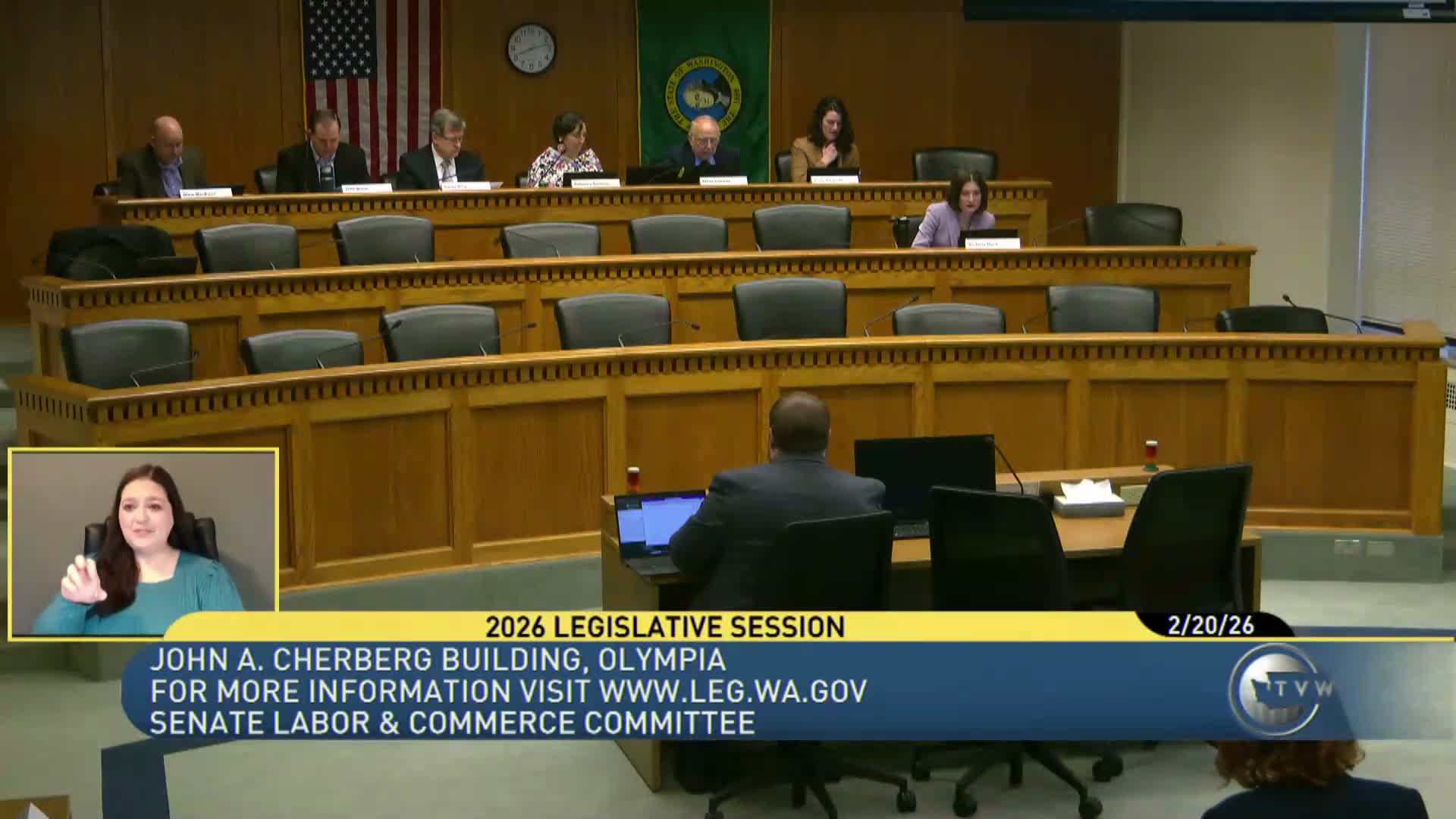
The Labor & Commerce Committee heard extensive public testimony on second substitute House Bill 11-28, which would create a childcare workforce standards board to study and recommend staffing, recruitment, retention and compensation policies.
Rep. Mary Fosse, the bill’s prime sponsor, framed the measure as a response to a statewide childcare workforce crisis that undermines economic participation. “We’ve seen this model work in other states,” she said, adding that recent research shows high stress among childcare staff: “over 80 percent of childcare educators are skipping meal breaks.”
Front-line childcare workers and directors provided accounts of understaffing and financial pressure. Amy Tucker, an instructional assistant, testified that many early-education staff hold multiple jobs and face burnout; Sumayya Iman, a classroom teacher, said staff regularly work while sick because substitutes are unavailable.
Opponents — including large providers and industry associations — warned the proposed board could duplicate existing efforts and produce unfunded wage recommendations that small and rural providers could not absorb. Erin Hayden of Learning Care Group said the bill “creates redundancies” and risks tuition increases or closures without targeted funding. Laura Murphy, who operates childcare centers in Yakima, said providers in her area could not pass on costs to families and urged rejection absent dedicated funding.
Supporters said the board’s role would be advisory and that it would elevate worker, parent and employer voices. Rep. Fosse and others emphasized the intent to coordinate with existing initiatives such as the cost-of-quality rate model and to rely on stakeholder input.
Committee members acknowledged the depth of testimony and the funding concerns; the hearing was paused for executive session on other items and no committee vote on HB 11-28 was recorded during the session.
Rep. Mary Fosse, the bill’s prime sponsor, framed the measure as a response to a statewide childcare workforce crisis that undermines economic participation. “We’ve seen this model work in other states,” she said, adding that recent research shows high stress among childcare staff: “over 80 percent of childcare educators are skipping meal breaks.”
Front-line childcare workers and directors provided accounts of understaffing and financial pressure. Amy Tucker, an instructional assistant, testified that many early-education staff hold multiple jobs and face burnout; Sumayya Iman, a classroom teacher, said staff regularly work while sick because substitutes are unavailable.
Opponents — including large providers and industry associations — warned the proposed board could duplicate existing efforts and produce unfunded wage recommendations that small and rural providers could not absorb. Erin Hayden of Learning Care Group said the bill “creates redundancies” and risks tuition increases or closures without targeted funding. Laura Murphy, who operates childcare centers in Yakima, said providers in her area could not pass on costs to families and urged rejection absent dedicated funding.
Supporters said the board’s role would be advisory and that it would elevate worker, parent and employer voices. Rep. Fosse and others emphasized the intent to coordinate with existing initiatives such as the cost-of-quality rate model and to rely on stakeholder input.
Committee members acknowledged the depth of testimony and the funding concerns; the hearing was paused for executive session on other items and no committee vote on HB 11-28 was recorded during the session.
View the Full Meeting & All Its Details
This article offers just a summary. Unlock complete video, transcripts, and insights as a Founder Member.
✓
Watch full, unedited meeting videos
✓
Search every word spoken in unlimited transcripts
✓
AI summaries & real-time alerts (all government levels)
✓
Permanent access to expanding government content
30-day money-back guarantee
