Fish & Wildlife Commission ends work on current draft conservation policy
February 14, 2026 | Board Council Commission Agencies , Executive, Washington
This article was created by AI summarizing key points discussed. AI makes mistakes, so for full details and context, please refer to the video of the full meeting. Please report any errors so we can fix them. Report an error »
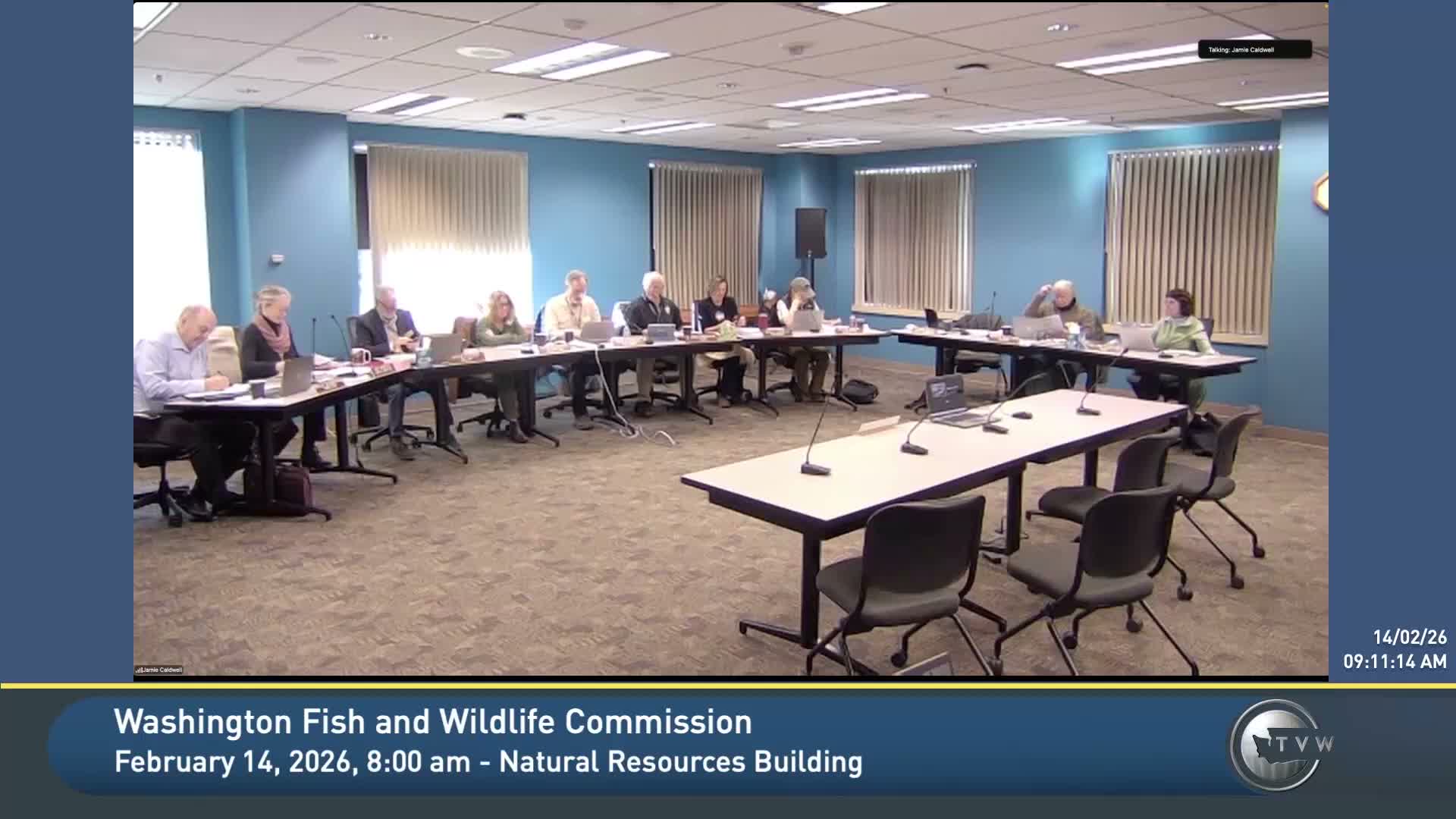
The Washington Fish and Wildlife Commission voted on Feb. 14 to discontinue work on the current draft conservation policy and to end further discussion of that specific draft with tribes and the public.
The motion, introduced and read aloud by the Vice Chair and seconded, incorporated a friendly amendment clarifying that the action applied to the current draft rather than to future conservation work. Chair Jim Anderson called the question and the motion carried on a voice vote at the meeting in Olympia.
Commissioners described the vote as a response to procedural missteps and to concerns raised during earlier public outreach and tribal consultation. Commissioner Smith said the commission's errors were largely procedural and tied to insufficient early engagement with co‑managers, while other commissioners said the concept of conservation remains central to the agency's mission and that discrete elements of the draft could be revisited in other formats.
Several commissioners urged that the commission still needs a clear way to address conservation topics over time. Commissioner Baker suggested breaking the draft into prioritized components and proceeding piecemeal where appropriate; Commissioner Roland asked if certain topics like the precautionary principle could be extracted for separate presentation or discussion.
The vote removed the current draft from active consideration but did not prohibit future work on conservation topics. Commissioners directed that, if the commission chooses to address conservation again, it should do so with clearer process, earlier engagement of partners and tribes, and lessons learned from the draft's shortcomings. Chair Anderson said staff and commissioners would return with options on how to proceed on conservation-related issues in the future.
The motion and vote were the formal outcome recorded on the matter at the meeting; commissioners did not adopt any replacement policy at the session and delegated follow-up process and timing to the commission's decision-making process going forward.
The motion, introduced and read aloud by the Vice Chair and seconded, incorporated a friendly amendment clarifying that the action applied to the current draft rather than to future conservation work. Chair Jim Anderson called the question and the motion carried on a voice vote at the meeting in Olympia.
Commissioners described the vote as a response to procedural missteps and to concerns raised during earlier public outreach and tribal consultation. Commissioner Smith said the commission's errors were largely procedural and tied to insufficient early engagement with co‑managers, while other commissioners said the concept of conservation remains central to the agency's mission and that discrete elements of the draft could be revisited in other formats.
Several commissioners urged that the commission still needs a clear way to address conservation topics over time. Commissioner Baker suggested breaking the draft into prioritized components and proceeding piecemeal where appropriate; Commissioner Roland asked if certain topics like the precautionary principle could be extracted for separate presentation or discussion.
The vote removed the current draft from active consideration but did not prohibit future work on conservation topics. Commissioners directed that, if the commission chooses to address conservation again, it should do so with clearer process, earlier engagement of partners and tribes, and lessons learned from the draft's shortcomings. Chair Anderson said staff and commissioners would return with options on how to proceed on conservation-related issues in the future.
The motion and vote were the formal outcome recorded on the matter at the meeting; commissioners did not adopt any replacement policy at the session and delegated follow-up process and timing to the commission's decision-making process going forward.
Don't Miss a Word: See the Full Meeting!
Go beyond summaries. Unlock every video, transcript, and key insight with a Founder Membership.
✓
Get instant access to full meeting videos
✓
Search and clip any phrase from complete transcripts
✓
Receive AI-powered summaries & custom alerts
✓
Enjoy lifetime, unrestricted access to government data
30-day money-back guarantee
