Lawmakers debate bonding, gas tax and ferry electrification as storm damage ramps up costs
January 09, 2026 | Governor's Office - Boards & Commissions, Executive, Washington
This article was created by AI summarizing key points discussed. AI makes mistakes, so for full details and context, please refer to the video of the full meeting. Please report any errors so we can fix them. Report an error »
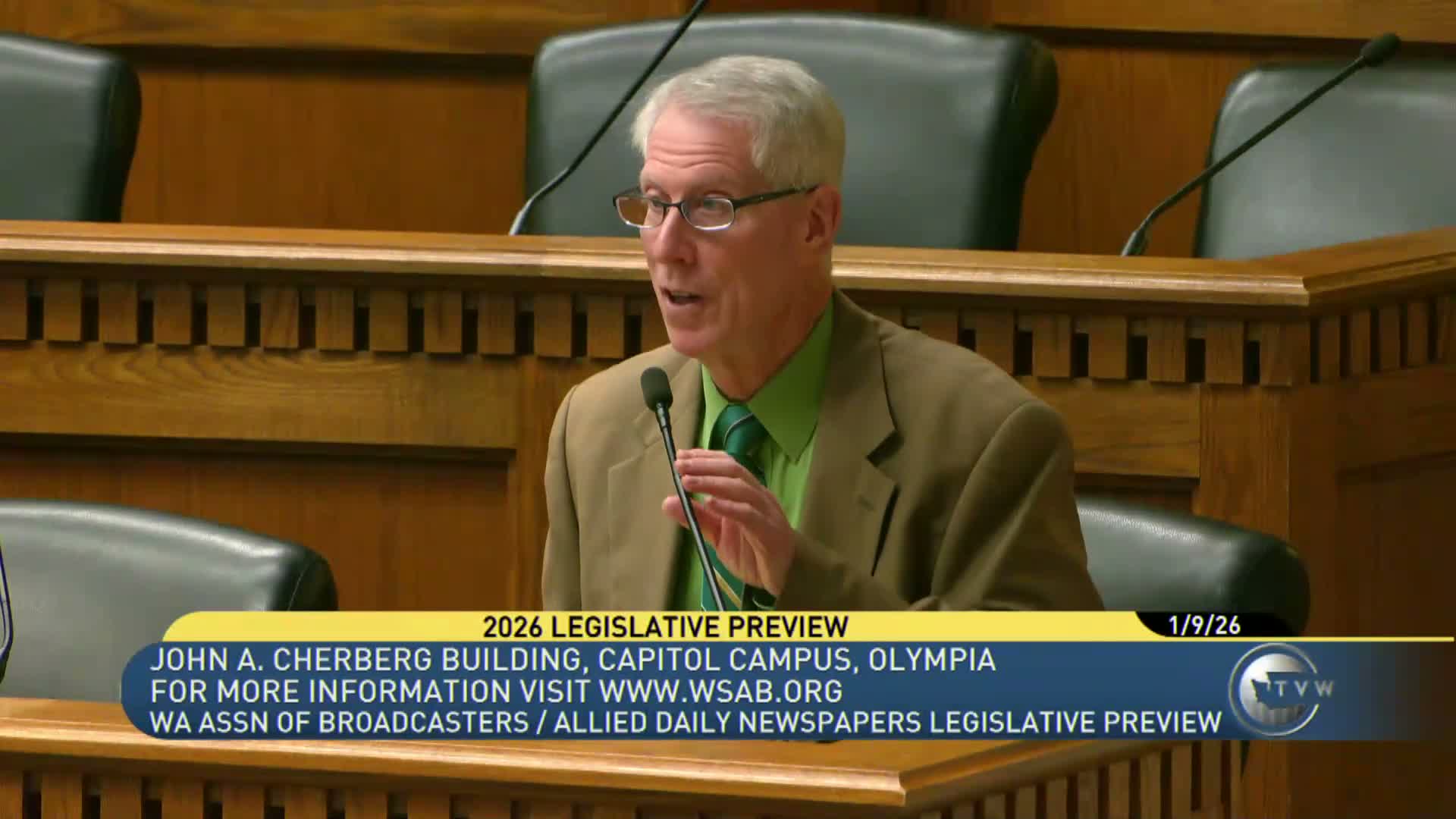
Senator Marco Lias, chair of the Senate Transportation Committee, told reporters the state must "be careful about what we're buying with [bonded funds]," saying bonding should be reserved for assets that outlast the bond term rather than routine pavement maintenance.
The debate opened when host Jerry Cornfield asked whether Gov. Bob Ferguson's proposal to bond against revenues raised by last session's gas-tax and fee increases was the right path to raise roughly $3 billion for transportation preservation. Senator Curtis King said bonding for routine maintenance is not logical because routine repairs could be consumed before bonds are paid off.
Lawmakers agreed on the scale of the preservation need: panelists cited WSDOT guidance that the state requires roughly $1 billion a year in additional preservation funding. Representative Barkis said recent cost escalations on major projects (citing roughly $700 million in added cost on the 520 project) mean the legislature must guard preservation funds from being raided to cover overruns and may need to adjust project schedules rather than shift maintenance dollars.
Ferries and bridge replacements emerged as the highest-cost items. Lias and other panelists pointed to an aging ferry fleet and a backlog of bridge projects—including Hood River and the Tacoma Narrows—as priorities that may warrant bonding because they are multi-decade assets. At the same time, multiple participants noted the electrification of ferries has added both vessel and shore-power costs; several said CCA dollars currently cover a meaningful share of terminal electrification and the incremental electrification cost for vessels.
Audience members asked whether surplus Climate Commitment Act funds could be temporarily diverted to emergency infrastructure repairs after December storms. Senator Liias and other Democratic panelists emphasized the statute's emissions-reduction purpose and evaluation mechanisms requiring reporting on actual carbon reductions, while Representative Barkus and some Republicans urged flexibility to use surplus CCA receipts for immediate recovery needs.
The panel did not endorse a single financing path. Members said they will review specific proposals from the governor's office and WSDOT, prioritize bridges and ferries for replacement where justified, and resist using short-term bonded debt for work that will not last the bond period. Next steps included committee hearings and follow-up with agency cost estimates and federal-reimbursement timelines.
The debate opened when host Jerry Cornfield asked whether Gov. Bob Ferguson's proposal to bond against revenues raised by last session's gas-tax and fee increases was the right path to raise roughly $3 billion for transportation preservation. Senator Curtis King said bonding for routine maintenance is not logical because routine repairs could be consumed before bonds are paid off.
Lawmakers agreed on the scale of the preservation need: panelists cited WSDOT guidance that the state requires roughly $1 billion a year in additional preservation funding. Representative Barkis said recent cost escalations on major projects (citing roughly $700 million in added cost on the 520 project) mean the legislature must guard preservation funds from being raided to cover overruns and may need to adjust project schedules rather than shift maintenance dollars.
Ferries and bridge replacements emerged as the highest-cost items. Lias and other panelists pointed to an aging ferry fleet and a backlog of bridge projects—including Hood River and the Tacoma Narrows—as priorities that may warrant bonding because they are multi-decade assets. At the same time, multiple participants noted the electrification of ferries has added both vessel and shore-power costs; several said CCA dollars currently cover a meaningful share of terminal electrification and the incremental electrification cost for vessels.
Audience members asked whether surplus Climate Commitment Act funds could be temporarily diverted to emergency infrastructure repairs after December storms. Senator Liias and other Democratic panelists emphasized the statute's emissions-reduction purpose and evaluation mechanisms requiring reporting on actual carbon reductions, while Representative Barkus and some Republicans urged flexibility to use surplus CCA receipts for immediate recovery needs.
The panel did not endorse a single financing path. Members said they will review specific proposals from the governor's office and WSDOT, prioritize bridges and ferries for replacement where justified, and resist using short-term bonded debt for work that will not last the bond period. Next steps included committee hearings and follow-up with agency cost estimates and federal-reimbursement timelines.
View the Full Meeting & All Its Details
This article offers just a summary. Unlock complete video, transcripts, and insights as a Founder Member.
✓
Watch full, unedited meeting videos
✓
Search every word spoken in unlimited transcripts
✓
AI summaries & real-time alerts (all government levels)
✓
Permanent access to expanding government content
30-day money-back guarantee
