Tribal leaders, fisheries staff say 'hundreds' of fish killed after tanker entered Indian Creek; long-term monitoring planned
July 20, 2025 | Governor's Office - Boards & Commissions, Executive, Washington
This article was created by AI summarizing key points discussed. AI makes mistakes, so for full details and context, please refer to the video of the full meeting. Please report any errors so we can fix them. Report an error »
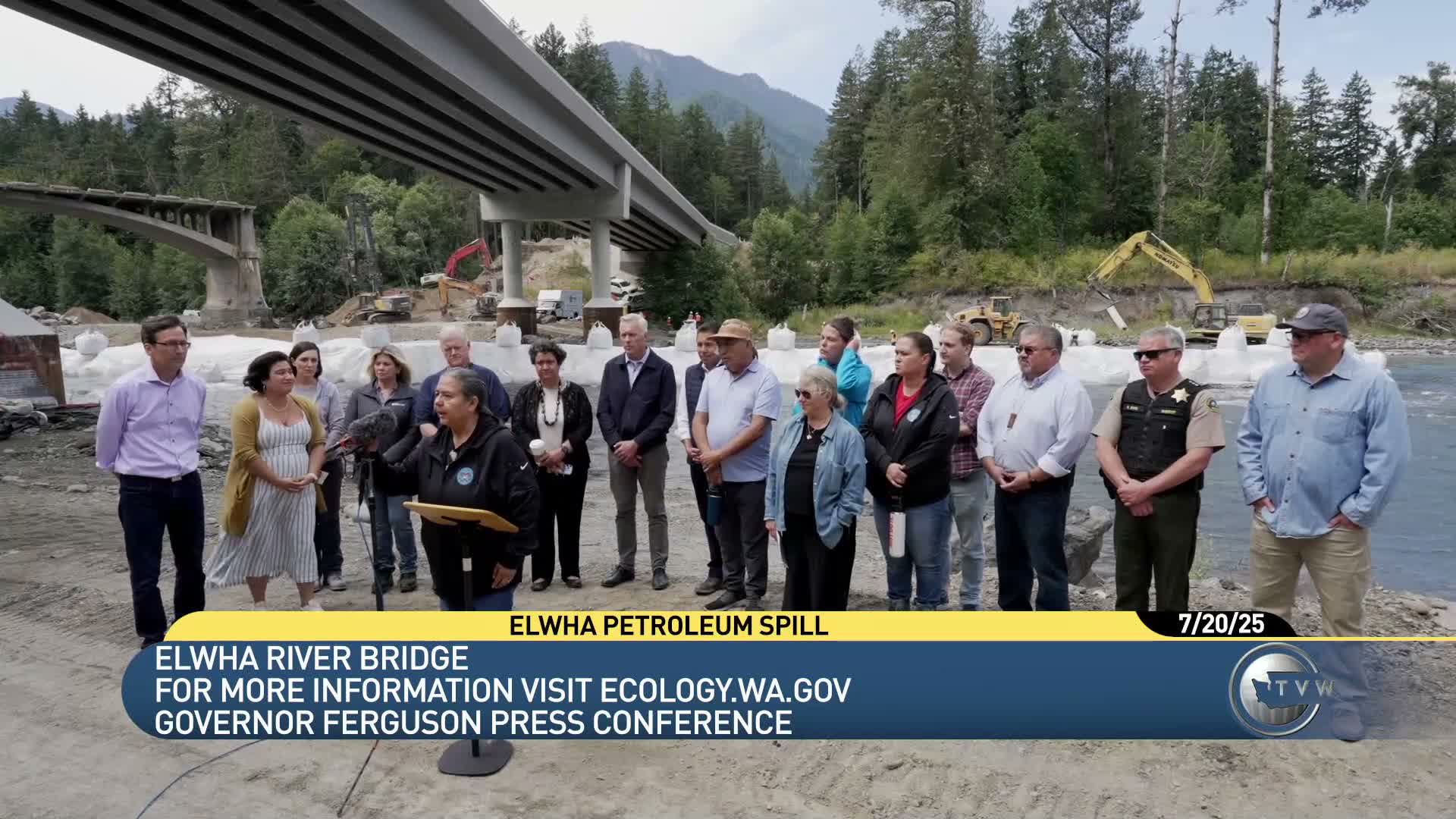
Tribal and fisheries officials described extensive ecological impacts after a Petrocard tanker truck entered Indian Creek, a productive tributary of the Elwha River, recovering "hundreds and hundreds" of dead fish and collecting samples for chemistry and documentation.
Matt Byrne, natural-resources director for the Lower Elwha Klallam Tribe, said Indian Creek is among the most productive tributaries in the Elwha system and that the timing and location of the spill were particularly damaging. Byrne said crews coordinated surveys and recovered hundreds of dead fish; he cautioned that many additional fish may have died and moved downstream or been consumed by wildlife, and said the tribe would continue short- and long-term monitoring.
Francis Charles, tribal chair (transcript), expressed the tribe's grief, thanked response partners and said tribal water on reservation lands is currently "okay." He also said the tribe's planned canoe-journey event would not be canceled.
Laura Yelling, president and CEO of Petrocard, said the company acknowledges responsibility as the responsible party, reported that the driver suffered a medical event and is recovering at home, and said the company will conduct a full investigation.
Officials from state agencies and the city credited volunteer and agency partners for rapid deployment of booms, absorbent pads and wildlife-response equipment. Ecology said wildlife surveys and mobile rehabilitation units are on-site and that any oiled wildlife would be collected and triaged; so far teams had not reported finding oiled birds but were still conducting surveys.
Next steps: tribes, state and federal partners will continue monitoring, collect water and sediment samples for analysis and document impacts; state and federal investigators will review the cause and scale of the release and Petrocard said it will carry out an internal investigation.
Matt Byrne, natural-resources director for the Lower Elwha Klallam Tribe, said Indian Creek is among the most productive tributaries in the Elwha system and that the timing and location of the spill were particularly damaging. Byrne said crews coordinated surveys and recovered hundreds of dead fish; he cautioned that many additional fish may have died and moved downstream or been consumed by wildlife, and said the tribe would continue short- and long-term monitoring.
Francis Charles, tribal chair (transcript), expressed the tribe's grief, thanked response partners and said tribal water on reservation lands is currently "okay." He also said the tribe's planned canoe-journey event would not be canceled.
Laura Yelling, president and CEO of Petrocard, said the company acknowledges responsibility as the responsible party, reported that the driver suffered a medical event and is recovering at home, and said the company will conduct a full investigation.
Officials from state agencies and the city credited volunteer and agency partners for rapid deployment of booms, absorbent pads and wildlife-response equipment. Ecology said wildlife surveys and mobile rehabilitation units are on-site and that any oiled wildlife would be collected and triaged; so far teams had not reported finding oiled birds but were still conducting surveys.
Next steps: tribes, state and federal partners will continue monitoring, collect water and sediment samples for analysis and document impacts; state and federal investigators will review the cause and scale of the release and Petrocard said it will carry out an internal investigation.
Don't Miss a Word: See the Full Meeting!
Go beyond summaries. Unlock every video, transcript, and key insight with a Founder Membership.
✓
Get instant access to full meeting videos
✓
Search and clip any phrase from complete transcripts
✓
Receive AI-powered summaries & custom alerts
✓
Enjoy lifetime, unrestricted access to government data
30-day money-back guarantee
