Agencies list care‑coordination resources, crisis referral hubs and clinical consult options for foster youth
February 20, 2026 | Children, Youth, and Families, Department of, State Agencies, Executive, Washington
This article was created by AI summarizing key points discussed. AI makes mistakes, so for full details and context, please refer to the video of the full meeting. Please report any errors so we can fix them. Report an error »
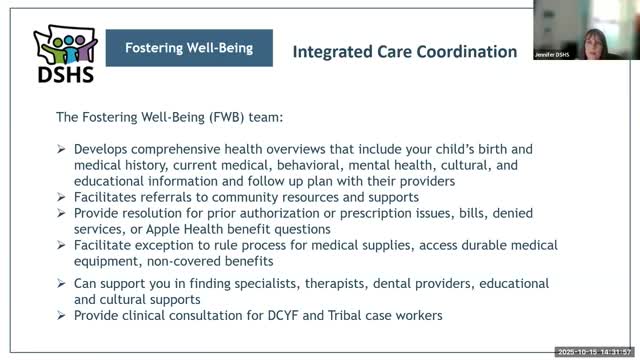
State and contractor presenters described the network of care coordination available to foster youth, including services intended to bridge gaps when placements change or specialized treatment is required.
Fostering Well‑Being and Coordinated Care said they provide integrated care coordination, clinical consultation and referral support for children and youth in out‑of‑home placement. Jennifer Heeb of DSHS described how Fostering Well‑Being develops a comprehensive health overview for each child and works with caregivers and clinicians to identify gaps, resolve prior‑authorization issues and arrange specialist referrals. "Fostering Well‑Being provides integrated care coordination for each child, and we develop a comprehensive health overview in collaboration with our clinical staff," Heeb said.
Clinical consults and crisis placement: presenters described five statewide Regional Medical Consultants (part‑time pediatricians) who provide medical consultation and an existing contract with Seattle Children’s (MedCon) to provide virtual medical consults for neglect and abuse cases. HCA Office of Tribal Affairs staff said the tribal resource hub has been launched to centralize tribal contact and bed‑availability information for inpatient treatment and crisis placements.
Managed‑care contractor roles: Coordinated Care representatives described their Apple Health Core Connections care managers, local health liaisons in each DCYF region and foster‑care centers of excellence meant to provide trauma‑informed, integrated services and faster EPSDT exams. Coordinated Care also listed value‑added benefits they provide to members, such as fruit and vegetable vouchers through a Harvest Bucks partnership, rewards Visa cards for health activities, Start Smart for Your Baby materials and Boys & Girls Club memberships.
How to get help: presenters repeatedly advised caseworkers, tribal social workers and caregivers to submit referrals via the links provided in the chat, contact the fostering‑wellbeing inbox or Coordinated Care’s care management team, and use the tribal resource hub for bed or contact information.
Closing note: presenters emphasized a "no wrong door" approach to routing requests: if one program cannot help, staff will route the request to the appropriate contact.
Fostering Well‑Being and Coordinated Care said they provide integrated care coordination, clinical consultation and referral support for children and youth in out‑of‑home placement. Jennifer Heeb of DSHS described how Fostering Well‑Being develops a comprehensive health overview for each child and works with caregivers and clinicians to identify gaps, resolve prior‑authorization issues and arrange specialist referrals. "Fostering Well‑Being provides integrated care coordination for each child, and we develop a comprehensive health overview in collaboration with our clinical staff," Heeb said.
Clinical consults and crisis placement: presenters described five statewide Regional Medical Consultants (part‑time pediatricians) who provide medical consultation and an existing contract with Seattle Children’s (MedCon) to provide virtual medical consults for neglect and abuse cases. HCA Office of Tribal Affairs staff said the tribal resource hub has been launched to centralize tribal contact and bed‑availability information for inpatient treatment and crisis placements.
Managed‑care contractor roles: Coordinated Care representatives described their Apple Health Core Connections care managers, local health liaisons in each DCYF region and foster‑care centers of excellence meant to provide trauma‑informed, integrated services and faster EPSDT exams. Coordinated Care also listed value‑added benefits they provide to members, such as fruit and vegetable vouchers through a Harvest Bucks partnership, rewards Visa cards for health activities, Start Smart for Your Baby materials and Boys & Girls Club memberships.
How to get help: presenters repeatedly advised caseworkers, tribal social workers and caregivers to submit referrals via the links provided in the chat, contact the fostering‑wellbeing inbox or Coordinated Care’s care management team, and use the tribal resource hub for bed or contact information.
Closing note: presenters emphasized a "no wrong door" approach to routing requests: if one program cannot help, staff will route the request to the appropriate contact.
Don't Miss a Word: See the Full Meeting!
Go beyond summaries. Unlock every video, transcript, and key insight with a Founder Membership.
✓
Get instant access to full meeting videos
✓
Search and clip any phrase from complete transcripts
✓
Receive AI-powered summaries & custom alerts
✓
Enjoy lifetime, unrestricted access to government data
30-day money-back guarantee
