House elections committee advances committee substitute for HB 534 after county clerks warn of voter‑list and timing risks
February 20, 2026 | 2026 Legislature KY, Kentucky
This article was created by AI summarizing key points discussed. AI makes mistakes, so for full details and context, please refer to the video of the full meeting. Please report any errors so we can fix them. Report an error »
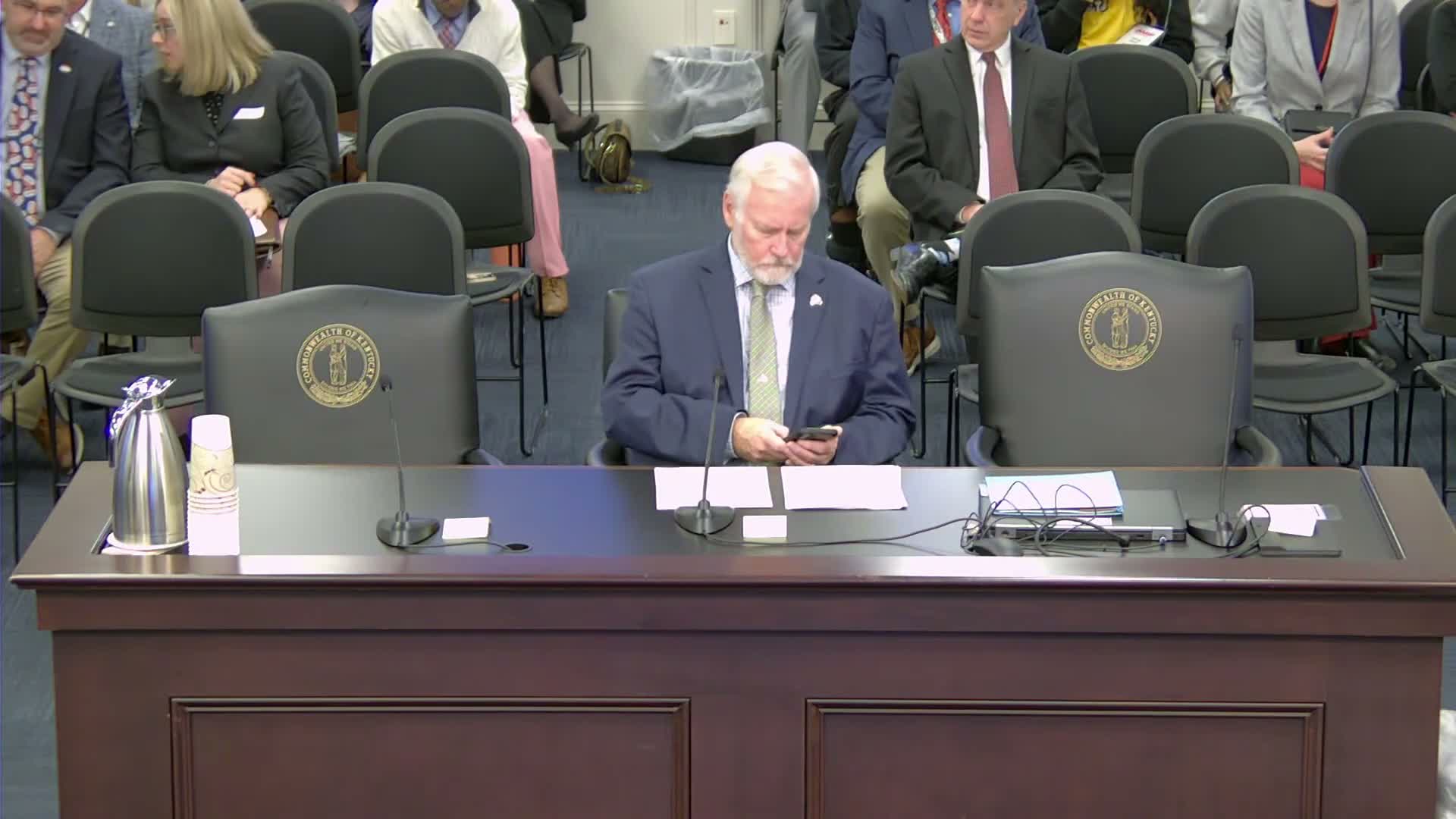
The House Elections, Constitutional Amendments and Intergovernmental Affairs Committee on Feb. 20 advanced a committee substitute for House Bill 534, a package of election‑administration changes that would authorize the Kentucky Board of Elections to share limited voter data with federal agencies for citizenship checks, allow individuals identified as noncitizens to cast provisional ballots pending verification, permit counties to explore ballot‑image technology on a voluntary basis, and shift two appointments to the KREF registry from the governor to legislative leadership.
Representative DJ Johnson, who introduced the measure and identified himself as a state representative for the 13th District, said the bill grew from work with the secretary of state, the Kentucky Board of Elections, the county clerks association and other stakeholders. “The information that we’re gonna provide is very specific: name, date of birth, and Social Security number,” Johnson said as he described proposed agreements with federal agencies to identify noncitizens.
That limited data set, Johnson said, is already available at the federal level and the measure is intended to be narrowly tailored. He also described the ballot‑image provision as permissive — allowing counties to investigate an emerging technology rather than mandating adoption — and said the committee could remove or amend that language on the floor.
But Danetta Ford Allen, Rockcastle County Clerk and president of the Kentucky County Clerk’s Association, told the committee county clerks oppose HB 534 as introduced. “As introduced, Kentucky county clerks do not currently support House Bill 534,” Allen said, citing three primary concerns: using federal SAVE data could put eligible Kentucky voters “at risk of becoming ineligible and incorrectly removed from the voter rolls,” making ballot images publicly accessible could violate voter privacy and facilitate vote‑buying, and an emergency clause would place significant election‑law changes into effect weeks before the May primary.
Allen pointed to recent state court precedent when she warned that public posting of cast‑paper ballot images could conflict with constitutional privacy protections. She urged additional safeguards and said clerks stand ready to work on floor amendments and other changes.
Johnson acknowledged those concerns and described the SAVE database as a "moving target," saying officials are trying to determine what they are comfortable sharing. He confirmed the bill would allow provisional voting for people whose citizenship status is under review and emphasized the language in the substitute is permissive regarding ballot‑image technology. “I will be very honest: there are two issues with this technology — technical concerns about voter integrity and cost,” he said, adding he was open to removing the section or setting an implementation date after the primary.
Members debated the bill’s fiscal and operational impact. One lawmaker asked whether HB 534 would require new voting equipment; Johnson said the substitute requires equipment to meet current standards but does not itself mandate purchases. Several members expressed concern that the bill makes significant changes for a problem they said is isolated.
After members offered brief "explain my vote" remarks reflecting both support and reservations, the committee approved the committee substitute on HB 534 with a favorable report: nine votes in favor, two opposed and one member passing. Chair Johnson announced the substitute passes and the measure will proceed to the House floor for further consideration.
The committee hearing produced a mix of technical clarifications and unresolved policy disagreements: clerks urged stronger protections against wrongful removal from voter rolls and opposed near‑term implementation, while the sponsor repeatedly signaled willingness to work on floor amendments to address timing, privacy and oversight concerns. The bill’s next step is consideration on the House floor, where lawmakers may offer additional amendments.
Representative DJ Johnson, who introduced the measure and identified himself as a state representative for the 13th District, said the bill grew from work with the secretary of state, the Kentucky Board of Elections, the county clerks association and other stakeholders. “The information that we’re gonna provide is very specific: name, date of birth, and Social Security number,” Johnson said as he described proposed agreements with federal agencies to identify noncitizens.
That limited data set, Johnson said, is already available at the federal level and the measure is intended to be narrowly tailored. He also described the ballot‑image provision as permissive — allowing counties to investigate an emerging technology rather than mandating adoption — and said the committee could remove or amend that language on the floor.
But Danetta Ford Allen, Rockcastle County Clerk and president of the Kentucky County Clerk’s Association, told the committee county clerks oppose HB 534 as introduced. “As introduced, Kentucky county clerks do not currently support House Bill 534,” Allen said, citing three primary concerns: using federal SAVE data could put eligible Kentucky voters “at risk of becoming ineligible and incorrectly removed from the voter rolls,” making ballot images publicly accessible could violate voter privacy and facilitate vote‑buying, and an emergency clause would place significant election‑law changes into effect weeks before the May primary.
Allen pointed to recent state court precedent when she warned that public posting of cast‑paper ballot images could conflict with constitutional privacy protections. She urged additional safeguards and said clerks stand ready to work on floor amendments and other changes.
Johnson acknowledged those concerns and described the SAVE database as a "moving target," saying officials are trying to determine what they are comfortable sharing. He confirmed the bill would allow provisional voting for people whose citizenship status is under review and emphasized the language in the substitute is permissive regarding ballot‑image technology. “I will be very honest: there are two issues with this technology — technical concerns about voter integrity and cost,” he said, adding he was open to removing the section or setting an implementation date after the primary.
Members debated the bill’s fiscal and operational impact. One lawmaker asked whether HB 534 would require new voting equipment; Johnson said the substitute requires equipment to meet current standards but does not itself mandate purchases. Several members expressed concern that the bill makes significant changes for a problem they said is isolated.
After members offered brief "explain my vote" remarks reflecting both support and reservations, the committee approved the committee substitute on HB 534 with a favorable report: nine votes in favor, two opposed and one member passing. Chair Johnson announced the substitute passes and the measure will proceed to the House floor for further consideration.
The committee hearing produced a mix of technical clarifications and unresolved policy disagreements: clerks urged stronger protections against wrongful removal from voter rolls and opposed near‑term implementation, while the sponsor repeatedly signaled willingness to work on floor amendments to address timing, privacy and oversight concerns. The bill’s next step is consideration on the House floor, where lawmakers may offer additional amendments.
View the Full Meeting & All Its Details
This article offers just a summary. Unlock complete video, transcripts, and insights as a Founder Member.
✓
Watch full, unedited meeting videos
✓
Search every word spoken in unlimited transcripts
✓
AI summaries & real-time alerts (all government levels)
✓
Permanent access to expanding government content
30-day money-back guarantee
