Committee reviews HB 2663 to ease cohort rules for at‑risk student accountability plans
February 07, 2026 | Committee on Education, Standing, HOUSE OF REPRESENTATIVES, Committees, Legislative, Kansas
This article was created by AI summarizing key points discussed. AI makes mistakes, so for full details and context, please refer to the video of the full meeting. Please report any errors so we can fix them. Report an error »
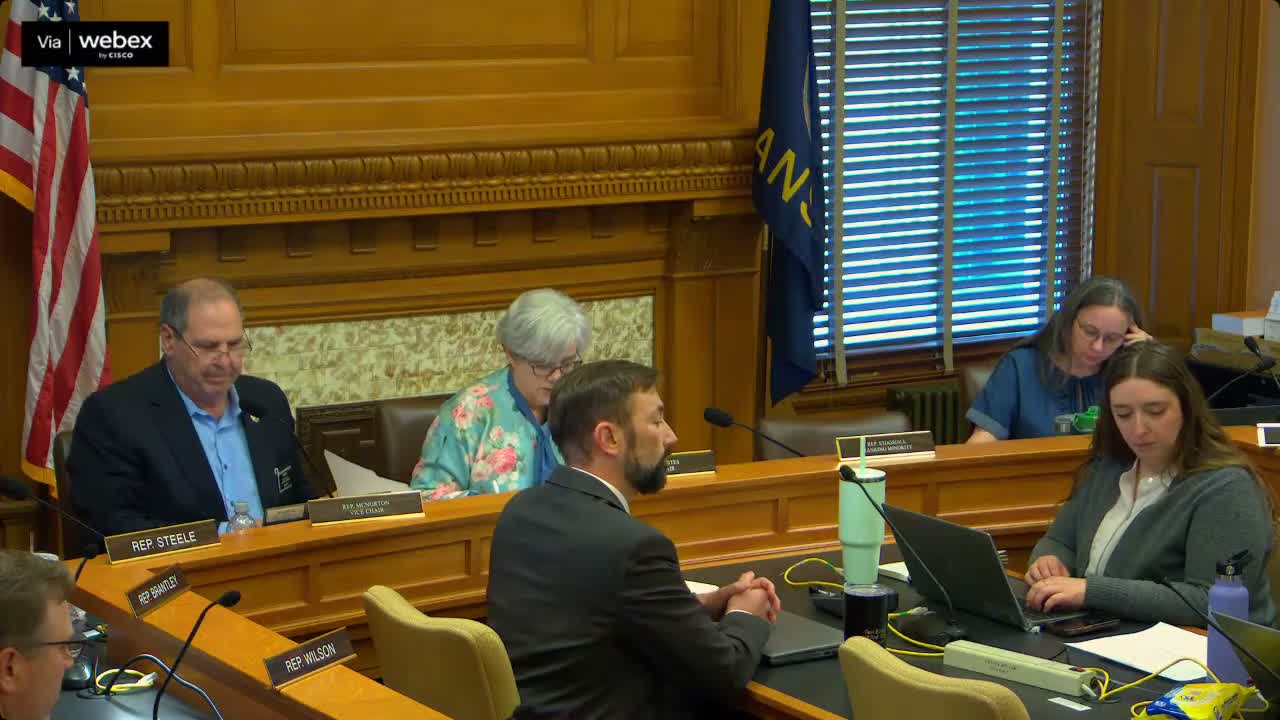
The Committee on Education heard a presentation on House Bill 2663, which would amend statute 72‑35‑74 to alter how school districts select and measure cohorts for at‑risk student accountability plans.
Nick Myers, Office Supervisor of Statutes, told the committee the 2024 pilot program is ending and the law would be implemented statewide in the 2026‑27 school year. Myers said HB 2663 proposes four changes: require the previously mandated third‑grade cohort to be a fourth‑grade cohort; remove the option that one cohort be based solely on eligibility for free meals under the National School Lunch Program; allow Kansas State Department of Education (KSDE) consultation for very small districts that cannot form cohorts of more than 10 students; and let districts set an achievement goal tied to a single assessment (ELA or math) rather than requiring both.
Dr. Harwood, speaking for the pilot group in neutral testimony, explained the rationale for the grade change: ‘‘fourth grade makes the most sense because that’s the only grade where you’ll have current data and then be able to project forward,’’ he said, noting third graders have not yet taken the state assessment the committee plans to use for longitudinal measurement. Harwood also said teachers cannot be told which students receive free meals by federal rule, which would make interventions difficult if the cohort were defined by free‑meal status; that concern is central to removing the free‑meals cohort option.
On cohort size, Harwood said many districts lack 11 students in a single grade and that consultation with KSDE would allow tailored alternatives so districts are not excluded from the program for technical reasons. He cited district counts showing some smaller districts would struggle to form closed cohorts that survive the study period.
Representative McDonald asked about the pilot’s original bill; Myers said it was 2024 Senate Bill 387 and offered to provide the citation by email. Representative McNorton reported that KSDE and the Kansas Association of School Boards indicated enactment of HB 2663 would have no physical effect on state aid or district administrative costs.
The hearing closed with committee members thanking conferees and moving to the next bill. No formal action was taken in the hearing itself; the committee will consider amendments and next steps during bill work sessions.
The bill, if enacted as discussed, would take effect upon publication in the statute book, cited by Myers as 07/01/2026.
Nick Myers, Office Supervisor of Statutes, told the committee the 2024 pilot program is ending and the law would be implemented statewide in the 2026‑27 school year. Myers said HB 2663 proposes four changes: require the previously mandated third‑grade cohort to be a fourth‑grade cohort; remove the option that one cohort be based solely on eligibility for free meals under the National School Lunch Program; allow Kansas State Department of Education (KSDE) consultation for very small districts that cannot form cohorts of more than 10 students; and let districts set an achievement goal tied to a single assessment (ELA or math) rather than requiring both.
Dr. Harwood, speaking for the pilot group in neutral testimony, explained the rationale for the grade change: ‘‘fourth grade makes the most sense because that’s the only grade where you’ll have current data and then be able to project forward,’’ he said, noting third graders have not yet taken the state assessment the committee plans to use for longitudinal measurement. Harwood also said teachers cannot be told which students receive free meals by federal rule, which would make interventions difficult if the cohort were defined by free‑meal status; that concern is central to removing the free‑meals cohort option.
On cohort size, Harwood said many districts lack 11 students in a single grade and that consultation with KSDE would allow tailored alternatives so districts are not excluded from the program for technical reasons. He cited district counts showing some smaller districts would struggle to form closed cohorts that survive the study period.
Representative McDonald asked about the pilot’s original bill; Myers said it was 2024 Senate Bill 387 and offered to provide the citation by email. Representative McNorton reported that KSDE and the Kansas Association of School Boards indicated enactment of HB 2663 would have no physical effect on state aid or district administrative costs.
The hearing closed with committee members thanking conferees and moving to the next bill. No formal action was taken in the hearing itself; the committee will consider amendments and next steps during bill work sessions.
The bill, if enacted as discussed, would take effect upon publication in the statute book, cited by Myers as 07/01/2026.
View the Full Meeting & All Its Details
This article offers just a summary. Unlock complete video, transcripts, and insights as a Founder Member.
✓
Watch full, unedited meeting videos
✓
Search every word spoken in unlimited transcripts
✓
AI summaries & real-time alerts (all government levels)
✓
Permanent access to expanding government content
30-day money-back guarantee
