Education committee hears testimony on HB 2421, a statewide ban on personal devices during school hours
February 07, 2026 | Committee on Education, Standing, HOUSE OF REPRESENTATIVES, Committees, Legislative, Kansas
This article was created by AI summarizing key points discussed. AI makes mistakes, so for full details and context, please refer to the video of the full meeting. Please report any errors so we can fix them. Report an error »
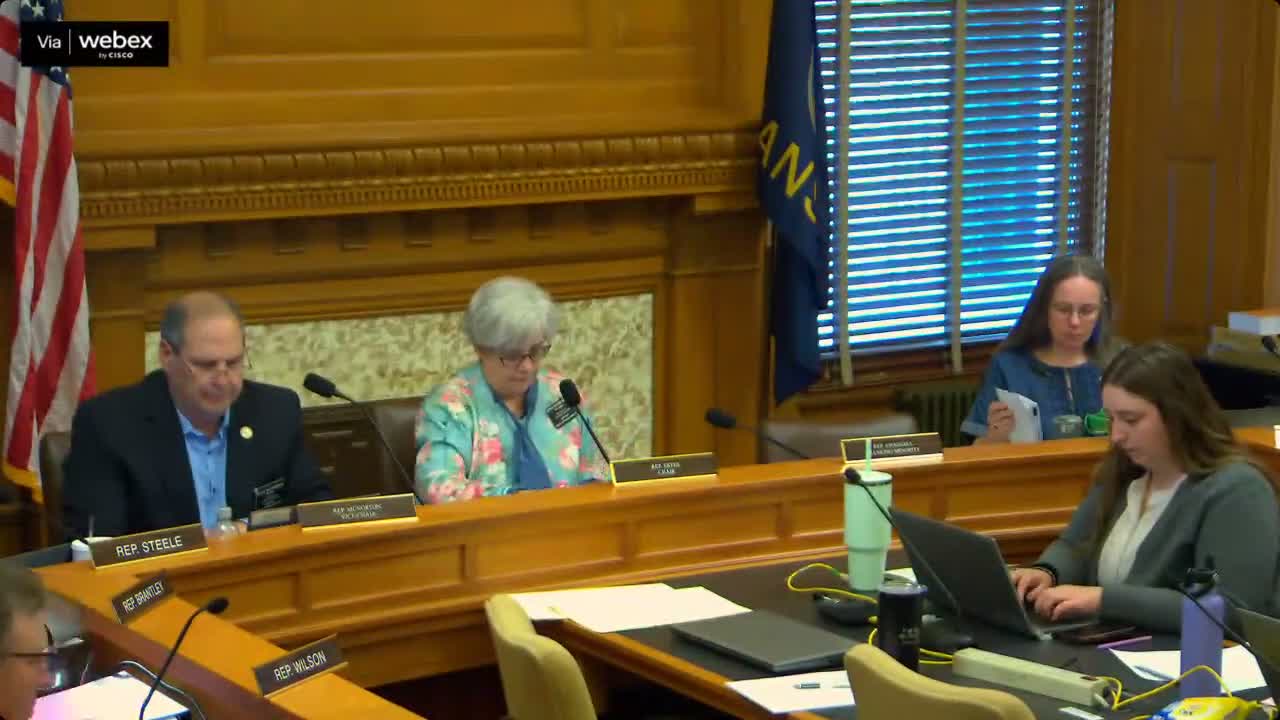
The Committee on Education heard extensive testimony on House Bill 2421, a proposed law that would prohibit students from using personally owned electronic communication devices while at school during school hours and would restrict two‑way social‑media contact between school employees and students.
Nick Myers summarized the proposal: Section 1 would ban personal devices during classroom time, passing periods and lunch and exclude school‑issued devices; Section 2 would require districts to prohibit employees from privately or directly communicating with students via social‑media platforms while allowing approved one‑way broadcast uses; Section 3 would require governing bodies to certify adoption of policies by Sept. 1, 2026 and to submit a screen‑time report for grades 1–4 showing average in‑school device time.
Student witnesses and advocacy groups gave mixed testimony. Ava Guston, a current student and co‑chair of the State Board’s Blue Ribbon Task Force on Student Screen Time, urged passage and described personal harm she attributed to phone use: "I just ask that you provide childhood back to these students and vote in favor of House Bill 24 21." Detective Kevin Chronister, representing the Internet Crimes Against Children task force, said predators often use school time and peer networks to initiate and expand contact with victims.
Several Turner High School students and others expressed concerns about logistics, privacy and emergency access. Ruby Backstrom read a classmate’s testimony saying students who work or whose families face emergencies need timely access to phones; Jose Juarez warned of the cost and space needed for locked pouches or phone‑storage equipment. Committee members and witness organizations flagged implementation and local‑control issues: the Kansas Association of School Boards and United School Administrators opposed the bill as drafted, urging grandfathering of districts with existing policies or funding support for districts that must purchase storage systems.
A fiscal note figure was raised in committee discussion: Representative McDonald cited a fiscal estimate of $13,400,000 and asked witnesses about the funding burden; opponents called the bill an unfunded mandate. Kansas State Board representatives and task‑force members argued district policies that limit devices have produced benefits, including improved student behavior and engagement.
Members asked about scope (the bill as drafted would apply to public and accredited nonpublic schools), exceptions for IEP/504 or medical necessity, how the ban would treat district‑provided learning systems (e.g., Canvas or Seesaw), and whether virtual schools are exempt. No final action occurred; committee will consider amendments and further work sessions.
Nick Myers summarized the proposal: Section 1 would ban personal devices during classroom time, passing periods and lunch and exclude school‑issued devices; Section 2 would require districts to prohibit employees from privately or directly communicating with students via social‑media platforms while allowing approved one‑way broadcast uses; Section 3 would require governing bodies to certify adoption of policies by Sept. 1, 2026 and to submit a screen‑time report for grades 1–4 showing average in‑school device time.
Student witnesses and advocacy groups gave mixed testimony. Ava Guston, a current student and co‑chair of the State Board’s Blue Ribbon Task Force on Student Screen Time, urged passage and described personal harm she attributed to phone use: "I just ask that you provide childhood back to these students and vote in favor of House Bill 24 21." Detective Kevin Chronister, representing the Internet Crimes Against Children task force, said predators often use school time and peer networks to initiate and expand contact with victims.
Several Turner High School students and others expressed concerns about logistics, privacy and emergency access. Ruby Backstrom read a classmate’s testimony saying students who work or whose families face emergencies need timely access to phones; Jose Juarez warned of the cost and space needed for locked pouches or phone‑storage equipment. Committee members and witness organizations flagged implementation and local‑control issues: the Kansas Association of School Boards and United School Administrators opposed the bill as drafted, urging grandfathering of districts with existing policies or funding support for districts that must purchase storage systems.
A fiscal note figure was raised in committee discussion: Representative McDonald cited a fiscal estimate of $13,400,000 and asked witnesses about the funding burden; opponents called the bill an unfunded mandate. Kansas State Board representatives and task‑force members argued district policies that limit devices have produced benefits, including improved student behavior and engagement.
Members asked about scope (the bill as drafted would apply to public and accredited nonpublic schools), exceptions for IEP/504 or medical necessity, how the ban would treat district‑provided learning systems (e.g., Canvas or Seesaw), and whether virtual schools are exempt. No final action occurred; committee will consider amendments and further work sessions.
Don't Miss a Word: See the Full Meeting!
Go beyond summaries. Unlock every video, transcript, and key insight with a Founder Membership.
✓
Get instant access to full meeting videos
✓
Search and clip any phrase from complete transcripts
✓
Receive AI-powered summaries & custom alerts
✓
Enjoy lifetime, unrestricted access to government data
30-day money-back guarantee
