Committee advances bill allowing court review of adult sentences for crimes committed as juveniles, trims review trigger from 15 to 12 years
February 14, 2026 | Senate, Legislative , Hawaii
This article was created by AI summarizing key points discussed. AI makes mistakes, so for full details and context, please refer to the video of the full meeting. Please report any errors so we can fix them. Report an error »
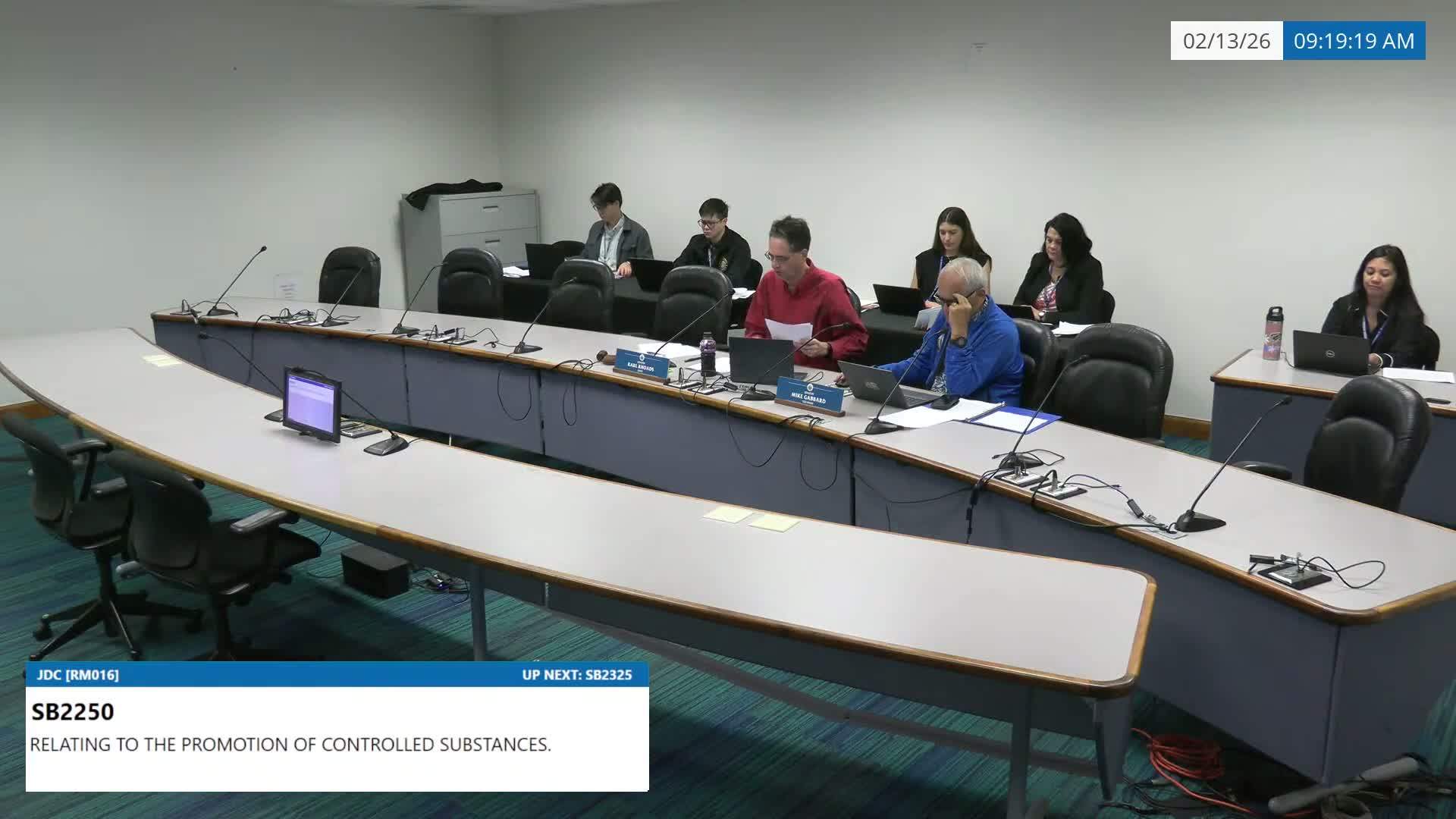
The Senate Judiciary Committee advanced SB2325, a measure to allow courts to modify sentences imposed on people who committed crimes as juveniles if certain criteria are met and the court finds the person no longer presents a danger.
Jennifer Wong, staff attorney for the criminal divisions of the First Circuit, told senators the judiciary "supports the intent of this measure" but cautioned that Hawaii's indeterminate sentencing scheme limits judicial authority to reduce certain long terms without structural changes. Wong said the Hawaii Paroling Authority plays a central role and suggested alternatives that direct review considerations to that authority.
Advocates framed the bill as grounded in brain-development science and rehabilitation. Teresa Komunos of Human Rights for Kids cited Supreme Court decisions recognizing children are constitutionally different from adults and said the bill would create a mechanism for judges to review sentences after a person has served 15 years; Jose Burgos of the Campaign for the Fair Sentencing of Youth, who served 27 years after a life sentence as a youth, testified in strong support and urged adoption of the bill's review pathway.
Committee members discussed the timing for a review. During floor amendment discussion, the chair proposed moving the review trigger from 15 years to 12 years and placing post-release supervision under parole frameworks rather than probation. The committee adopted the recommendation to pass SB2325 with those amendments.
What happens next: SB2325 was reported out of committee with amendments; the committee directed staff to reflect changes in the report and to coordinate with the Paroling Authority and stakeholders on implementation details like supervised-release terms.
Jennifer Wong, staff attorney for the criminal divisions of the First Circuit, told senators the judiciary "supports the intent of this measure" but cautioned that Hawaii's indeterminate sentencing scheme limits judicial authority to reduce certain long terms without structural changes. Wong said the Hawaii Paroling Authority plays a central role and suggested alternatives that direct review considerations to that authority.
Advocates framed the bill as grounded in brain-development science and rehabilitation. Teresa Komunos of Human Rights for Kids cited Supreme Court decisions recognizing children are constitutionally different from adults and said the bill would create a mechanism for judges to review sentences after a person has served 15 years; Jose Burgos of the Campaign for the Fair Sentencing of Youth, who served 27 years after a life sentence as a youth, testified in strong support and urged adoption of the bill's review pathway.
Committee members discussed the timing for a review. During floor amendment discussion, the chair proposed moving the review trigger from 15 years to 12 years and placing post-release supervision under parole frameworks rather than probation. The committee adopted the recommendation to pass SB2325 with those amendments.
What happens next: SB2325 was reported out of committee with amendments; the committee directed staff to reflect changes in the report and to coordinate with the Paroling Authority and stakeholders on implementation details like supervised-release terms.
View the Full Meeting & All Its Details
This article offers just a summary. Unlock complete video, transcripts, and insights as a Founder Member.
✓
Watch full, unedited meeting videos
✓
Search every word spoken in unlimited transcripts
✓
AI summaries & real-time alerts (all government levels)
✓
Permanent access to expanding government content
30-day money-back guarantee
