Maryland House approves bill letting counties opt into speed‑camera programs statewide
February 20, 2026 | HOUSE OF REPRESENTATIVES, Committees, Legislative, Maryland
This article was created by AI summarizing key points discussed. AI makes mistakes, so for full details and context, please refer to the video of the full meeting. Please report any errors so we can fix them. Report an error »
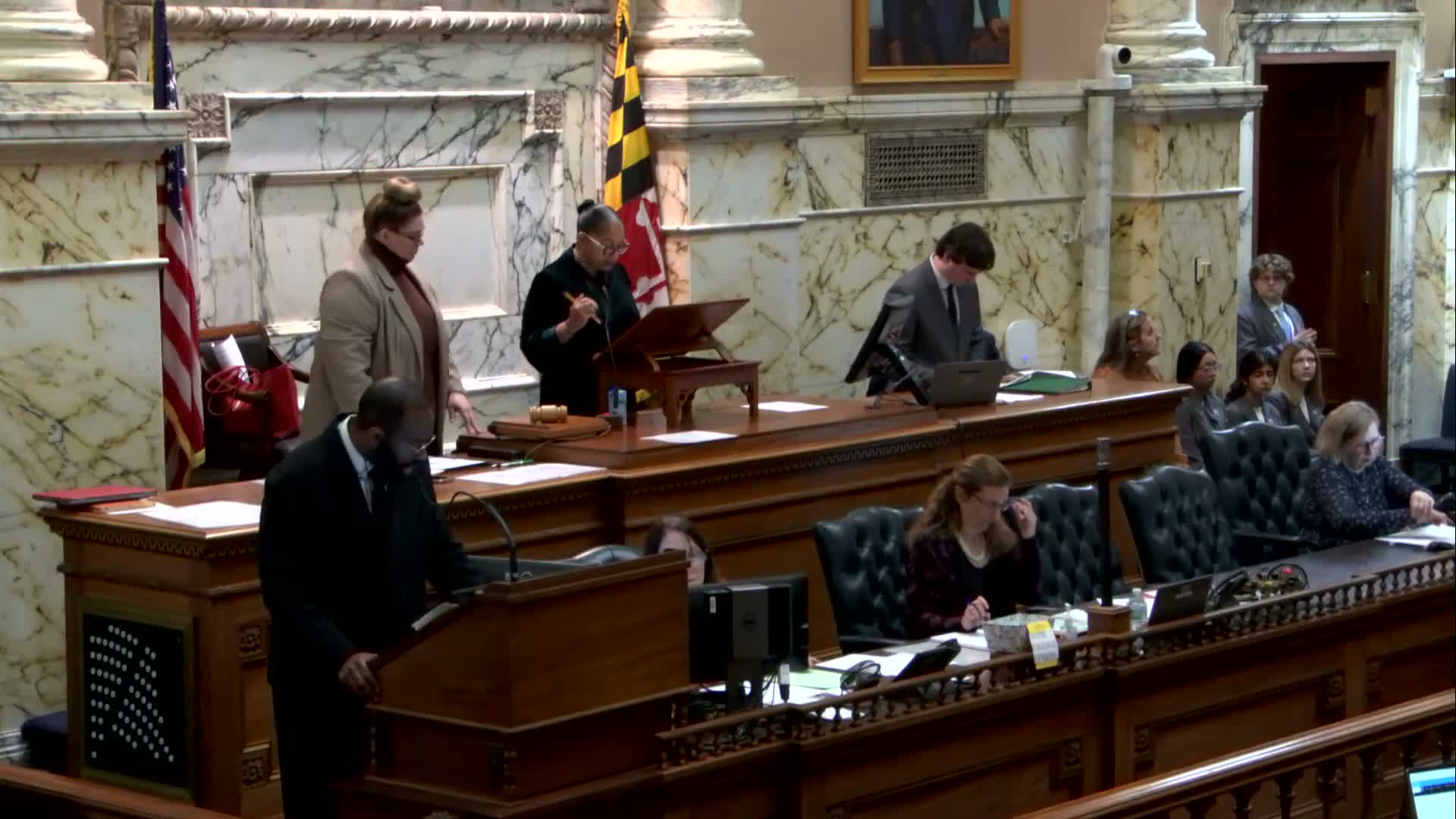
Annapolis — The Maryland House of Delegates on Feb. 15 approved House Bill 55, a measure allowing local jurisdictions statewide to authorize speed‑monitoring cameras on high‑volume arterials and in school zones if they choose.
The floor leader, describing the bill on the chamber floor, said the proposal “expands statewide authorization for jurisdictions, should they so choose, to use speed camera monitoring on high volume arterials” and noted the authority already exists in Prince George’s, Anne Arundel and Montgomery counties. He added that the measure is optional for counties and does not impose a statewide mandate.
Supporters framed the bill as a public‑safety tool. The sponsor cited Federal Highway Safety Agency recommendations and evidence that cameras reduce crashes and change driver behavior, noting long‑running programs on some state highways where citations and crashes have declined.
Opponents warned the change could open the door to broader use of cameras and to revenue‑driven enforcement. One delegate said the bill would “abdicate local authority here in Annapolis” and worried fines could be diverted away from traffic‑calming measures. The chair of the committee clarified existing law requires revenues, after administrative costs, to be used for administration and public safety purposes rather than to balance unrelated parts of a local budget.
The House debated technical thresholds in the bill. The floor leader said the measure applies to roads with posted maximum speeds up to 35 mph and that a citation threshold under current practice is 12 miles per hour over the limit; he also confirmed the bill requires public notice and hearings before a jurisdiction establishes a program.
After debate, the clerk reported 98 votes in favor and 35 opposed. House Bill 55, having received a constitutional majority, was declared passed. The bill will now proceed to the next steps required under the legislative process.
The House also agreed there is no state‑level requirement in the bill to earmark remaining citation revenue beyond administrative costs; local governments retain discretion within the constraints of existing law.
The floor leader, describing the bill on the chamber floor, said the proposal “expands statewide authorization for jurisdictions, should they so choose, to use speed camera monitoring on high volume arterials” and noted the authority already exists in Prince George’s, Anne Arundel and Montgomery counties. He added that the measure is optional for counties and does not impose a statewide mandate.
Supporters framed the bill as a public‑safety tool. The sponsor cited Federal Highway Safety Agency recommendations and evidence that cameras reduce crashes and change driver behavior, noting long‑running programs on some state highways where citations and crashes have declined.
Opponents warned the change could open the door to broader use of cameras and to revenue‑driven enforcement. One delegate said the bill would “abdicate local authority here in Annapolis” and worried fines could be diverted away from traffic‑calming measures. The chair of the committee clarified existing law requires revenues, after administrative costs, to be used for administration and public safety purposes rather than to balance unrelated parts of a local budget.
The House debated technical thresholds in the bill. The floor leader said the measure applies to roads with posted maximum speeds up to 35 mph and that a citation threshold under current practice is 12 miles per hour over the limit; he also confirmed the bill requires public notice and hearings before a jurisdiction establishes a program.
After debate, the clerk reported 98 votes in favor and 35 opposed. House Bill 55, having received a constitutional majority, was declared passed. The bill will now proceed to the next steps required under the legislative process.
The House also agreed there is no state‑level requirement in the bill to earmark remaining citation revenue beyond administrative costs; local governments retain discretion within the constraints of existing law.
View the Full Meeting & All Its Details
This article offers just a summary. Unlock complete video, transcripts, and insights as a Founder Member.
✓
Watch full, unedited meeting videos
✓
Search every word spoken in unlimited transcripts
✓
AI summaries & real-time alerts (all government levels)
✓
Permanent access to expanding government content
30-day money-back guarantee
