Cumberland County seeks rules for data centers as staff will draft ordinance and hold public comment
February 20, 2026 | Cumberland County, North Carolina
This article was created by AI summarizing key points discussed. AI makes mistakes, so for full details and context, please refer to the video of the full meeting. Please report any errors so we can fix them. Report an error »
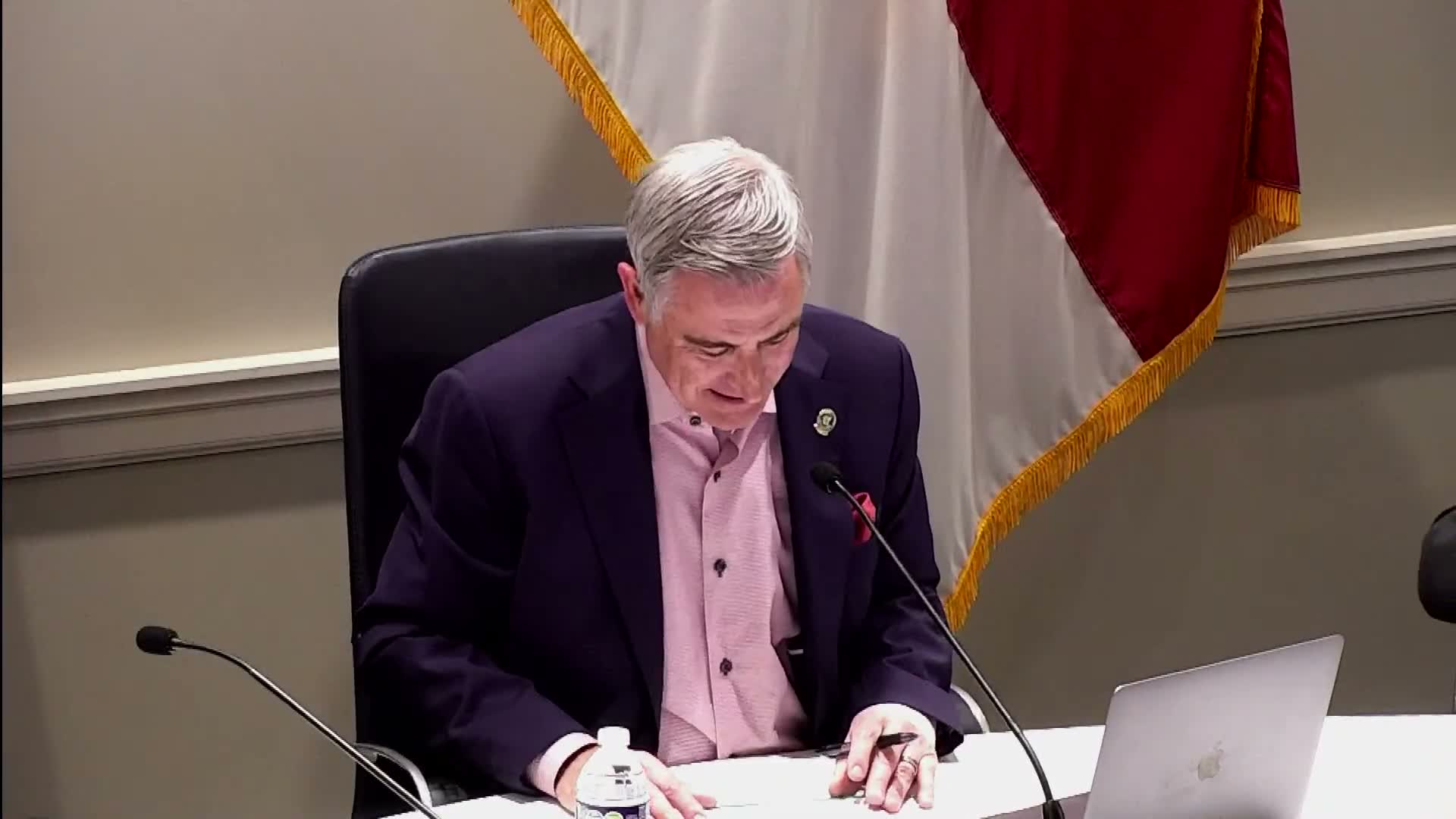
FAYETTEVILLE, N.C. — Cumberland County commissioners on Feb. 19 convened an informational meeting to hear economic‑development and planning staff describe the technical, environmental and land‑use implications of growing data‑center development and to outline a path for local regulations.
Robert Van Gheens, president of the Fayetteville–Cumberland Economic Development Corporation, told the board that data‑center projects range from small server rooms to “hyperscalers” that can demand tens to hundreds of megawatts of power and hundreds of acres. “Power generation by an independent third party in our community that is not a utility causes me a bit of pause,” Van Gheens said, urging the county to require intensive review of non‑utility on‑site generation.
Van Gheens said utilities and cooling choice drive site suitability. He said larger standalone centers commonly seek 100‑megawatt‑class service and sites in the 150–300‑acre range, and that cooling and backup systems can produce noise and require significant water or fuel storage. “For each billion dollars of investment, that is $5,000,000 in property tax revenue for the county,” he said, noting that data centers create relatively few but high‑paying technology jobs.
County planning staff told commissioners the current zoning code treats large data centers as comparable to warehouses or call centers and allows that use by right in the MP (manufacturing/industrial) district. Director Howard said staff would focus a draft amendment on hyperscale operations and proposed several tools: special‑use permits (SUPs) or conditional zoning for higher‑impact projects; allowing lower‑intensity accessory uses to continue under existing rules; and requiring utility attestations — certified letters from water or power providers showing adequate capacity — before permits are issued.
Commissioners asked about specific local impacts. Commissioner Adams flagged water usage, noting news coverage of regional drought concerns and saying some projects elsewhere have sought “millions of gallons” per day for cooling. Staff replied that closed‑loop systems and utility limits often address those concerns, and that municipal utilities (PWC) have protections to prevent draws that would jeopardize fire flows.
Several commissioners voiced worry about grid effects and rate impacts: if a hyperscaler consumes large amounts of capacity, other prospective employers might be unable to locate nearby. Van Gheens and staff said setting local compatibility standards is appropriate but that utility rates and generation are governed primarily at the utility‑commission and legislative level, so the county’s role is to advocate and set land‑use standards to protect local interests.
On process, staff outlined a stepwise path: draft an ordinance amendment focused on hyperscalers, convene a planning‑board subcommittee to draft code language, send it to the planning board for recommendation, and then return to the board of commissioners. Staff estimated a roughly 90‑day drafting window for an initial draft and proposed bringing a preliminary draft to the board in March with a final ordinance target in May.
Commissioner Tyson said he favored special‑use permitting to retain board flexibility; other commissioners agreed SUP or conditional review could reduce litigation risk and let the county apply site‑specific findings. Vice Chair Jones and others urged more and earlier public engagement — evening town halls or webinars, written question submissions, and a dedicated public‑comment period — to make information accessible to working residents. The chair proposed a special public‑comment segment tied to a March meeting (staff suggested March 16) and asked staff to publish slide decks and accept written comments in advance.
The meeting was procedural in nature: the board approved the meeting agenda and later adjourned without taking regulatory votes. County staff will return with a draft amendment, planning‑board input and a public‑engagement plan.
Robert Van Gheens, president of the Fayetteville–Cumberland Economic Development Corporation, told the board that data‑center projects range from small server rooms to “hyperscalers” that can demand tens to hundreds of megawatts of power and hundreds of acres. “Power generation by an independent third party in our community that is not a utility causes me a bit of pause,” Van Gheens said, urging the county to require intensive review of non‑utility on‑site generation.
Van Gheens said utilities and cooling choice drive site suitability. He said larger standalone centers commonly seek 100‑megawatt‑class service and sites in the 150–300‑acre range, and that cooling and backup systems can produce noise and require significant water or fuel storage. “For each billion dollars of investment, that is $5,000,000 in property tax revenue for the county,” he said, noting that data centers create relatively few but high‑paying technology jobs.
County planning staff told commissioners the current zoning code treats large data centers as comparable to warehouses or call centers and allows that use by right in the MP (manufacturing/industrial) district. Director Howard said staff would focus a draft amendment on hyperscale operations and proposed several tools: special‑use permits (SUPs) or conditional zoning for higher‑impact projects; allowing lower‑intensity accessory uses to continue under existing rules; and requiring utility attestations — certified letters from water or power providers showing adequate capacity — before permits are issued.
Commissioners asked about specific local impacts. Commissioner Adams flagged water usage, noting news coverage of regional drought concerns and saying some projects elsewhere have sought “millions of gallons” per day for cooling. Staff replied that closed‑loop systems and utility limits often address those concerns, and that municipal utilities (PWC) have protections to prevent draws that would jeopardize fire flows.
Several commissioners voiced worry about grid effects and rate impacts: if a hyperscaler consumes large amounts of capacity, other prospective employers might be unable to locate nearby. Van Gheens and staff said setting local compatibility standards is appropriate but that utility rates and generation are governed primarily at the utility‑commission and legislative level, so the county’s role is to advocate and set land‑use standards to protect local interests.
On process, staff outlined a stepwise path: draft an ordinance amendment focused on hyperscalers, convene a planning‑board subcommittee to draft code language, send it to the planning board for recommendation, and then return to the board of commissioners. Staff estimated a roughly 90‑day drafting window for an initial draft and proposed bringing a preliminary draft to the board in March with a final ordinance target in May.
Commissioner Tyson said he favored special‑use permitting to retain board flexibility; other commissioners agreed SUP or conditional review could reduce litigation risk and let the county apply site‑specific findings. Vice Chair Jones and others urged more and earlier public engagement — evening town halls or webinars, written question submissions, and a dedicated public‑comment period — to make information accessible to working residents. The chair proposed a special public‑comment segment tied to a March meeting (staff suggested March 16) and asked staff to publish slide decks and accept written comments in advance.
The meeting was procedural in nature: the board approved the meeting agenda and later adjourned without taking regulatory votes. County staff will return with a draft amendment, planning‑board input and a public‑engagement plan.
Don't Miss a Word: See the Full Meeting!
Go beyond summaries. Unlock every video, transcript, and key insight with a Founder Membership.
✓
Get instant access to full meeting videos
✓
Search and clip any phrase from complete transcripts
✓
Receive AI-powered summaries & custom alerts
✓
Enjoy lifetime, unrestricted access to government data
30-day money-back guarantee
