Witness recounts denied life-insurance payout as committee considers letting nonprofits be named beneficiaries
February 19, 2026 | Appropriations, HOUSE OF REPRESENTATIVES, Committees, Legislative, Georgia
This article was created by AI summarizing key points discussed. AI makes mistakes, so for full details and context, please refer to the video of the full meeting. Please report any errors so we can fix them. Report an error »
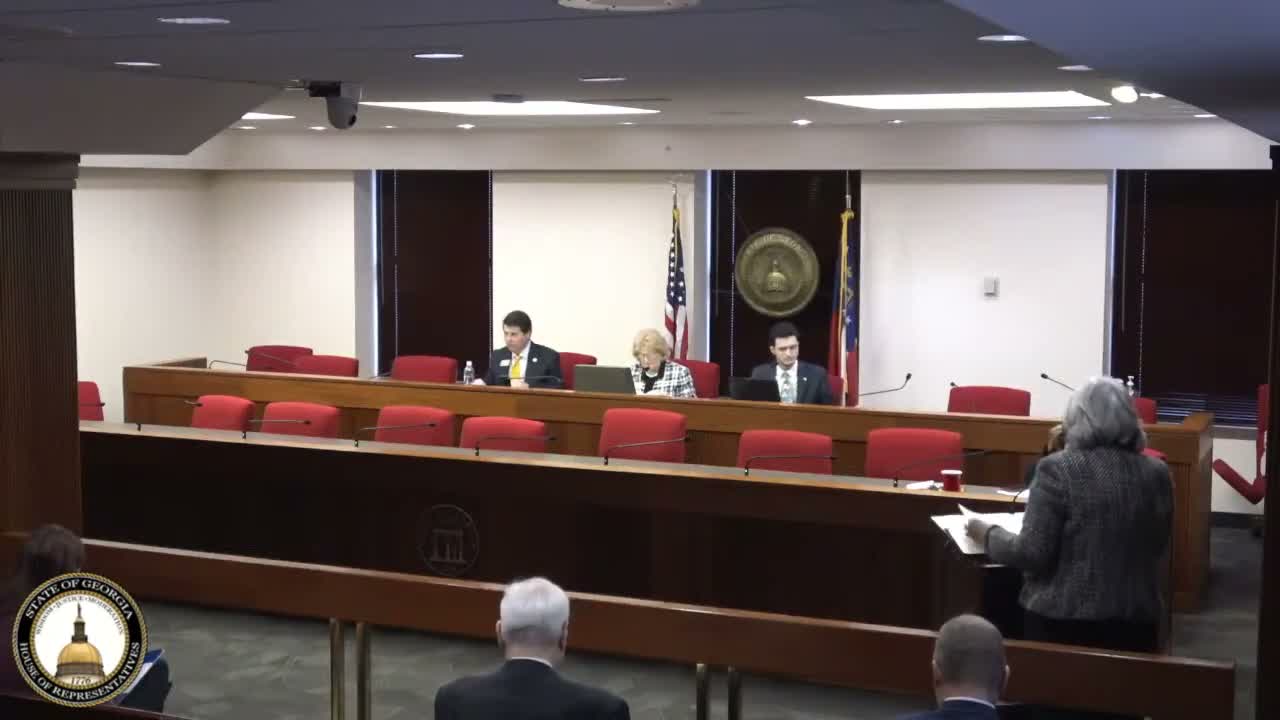
Representative Buckner presented House Bill 10 58, saying the change would allow employees of charitable nonprofits to designate their employer as a beneficiary of an employer-provided group life policy when the employee signs the appropriate paperwork. "By law, they can't do that," Buckner said, describing the statutory restriction in Chapter 27, Title 33 of the code.
Why it matters: Lisonbee Evans, CEO of the Methodist Home for Children and Youth, told the committee a staff member, Stephanie Macon, named the Methodist Home as beneficiary and the claim was denied because the employer was barred by statute. Evans described a private resolution that involved a church and donor match, but said nonprofits should be able to receive benefits when an employee expressly chooses them: "It's just important that nonprofits, if someone chooses to share that with them, that they be able to receive that benefit," Evans said.
Details and support: Representative Buckner framed the bill as a narrow change for the nonprofit sector; Bobby Potter of the American Council of Life Insurers said industry counsel had requested one brief clarifying phrase about donor and beneficiary names that was incorporated and that the group supports the bill. The committee asked questions about the type of policy (guaranteed-issue life) and the prevalence of charitable organizations; witnesses said Georgia has roughly 57,000 registered charitable organizations and that nonprofits often rely on donor support to supplement state funding.
What happens next: The hearing concluded without votes; the committee will carry the testimony forward for further consideration in full committee.
Why it matters: Lisonbee Evans, CEO of the Methodist Home for Children and Youth, told the committee a staff member, Stephanie Macon, named the Methodist Home as beneficiary and the claim was denied because the employer was barred by statute. Evans described a private resolution that involved a church and donor match, but said nonprofits should be able to receive benefits when an employee expressly chooses them: "It's just important that nonprofits, if someone chooses to share that with them, that they be able to receive that benefit," Evans said.
Details and support: Representative Buckner framed the bill as a narrow change for the nonprofit sector; Bobby Potter of the American Council of Life Insurers said industry counsel had requested one brief clarifying phrase about donor and beneficiary names that was incorporated and that the group supports the bill. The committee asked questions about the type of policy (guaranteed-issue life) and the prevalence of charitable organizations; witnesses said Georgia has roughly 57,000 registered charitable organizations and that nonprofits often rely on donor support to supplement state funding.
What happens next: The hearing concluded without votes; the committee will carry the testimony forward for further consideration in full committee.
View the Full Meeting & All Its Details
This article offers just a summary. Unlock complete video, transcripts, and insights as a Founder Member.
✓
Watch full, unedited meeting videos
✓
Search every word spoken in unlimited transcripts
✓
AI summaries & real-time alerts (all government levels)
✓
Permanent access to expanding government content
30-day money-back guarantee
