Utilities tell Vermont committee net‑metering is concentrated in higher‑income towns and is driving rate pressure
February 20, 2026 | Environment & Energy, HOUSE OF REPRESENTATIVES, Committees, Legislative , Vermont
This article was created by AI summarizing key points discussed. AI makes mistakes, so for full details and context, please refer to the video of the full meeting. Please report any errors so we can fix them. Report an error »
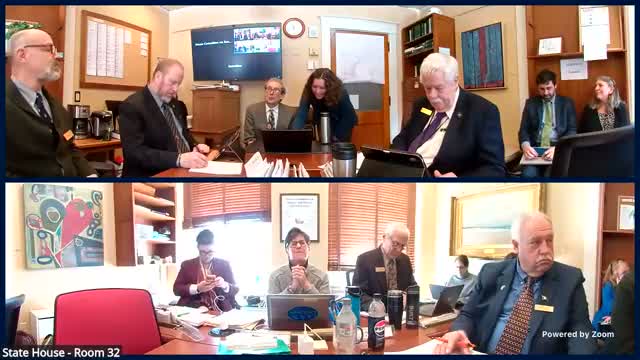
Montpelier — Utilities testifying before the House Energy & Digital Infrastructure committee on Feb. 13 told lawmakers that Vermont’s current net‑metering compensation creates a cost shift from customers without rooftop solar to those who have it and urged the committee to leave detailed rate decisions to the Public Utility Commission (PUC).
Dan Potter, a power‑planning analyst at Vermont Electric Cooperative, summarized VEC’s view: “The first is that net metering in VEC’s service territory is happening in the towns that we serve with the lowest energy burdens and the highest incomes.” He and other utility witnesses said that differential deployment produces cross‑subsidies and upward pressure on rates.
Why it matters: committee members and utilities framed the debate as a trade‑off between expanding rooftop solar and protecting customers who cannot install it. Utilities argued the current compensation formula pays more than the wholesale or system value of exported energy and that those extra payments are distributed across all members of customer‑owned cooperatives and utility ratepayers.
Vermont Electric Cooperative provided specific figures to illustrate the point. Potter said excess generation imposed “approximately $1,700,000 in upward rate pressure” on VEC’s customers. VEC described the compensation paid to net‑metered generators as about $180 per megawatt‑hour, while the cooperative’s valuation of the energy, renewable attributes and capacity from those exports was typically “on the order of $60 to $80 a megawatt hour.” According to VEC, that differential is the principal driver of the cooperative’s calculated $1.7 million cost.
VEC also presented account‑level meter data to show seasonal limits to on‑site solar. A sample account, the utilities said, produced enough generation in summer months to cover much of the customer’s use but supplied only about 4% of usage in December. VEC said roughly 8% of its net‑metering customers have batteries; utilities described batteries as helpful but not yet widely adopted or broadly cost‑effective at household scale.
Washington Electric Cooperative’s board president, Steve Moulton, testified from a member perspective that PUC tools and biennial reviews are the right mechanisms to balance deployment pace and rate impacts. Moulton, who said “I’m also a net meterer. I’ve been net meterer for over 11 years now,” urged lawmakers to reconsider net‑metering design in light of lower installation costs over time and the arrival of battery and automation options.
Green Mountain Power’s Candice Morgan told the committee GMP would not support H 07/16 as drafted and favors continued PUC review: “we would not be in support of what’s before you in h 07/16, and would prefer to have the PUC continue to do that fair and transparent process,” she said. GMP described programs that target bill relief or direct discounts to income‑eligible customers (ACRE and shared‑solar arrangements) and noted the utility’s procurement to meet Vermont’s renewable energy standard requirements.
What the committee asked for: members requested follow‑up data from utilities, including average monthly bills, more detail on how the $1.7 million figure translates to per‑customer impacts, ACRE project locations and waiting lists, and any non‑ratepayer programs that reduce the need for cost shifts. Utilities agreed to provide written materials and the committee said it would post those submissions.
No formal votes or amendments were taken at the hearing; the committee closed after witnesses agreed to deliver the requested follow‑up documents.
The committee’s next steps include reviewing the utilities’ written materials and the PUC’s biennial review reports before further action on H 07/16.
Dan Potter, a power‑planning analyst at Vermont Electric Cooperative, summarized VEC’s view: “The first is that net metering in VEC’s service territory is happening in the towns that we serve with the lowest energy burdens and the highest incomes.” He and other utility witnesses said that differential deployment produces cross‑subsidies and upward pressure on rates.
Why it matters: committee members and utilities framed the debate as a trade‑off between expanding rooftop solar and protecting customers who cannot install it. Utilities argued the current compensation formula pays more than the wholesale or system value of exported energy and that those extra payments are distributed across all members of customer‑owned cooperatives and utility ratepayers.
Vermont Electric Cooperative provided specific figures to illustrate the point. Potter said excess generation imposed “approximately $1,700,000 in upward rate pressure” on VEC’s customers. VEC described the compensation paid to net‑metered generators as about $180 per megawatt‑hour, while the cooperative’s valuation of the energy, renewable attributes and capacity from those exports was typically “on the order of $60 to $80 a megawatt hour.” According to VEC, that differential is the principal driver of the cooperative’s calculated $1.7 million cost.
VEC also presented account‑level meter data to show seasonal limits to on‑site solar. A sample account, the utilities said, produced enough generation in summer months to cover much of the customer’s use but supplied only about 4% of usage in December. VEC said roughly 8% of its net‑metering customers have batteries; utilities described batteries as helpful but not yet widely adopted or broadly cost‑effective at household scale.
Washington Electric Cooperative’s board president, Steve Moulton, testified from a member perspective that PUC tools and biennial reviews are the right mechanisms to balance deployment pace and rate impacts. Moulton, who said “I’m also a net meterer. I’ve been net meterer for over 11 years now,” urged lawmakers to reconsider net‑metering design in light of lower installation costs over time and the arrival of battery and automation options.
Green Mountain Power’s Candice Morgan told the committee GMP would not support H 07/16 as drafted and favors continued PUC review: “we would not be in support of what’s before you in h 07/16, and would prefer to have the PUC continue to do that fair and transparent process,” she said. GMP described programs that target bill relief or direct discounts to income‑eligible customers (ACRE and shared‑solar arrangements) and noted the utility’s procurement to meet Vermont’s renewable energy standard requirements.
What the committee asked for: members requested follow‑up data from utilities, including average monthly bills, more detail on how the $1.7 million figure translates to per‑customer impacts, ACRE project locations and waiting lists, and any non‑ratepayer programs that reduce the need for cost shifts. Utilities agreed to provide written materials and the committee said it would post those submissions.
No formal votes or amendments were taken at the hearing; the committee closed after witnesses agreed to deliver the requested follow‑up documents.
The committee’s next steps include reviewing the utilities’ written materials and the PUC’s biennial review reports before further action on H 07/16.
Don't Miss a Word: See the Full Meeting!
Go beyond summaries. Unlock every video, transcript, and key insight with a Founder Membership.
✓
Get instant access to full meeting videos
✓
Search and clip any phrase from complete transcripts
✓
Receive AI-powered summaries & custom alerts
✓
Enjoy lifetime, unrestricted access to government data
30-day money-back guarantee
