Fargo Park District outlines prairie restorations, pollinator projects and volunteer programs
December 24, 2025 | Fargo , Cass County, North Dakota
This article was created by AI summarizing key points discussed. AI makes mistakes, so for full details and context, please refer to the video of the full meeting. Please report any errors so we can fix them. Report an error »
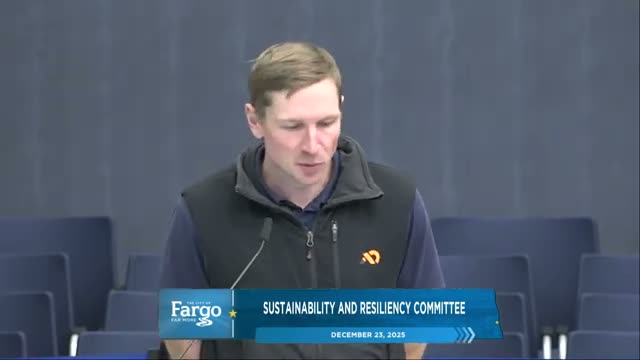
Sam Demra, the Fargo Park District forester, used the committee’s final meeting to summarize a decade of conservation work and ongoing projects across city parks.
“We’ve done 220 acres of prairie restoration across 23 different sites,” Demra said, and added that the district has established 29 pollinator gardens at 10 locations. He described a major, city-partnered effort called the Southwest Regional Pond Recreational Area that has funding from an Outdoor Heritage Fund grant and will include about 80 acres of native prairie plantings, roughly 3,000 feet of gravel trails and interpretive signage.
Demra highlighted a range of smaller and neighborhood projects as well: a 12-acre Urban Plains Park prairie and educational trail that draws school groups and a monarch-tagging event that drew “over 300 kids and people” this year and recorded more than 150 monarchs in two hours. He said the district has restored Heritage Hills Park (about 45 acres), expanded pollinator plots at neighborhood sites, and used reclaimed lumber to build park shelters.
The forester credited several partnerships for the work, naming United Prairie Foundation, the Cass County Soil Conservation District, the City of Fargo and the North Dakota Game and Fish. When members asked where residents can source appropriate native seed, Demra recommended United Prairie Foundation as a local supplier that harvests Red River Valley ecotype seed.
Demra also described volunteer recruitment and big single-day efforts: River Keepers and United Way help recruit and organize volunteers for events such as Reforest the Red, which can draw 400–500 participants. He said park-use estimates rely in part on past LIDAR canopy studies and anonymized location-data products that help the district plan services and trail maintenance.
Committee members requested a citywide map of the district’s prairie and pollinator sites; a committee member asked Demra to send the map so elected officials and staff can better explain park activities to constituents.
The presentation closed with a discussion of where edible plantings are appropriate; Demra said some fruit-bearing trees and edible annuals exist in parks but added that edible plantings must be sited, maintained and labeled so the public knows what is safe to eat.
Next steps: the Park District will continue planned plantings funded through grants and partner organizations and welcomed continued coordination with schools and youth programs to expand volunteer and education opportunities.
“We’ve done 220 acres of prairie restoration across 23 different sites,” Demra said, and added that the district has established 29 pollinator gardens at 10 locations. He described a major, city-partnered effort called the Southwest Regional Pond Recreational Area that has funding from an Outdoor Heritage Fund grant and will include about 80 acres of native prairie plantings, roughly 3,000 feet of gravel trails and interpretive signage.
Demra highlighted a range of smaller and neighborhood projects as well: a 12-acre Urban Plains Park prairie and educational trail that draws school groups and a monarch-tagging event that drew “over 300 kids and people” this year and recorded more than 150 monarchs in two hours. He said the district has restored Heritage Hills Park (about 45 acres), expanded pollinator plots at neighborhood sites, and used reclaimed lumber to build park shelters.
The forester credited several partnerships for the work, naming United Prairie Foundation, the Cass County Soil Conservation District, the City of Fargo and the North Dakota Game and Fish. When members asked where residents can source appropriate native seed, Demra recommended United Prairie Foundation as a local supplier that harvests Red River Valley ecotype seed.
Demra also described volunteer recruitment and big single-day efforts: River Keepers and United Way help recruit and organize volunteers for events such as Reforest the Red, which can draw 400–500 participants. He said park-use estimates rely in part on past LIDAR canopy studies and anonymized location-data products that help the district plan services and trail maintenance.
Committee members requested a citywide map of the district’s prairie and pollinator sites; a committee member asked Demra to send the map so elected officials and staff can better explain park activities to constituents.
The presentation closed with a discussion of where edible plantings are appropriate; Demra said some fruit-bearing trees and edible annuals exist in parks but added that edible plantings must be sited, maintained and labeled so the public knows what is safe to eat.
Next steps: the Park District will continue planned plantings funded through grants and partner organizations and welcomed continued coordination with schools and youth programs to expand volunteer and education opportunities.
Don't Miss a Word: See the Full Meeting!
Go beyond summaries. Unlock every video, transcript, and key insight with a Founder Membership.
✓
Get instant access to full meeting videos
✓
Search and clip any phrase from complete transcripts
✓
Receive AI-powered summaries & custom alerts
✓
Enjoy lifetime, unrestricted access to government data
30-day money-back guarantee
