Dark Sky advocate thanks committee, urges action on light pollution
December 24, 2025 | Fargo , Cass County, North Dakota
This article was created by AI summarizing key points discussed. AI makes mistakes, so for full details and context, please refer to the video of the full meeting. Please report any errors so we can fix them. Report an error »
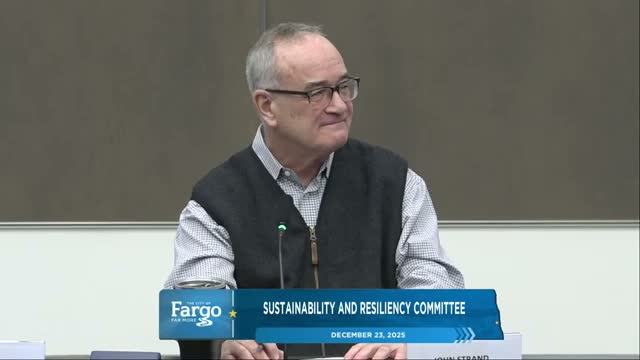
Patrick Summer, who identified himself at the microphone as a representative of Dark Sky International, used the committee’s public-comment period to thank current and former members and urge continued attention to light at night.
"Artificial light tonight, easiest environmental sustainability issue to go after," Summer said, and he referenced recent research suggesting artificial nighttime lighting reduces plant carbon sequestration and disrupts circadian rhythms in vegetation.
Committee members described local examples of light trespass: one resident said permanent, programmable holiday lights created a persistent strobing effect visible inside a neighbor’s home. A member noted the city currently has limited code authority over permanent decorative house lights, though the city can work with homeowners to redirect flood lights or add diffusers that reduce outward glare. Summer encouraged neighbor-to-neighbor conversation and said he would look into policy examples that might be adaptable locally.
Members also asked whether labelling edible-plant areas is required before the public harvests fruit from park trees; the Park District forester said edible plantings are welcomed in some locations but should be labeled and sited to manage maintenance and safety.
Next steps: advocates offered to research model ordinances and voluntary fixes (such as light diffusers and timed shutoffs); the committee encouraged outreach and education as first steps because enforcement options are limited for permanent residential decorative lighting.
"Artificial light tonight, easiest environmental sustainability issue to go after," Summer said, and he referenced recent research suggesting artificial nighttime lighting reduces plant carbon sequestration and disrupts circadian rhythms in vegetation.
Committee members described local examples of light trespass: one resident said permanent, programmable holiday lights created a persistent strobing effect visible inside a neighbor’s home. A member noted the city currently has limited code authority over permanent decorative house lights, though the city can work with homeowners to redirect flood lights or add diffusers that reduce outward glare. Summer encouraged neighbor-to-neighbor conversation and said he would look into policy examples that might be adaptable locally.
Members also asked whether labelling edible-plant areas is required before the public harvests fruit from park trees; the Park District forester said edible plantings are welcomed in some locations but should be labeled and sited to manage maintenance and safety.
Next steps: advocates offered to research model ordinances and voluntary fixes (such as light diffusers and timed shutoffs); the committee encouraged outreach and education as first steps because enforcement options are limited for permanent residential decorative lighting.
View the Full Meeting & All Its Details
This article offers just a summary. Unlock complete video, transcripts, and insights as a Founder Member.
✓
Watch full, unedited meeting videos
✓
Search every word spoken in unlimited transcripts
✓
AI summaries & real-time alerts (all government levels)
✓
Permanent access to expanding government content
30-day money-back guarantee
