Maricopa County recorder defends office, requests Agilis sorter to speed provisional‑ballot processing
February 19, 2026 | Maricopa County, Arizona
This article was created by AI summarizing key points discussed. AI makes mistakes, so for full details and context, please refer to the video of the full meeting. Please report any errors so we can fix them. Report an error »
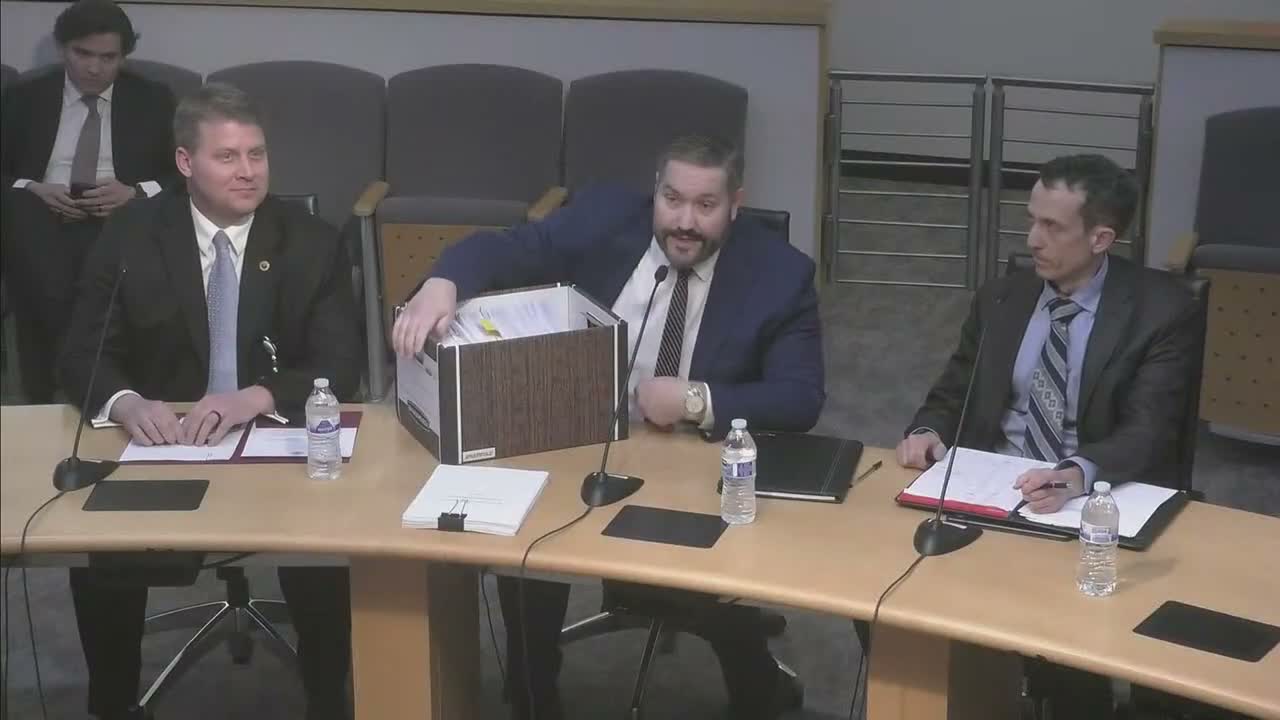
Recorder Justin Heap told the Maricopa County Board of Supervisors on Feb. 18 that his office complied with the board’s document request but that the production—about 10,000 pages over a compressed timeline—contained personally identifiable information and therefore could be inspected by the board but not copied until redactions are completed.
Heap’s legal counsel told the board the documents were being produced under public‑records law and said a small subset of county‑attorney communications remained under privilege review. Heap said the quick turnaround placed “an immense amount of stress” on his staff, which worked weekends and overtime to assemble the material.
Why it matters: The exchange came amid ongoing litigation and negotiations between the recorder and the board. Heap framed the production and his office’s procedures as lawful and routine, while supervisors pressed him on prior courtroom testimony and operational details that have fueled disagreement.
Heap explained how signature verification and the curing process work, saying the office uses a standard of “broad characteristics” when comparing signatures and that, by law, a provisional ballot that is not cured must be rejected. “That is not disenfranchisement. That is the law,” Heap said, adding that he had not seen evidence the lack of a sorting machine had caused disenfranchisement so far this year.
Heap described the Special Election Board (SEB) program and said the office moved registration tasks to a deputy‑registrar volunteer program to avoid having full‑time staff conducting voter registration, while ensuring facilities in need can request assistance. He also said the office identified years of USPS overcharges and expects roughly $500,000 in refunds.
Heap urged the county to acquire an Agilis ballot‑sorting machine to process large volumes of provisional ballots more efficiently. He said the device can sort tens of thousands of ballots and pull verified ballots in about 45 minutes, reducing labor and chain‑of‑custody complications that would arise from repeatedly transporting ballots to an external vendor such as Runbeck.
Heap offered to meet voluntarily with the board for follow‑up but said he would weigh an invitation carefully given statutory removal procedures referenced in the discussion.
What’s next: Heap answered several supervisor questions and offered additional detail in writing where requested. The board then recessed and moved to consider a separate resolution on election services.
Heap’s legal counsel told the board the documents were being produced under public‑records law and said a small subset of county‑attorney communications remained under privilege review. Heap said the quick turnaround placed “an immense amount of stress” on his staff, which worked weekends and overtime to assemble the material.
Why it matters: The exchange came amid ongoing litigation and negotiations between the recorder and the board. Heap framed the production and his office’s procedures as lawful and routine, while supervisors pressed him on prior courtroom testimony and operational details that have fueled disagreement.
Heap explained how signature verification and the curing process work, saying the office uses a standard of “broad characteristics” when comparing signatures and that, by law, a provisional ballot that is not cured must be rejected. “That is not disenfranchisement. That is the law,” Heap said, adding that he had not seen evidence the lack of a sorting machine had caused disenfranchisement so far this year.
Heap described the Special Election Board (SEB) program and said the office moved registration tasks to a deputy‑registrar volunteer program to avoid having full‑time staff conducting voter registration, while ensuring facilities in need can request assistance. He also said the office identified years of USPS overcharges and expects roughly $500,000 in refunds.
Heap urged the county to acquire an Agilis ballot‑sorting machine to process large volumes of provisional ballots more efficiently. He said the device can sort tens of thousands of ballots and pull verified ballots in about 45 minutes, reducing labor and chain‑of‑custody complications that would arise from repeatedly transporting ballots to an external vendor such as Runbeck.
Heap offered to meet voluntarily with the board for follow‑up but said he would weigh an invitation carefully given statutory removal procedures referenced in the discussion.
What’s next: Heap answered several supervisor questions and offered additional detail in writing where requested. The board then recessed and moved to consider a separate resolution on election services.
View the Full Meeting & All Its Details
This article offers just a summary. Unlock complete video, transcripts, and insights as a Founder Member.
✓
Watch full, unedited meeting videos
✓
Search every word spoken in unlimited transcripts
✓
AI summaries & real-time alerts (all government levels)
✓
Permanent access to expanding government content
30-day money-back guarantee
