Maricopa County Board adopts resolution to split election IT and set early‑voting policy after talks stall
February 19, 2026 | Maricopa County, Arizona
This article was created by AI summarizing key points discussed. AI makes mistakes, so for full details and context, please refer to the video of the full meeting. Please report any errors so we can fix them. Report an error »
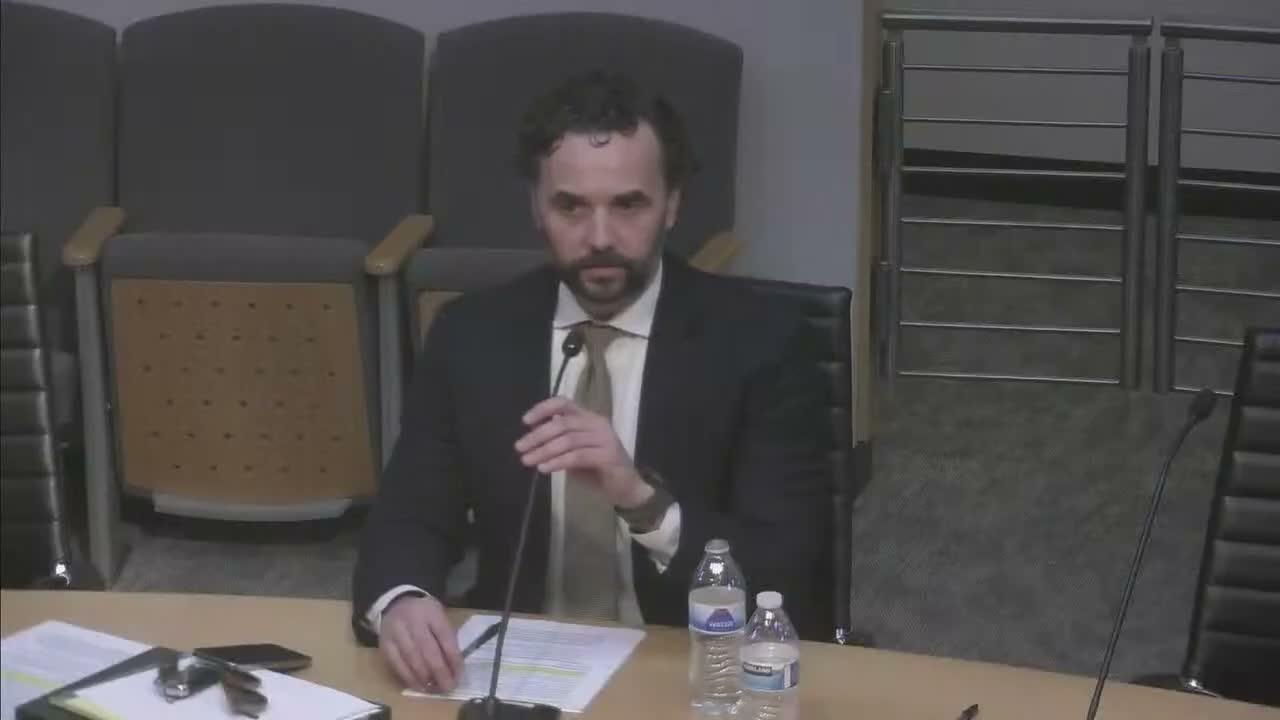
The Maricopa County Board of Supervisors voted unanimously on Feb. 18 to adopt a resolution that sets county policy for two core election disputes: separating shared IT services between the board and the recorder, and the administration of in‑person early voting.
The resolution, adopted 5–0 after a reading by the clerk, directs an expedited IT separation consistent with outside consultants’ recommendations, funds half of the previously shared IT staff (a total of 16 positions) until the split is complete, and preserves joint review through a change advisory board for system changes. On in‑person early voting, the resolution says board staff will provide the recorder a list of recently used voting sites; the recorder may accept or modify that list but must ensure any site meets statutory accessibility and distribution requirements. The board also pledged to furnish equipment and staff resources to avoid prohibitive new purchases and authorized real‑estate contracts and appropriations as prudently managed by the county.
Why it matters: The resolution implements key elements of settlement terms the board had proposed after months of negotiations and court encouragement to settle, and it does so unilaterally where the board said agreement could not be reached in writing.
Board counsel Corey Langhofer told supervisors the settlement talks had been active since April 2025 but stalled because the recorder’s side declined to transmit a substantive written counteroffer. Langhofer described the board’s last offer as centering on two major points — a split of the IT system and arrangements for in‑person early voting — and said the resolution adopts the elements the board can impose without the recorder’s written agreement.
Vice Chair Lesko and Supervisor Galvin each explained their aye votes as efforts to resolve a long‑running dispute and ensure election operations are ready for 2026. Lesko urged Recorder Heap to respond and rejoin negotiations; Galvin emphasized the county’s size and national attention and said the resolution protects voter access while preserving the board’s budgetary oversight.
The resolution also states that recorder Heap and senior staff will have badge access to the county command center during early‑voting periods and that the board will consider supplementary budget requests the recorder submits through standard county procedures.
What’s next: The board’s action establishes unilateral county policy on these matters; the clerk recorded a 5–0 vote and the meeting was adjourned. Board members said they will review the documents recently provided by the recorder’s office and may pursue additional follow‑up depending on those reviews and any returned negotiation offers.
The resolution, adopted 5–0 after a reading by the clerk, directs an expedited IT separation consistent with outside consultants’ recommendations, funds half of the previously shared IT staff (a total of 16 positions) until the split is complete, and preserves joint review through a change advisory board for system changes. On in‑person early voting, the resolution says board staff will provide the recorder a list of recently used voting sites; the recorder may accept or modify that list but must ensure any site meets statutory accessibility and distribution requirements. The board also pledged to furnish equipment and staff resources to avoid prohibitive new purchases and authorized real‑estate contracts and appropriations as prudently managed by the county.
Why it matters: The resolution implements key elements of settlement terms the board had proposed after months of negotiations and court encouragement to settle, and it does so unilaterally where the board said agreement could not be reached in writing.
Board counsel Corey Langhofer told supervisors the settlement talks had been active since April 2025 but stalled because the recorder’s side declined to transmit a substantive written counteroffer. Langhofer described the board’s last offer as centering on two major points — a split of the IT system and arrangements for in‑person early voting — and said the resolution adopts the elements the board can impose without the recorder’s written agreement.
Vice Chair Lesko and Supervisor Galvin each explained their aye votes as efforts to resolve a long‑running dispute and ensure election operations are ready for 2026. Lesko urged Recorder Heap to respond and rejoin negotiations; Galvin emphasized the county’s size and national attention and said the resolution protects voter access while preserving the board’s budgetary oversight.
The resolution also states that recorder Heap and senior staff will have badge access to the county command center during early‑voting periods and that the board will consider supplementary budget requests the recorder submits through standard county procedures.
What’s next: The board’s action establishes unilateral county policy on these matters; the clerk recorded a 5–0 vote and the meeting was adjourned. Board members said they will review the documents recently provided by the recorder’s office and may pursue additional follow‑up depending on those reviews and any returned negotiation offers.
Don't Miss a Word: See the Full Meeting!
Go beyond summaries. Unlock every video, transcript, and key insight with a Founder Membership.
✓
Get instant access to full meeting videos
✓
Search and clip any phrase from complete transcripts
✓
Receive AI-powered summaries & custom alerts
✓
Enjoy lifetime, unrestricted access to government data
30-day money-back guarantee
