Radius Gallery opens year‑long ledger‑art program, centering Indigenous artists and history
February 19, 2026 | Missoula, Missoula County, Montana
This article was created by AI summarizing key points discussed. AI makes mistakes, so for full details and context, please refer to the video of the full meeting. Please report any errors so we can fix them. Report an error »
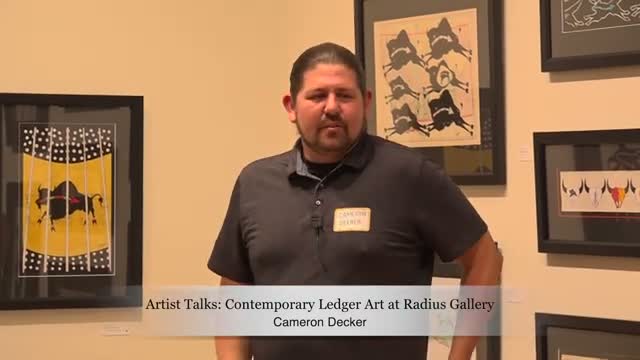
Radius Gallery in Missoula has opened a year‑long program of ledger art designed to showcase Indigenous artists and link gallery exhibits to larger public‑art projects and education events.
Lisa Simon, co‑owner of Radius Gallery, said the gallery’s purpose is “art advocacy” and to shift the economic balance in favor of artists. She told the audience the year‑long focus grew from a trip to the Santa Fe Indian Market, where gallery organizers saw Indigenous artists making a living and resolved to expand opportunities for Montana artists.
Artist and educator Cameron Decker, introduced by the gallery, gave a talk that combined material demonstration, history and interpretation. Decker—who identified himself as Dine and a descendant of the Confederated Salish and Kootenai tribes—described ledger art as part of an unbroken marking and storytelling tradition he called “time immemorial.” He demonstrated materials such as scraped hide and discussed how ledger drawings evolved once paper and colored pencils entered Indigenous artistic practice.
Decker read passages from a speech by Captain Richard Pratt and explained how institutions such as Fort Marion and the Carlisle Indian Boarding School shaped a period of reeducation in which ledger books were produced under constrained circumstances. He recommended the online archive plainsledgerart.org as a resource for viewing scanned ledger books and related material.
The gallery’s programming includes rotating ledger works from several artists, public murals slated to appear around a nearby substation and a north‑wall mural featuring six artists set to open in the spring. Simon said the gallery will run talks and educational events throughout the year so audiences can hear directly from the artists represented.
Audience members and Decker discussed themes visible in the exhibition—maps, animals such as bison, movement and use of color—and Decker described how contemporary ledger artists use historical maps and modern objects (cars, parasols) to connect past stories to present experience. He also addressed technical questions about traditional binders and pigment survival, noting multiple historical practices and some uncertainty about specifics.
Simon urged attendees to sign up for the rest of the talks and visit upcoming events listed at the gallery; Decker closed by thanking the gallery and the audience. The gallery said the ledger‑art focus will continue for the year with rotating exhibitions, talks and associated public‑art projects.
Lisa Simon, co‑owner of Radius Gallery, said the gallery’s purpose is “art advocacy” and to shift the economic balance in favor of artists. She told the audience the year‑long focus grew from a trip to the Santa Fe Indian Market, where gallery organizers saw Indigenous artists making a living and resolved to expand opportunities for Montana artists.
Artist and educator Cameron Decker, introduced by the gallery, gave a talk that combined material demonstration, history and interpretation. Decker—who identified himself as Dine and a descendant of the Confederated Salish and Kootenai tribes—described ledger art as part of an unbroken marking and storytelling tradition he called “time immemorial.” He demonstrated materials such as scraped hide and discussed how ledger drawings evolved once paper and colored pencils entered Indigenous artistic practice.
Decker read passages from a speech by Captain Richard Pratt and explained how institutions such as Fort Marion and the Carlisle Indian Boarding School shaped a period of reeducation in which ledger books were produced under constrained circumstances. He recommended the online archive plainsledgerart.org as a resource for viewing scanned ledger books and related material.
The gallery’s programming includes rotating ledger works from several artists, public murals slated to appear around a nearby substation and a north‑wall mural featuring six artists set to open in the spring. Simon said the gallery will run talks and educational events throughout the year so audiences can hear directly from the artists represented.
Audience members and Decker discussed themes visible in the exhibition—maps, animals such as bison, movement and use of color—and Decker described how contemporary ledger artists use historical maps and modern objects (cars, parasols) to connect past stories to present experience. He also addressed technical questions about traditional binders and pigment survival, noting multiple historical practices and some uncertainty about specifics.
Simon urged attendees to sign up for the rest of the talks and visit upcoming events listed at the gallery; Decker closed by thanking the gallery and the audience. The gallery said the ledger‑art focus will continue for the year with rotating exhibitions, talks and associated public‑art projects.
Don't Miss a Word: See the Full Meeting!
Go beyond summaries. Unlock every video, transcript, and key insight with a Founder Membership.
✓
Get instant access to full meeting videos
✓
Search and clip any phrase from complete transcripts
✓
Receive AI-powered summaries & custom alerts
✓
Enjoy lifetime, unrestricted access to government data
30-day money-back guarantee
