Assessors warn Ways & Means the new classification will add major grand‑list burdens
February 19, 2026 | Ways & Means, HOUSE OF REPRESENTATIVES, Committees, Legislative , Vermont
This article was created by AI summarizing key points discussed. AI makes mistakes, so for full details and context, please refer to the video of the full meeting. Please report any errors so we can fix them. Report an error »
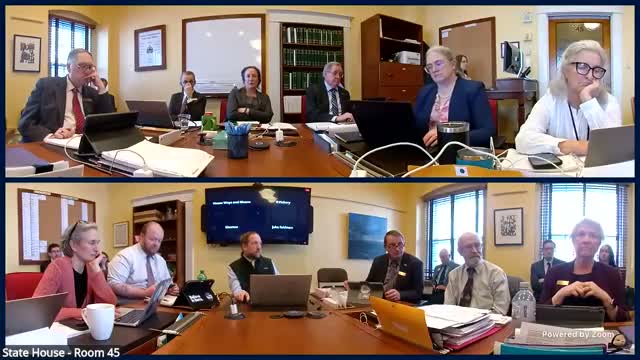
Municipal assessors and listers told the House Ways & Means Committee that implementing a nonhomestead residential classification would create substantial new recordkeeping and administrative burdens for towns.
Robert Vickery, representing Valla and Colchester, said draft language requiring listing of buildings and dwelling counts on the grand list would significantly increase the size of the printed grand‑list books that towns are statutorily required to keep. "As we increase the amount of data that we have per parcel on that grand list, we would actually be increasing the size of the book," he said, adding that Colchester keeps both digital and paper copies because statute still requires paper retention.
Vickery described limitations in local software and workflows: most towns do not store square footage at the per‑unit level for apartment buildings and their tax‑billing software may fail to transmit new allocation columns reliably to printers. He offered a recent example in which Colchester found nine tax bills with incorrect allocations out of about 7,300 parcels, requiring corrections.
On parcel and contiguous‑lot rules, Vickery said towns have for years handled contiguous lots under one ownership as a single grand‑list entry for valuation, and changing that approach would alter assessment practice and add procedural complexity when lots are sold and taxes prorated.
Vickery and others urged that the Department of Taxes collect initial dwelling‑use attestation data because many municipalities lack capacity to perform door‑by‑door collection. They also flagged questions about how land schedules and per‑acre valuation interact with percentage apportioning in mixed‑use parcels.
The testimony underscored implementation tradeoffs: assessors urged clearer statutory language on parcel definitions, an operational plan for software/export changes, and funding or per‑parcel assistance to municipalities to cover added workload before the committee advances the bill.
Robert Vickery, representing Valla and Colchester, said draft language requiring listing of buildings and dwelling counts on the grand list would significantly increase the size of the printed grand‑list books that towns are statutorily required to keep. "As we increase the amount of data that we have per parcel on that grand list, we would actually be increasing the size of the book," he said, adding that Colchester keeps both digital and paper copies because statute still requires paper retention.
Vickery described limitations in local software and workflows: most towns do not store square footage at the per‑unit level for apartment buildings and their tax‑billing software may fail to transmit new allocation columns reliably to printers. He offered a recent example in which Colchester found nine tax bills with incorrect allocations out of about 7,300 parcels, requiring corrections.
On parcel and contiguous‑lot rules, Vickery said towns have for years handled contiguous lots under one ownership as a single grand‑list entry for valuation, and changing that approach would alter assessment practice and add procedural complexity when lots are sold and taxes prorated.
Vickery and others urged that the Department of Taxes collect initial dwelling‑use attestation data because many municipalities lack capacity to perform door‑by‑door collection. They also flagged questions about how land schedules and per‑acre valuation interact with percentage apportioning in mixed‑use parcels.
The testimony underscored implementation tradeoffs: assessors urged clearer statutory language on parcel definitions, an operational plan for software/export changes, and funding or per‑parcel assistance to municipalities to cover added workload before the committee advances the bill.
View the Full Meeting & All Its Details
This article offers just a summary. Unlock complete video, transcripts, and insights as a Founder Member.
✓
Watch full, unedited meeting videos
✓
Search every word spoken in unlimited transcripts
✓
AI summaries & real-time alerts (all government levels)
✓
Permanent access to expanding government content
30-day money-back guarantee
