Clarksburg committee backs outreach on bill to let municipalities place unpaid fees on property tax rolls
February 19, 2026 | Clarksburg, Harrison County, West Virginia
This article was created by AI summarizing key points discussed. AI makes mistakes, so for full details and context, please refer to the video of the full meeting. Please report any errors so we can fix them. Report an error »
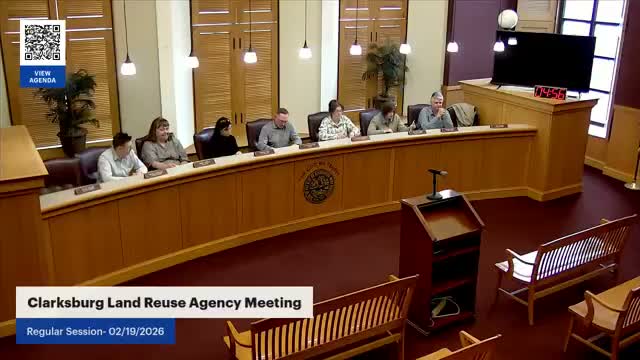
City staff presented a proposed legislative approach that would allow municipalities to transfer unpaid municipal fees (for example, grass‑cutting, fire fees or other municipal charges) onto property tax bills so the tax assessor could collect them in the same way delinquent property taxes are handled. "This piece of legislation ... would allow these unpaid fees to be put on their property taxes," the presenter told the committee and asked for the committee's support in seeking adoption through the West Virginia League of Cities (SEG 616–623).
Staff characterized the city's outstanding municipal fees as "millions" and cited figures in the discussion—$5,000,000 and later references to $6,000,000 appeared as approximate estimates during the meeting (SEG 641–647, SEG 810–959). Members asked whether the tax assessor and county officials had been consulted; staff said some initial conversations had taken place but more stakeholder outreach (assessor, sheriff, Association of Counties, municipal league) would be desirable (SEG 771–777, SEG 823–833).
Speaker 2 moved to authorize the city manager to draft a letter of support for the proposed bill and Speaker 8 seconded the motion (SEG 727–731). Committee members debated whether the agenda item (posted as "discussion") permitted an immediate binding action and discussed returning the item for formal consideration; the group ultimately agreed to seek further input from the assessor and other stakeholders and to place formal consideration on a future agenda while pursuing outreach through the League of Cities (SEG 932–944, SEG 944–953).
Members raised policy concerns about safeguards for low‑income property owners (payment plans or other protections) and recommended including those protections if the bill advanced to the state (SEG 741–751). Several members urged broad local outreach to increase the bill's chance of success at the legislature, including gaining support from other municipalities before it is filed (SEG 848–860, SEG 973–981).
Staff characterized the city's outstanding municipal fees as "millions" and cited figures in the discussion—$5,000,000 and later references to $6,000,000 appeared as approximate estimates during the meeting (SEG 641–647, SEG 810–959). Members asked whether the tax assessor and county officials had been consulted; staff said some initial conversations had taken place but more stakeholder outreach (assessor, sheriff, Association of Counties, municipal league) would be desirable (SEG 771–777, SEG 823–833).
Speaker 2 moved to authorize the city manager to draft a letter of support for the proposed bill and Speaker 8 seconded the motion (SEG 727–731). Committee members debated whether the agenda item (posted as "discussion") permitted an immediate binding action and discussed returning the item for formal consideration; the group ultimately agreed to seek further input from the assessor and other stakeholders and to place formal consideration on a future agenda while pursuing outreach through the League of Cities (SEG 932–944, SEG 944–953).
Members raised policy concerns about safeguards for low‑income property owners (payment plans or other protections) and recommended including those protections if the bill advanced to the state (SEG 741–751). Several members urged broad local outreach to increase the bill's chance of success at the legislature, including gaining support from other municipalities before it is filed (SEG 848–860, SEG 973–981).
Don't Miss a Word: See the Full Meeting!
Go beyond summaries. Unlock every video, transcript, and key insight with a Founder Membership.
✓
Get instant access to full meeting videos
✓
Search and clip any phrase from complete transcripts
✓
Receive AI-powered summaries & custom alerts
✓
Enjoy lifetime, unrestricted access to government data
30-day money-back guarantee
