Committee advances rezoning and rental‑registration concepts to address conversions and housing safety
February 19, 2026 | Clarksburg, Harrison County, West Virginia
This article was created by AI summarizing key points discussed. AI makes mistakes, so for full details and context, please refer to the video of the full meeting. Please report any errors so we can fix them. Report an error »
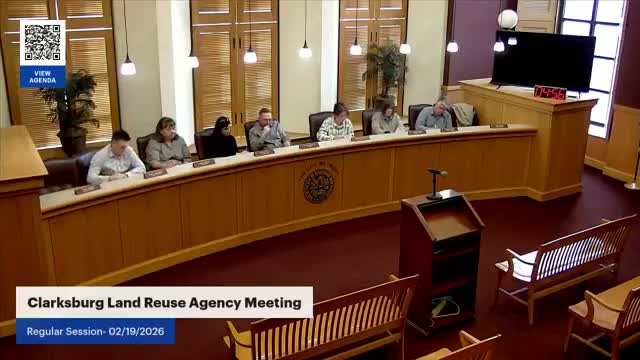
The committee reviewed a pair of proposals intended to address the conversion of single‑family homes into multi‑unit rentals and to improve rental housing safety. Staff described a rezoning resolution to make targeted residential areas R‑1 so conversions to multi‑unit properties would require planning and zoning review "to say what's the condition in the neighborhood" before allowing changes (SEG 998–1016).
Alongside rezoning, staff presented a rental registration and inspection proposal designed to be self‑funding. The structure described: an initial $150 inspection fee, reduced to $20 if the unit has no deficiencies on first inspection; repeat visits would cost an additional $30. Staff said the program would fund two contract inspectors for two to three years and help the city build a comprehensive inventory of rental properties; staff estimated between "14 to 1,800" rentals in preliminary pulls from the assessor's list and said they were refining the count (SEG 1371–1379, SEG 1396–1401).
Committee members emphasized enforcement capacity, the importance of sharing the inspection checklist in advance, coordination with HUD inspections for units receiving vouchers, and outreach to landlords (email lists or a landlord association) to communicate standards. Members asked for draft zoning maps and the WVU land‑use clinic's recommended zoning tables before returning the rezoning resolution for formal consideration (SEG 1080–1084, SEG 1840–1855).
Members also discussed incentives (rehab grants, tax breaks or pocket‑parking strategies) to complement regulatory approaches and to encourage reinvestment in older neighborhoods (SEG 2050–2070). Staff committed to provide neighborhood zoning maps and a refined rental inventory at the next meeting.
Alongside rezoning, staff presented a rental registration and inspection proposal designed to be self‑funding. The structure described: an initial $150 inspection fee, reduced to $20 if the unit has no deficiencies on first inspection; repeat visits would cost an additional $30. Staff said the program would fund two contract inspectors for two to three years and help the city build a comprehensive inventory of rental properties; staff estimated between "14 to 1,800" rentals in preliminary pulls from the assessor's list and said they were refining the count (SEG 1371–1379, SEG 1396–1401).
Committee members emphasized enforcement capacity, the importance of sharing the inspection checklist in advance, coordination with HUD inspections for units receiving vouchers, and outreach to landlords (email lists or a landlord association) to communicate standards. Members asked for draft zoning maps and the WVU land‑use clinic's recommended zoning tables before returning the rezoning resolution for formal consideration (SEG 1080–1084, SEG 1840–1855).
Members also discussed incentives (rehab grants, tax breaks or pocket‑parking strategies) to complement regulatory approaches and to encourage reinvestment in older neighborhoods (SEG 2050–2070). Staff committed to provide neighborhood zoning maps and a refined rental inventory at the next meeting.
View the Full Meeting & All Its Details
This article offers just a summary. Unlock complete video, transcripts, and insights as a Founder Member.
✓
Watch full, unedited meeting videos
✓
Search every word spoken in unlimited transcripts
✓
AI summaries & real-time alerts (all government levels)
✓
Permanent access to expanding government content
30-day money-back guarantee
