Sen. Harrison pushes online classroom option for teen driver education; DMV urges safeguards
February 19, 2026 | Senate Transportation, SENATE, Committees, Legislative , Vermont
This article was created by AI summarizing key points discussed. AI makes mistakes, so for full details and context, please refer to the video of the full meeting. Please report any errors so we can fix them. Report an error »
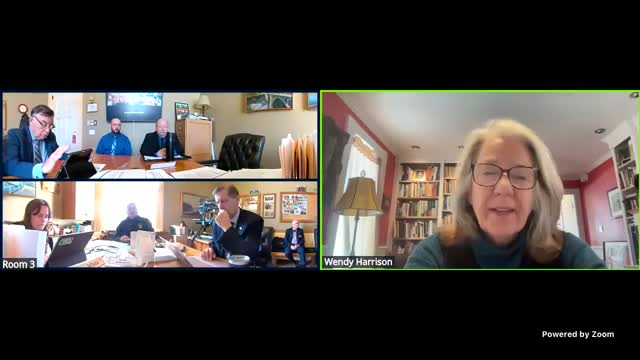
Sen. Harrison, sponsor of a bill to expand access to driver education, told the Senate Transportation Committee on Thursday that allowing the classroom portion of approved driver-education courses to be offered online could increase access for 15-year-old Vermont students when in-person instruction is unavailable.
"I sponsored this bill with the intention to increase the availability of driver education, and primarily to make our kids safer," Sen. Harrison said, adding she preferred in-person instruction and that online delivery should be a fallback when live classes are not available.
Pat McMahon, supervisor of the DMV education unit, told senators DMV oversees private driver-education providers and that simply moving classroom content online would not, by itself, expand seat capacity because instructors are limited to 30 students per class. McMahon said instructor numbers have risen from 56 in 2022 to 79 in 2025 but acknowledged the committee needs data on unmet demand and any local backlogs.
"By doing an online program, you're not going to increase the number of seats available to that student, because we limit our instructors to 30 students," McMahon said, arguing the agency and the Agency of Education should retain authority to set policy for online programs.
Justin McClain, DMV's driver's-ed coordinator, described practices in other states: approved vendors and state review are common, and authentication measures vary (camera checks, security questions, keystroke monitoring); many states use blended models requiring some in-person sessions or final in-person exams.
McClain said states that tried camera-based proctoring sometimes dropped it for cost reasons and instead use a combination of online safeguards and mandatory in-person testing. DMV recommended giving AOE and DMV rulemaking authority to tailor security and quality standards and allowing instructors discretion to accept online students so classroom integrity and concurrent behind-the-wheel training are preserved.
Committee members asked the agency to collect numbers on school and DMV backlogs; DMV agreed to liaise with AOE and the schools and to provide figures before the committee decides whether to move the bill to the education committee or advance it before crossover.
Joan Arch, executive director of the Vermont Driver and Traffic Safety Education Association and a longtime driver-education teacher, identified herself in the hearing and asked that AOE input and instruction quality be considered as the committee evaluates the proposal.
The committee did not vote on the bill Thursday and directed DMV and stakeholders to return with data and recommended language.
"I sponsored this bill with the intention to increase the availability of driver education, and primarily to make our kids safer," Sen. Harrison said, adding she preferred in-person instruction and that online delivery should be a fallback when live classes are not available.
Pat McMahon, supervisor of the DMV education unit, told senators DMV oversees private driver-education providers and that simply moving classroom content online would not, by itself, expand seat capacity because instructors are limited to 30 students per class. McMahon said instructor numbers have risen from 56 in 2022 to 79 in 2025 but acknowledged the committee needs data on unmet demand and any local backlogs.
"By doing an online program, you're not going to increase the number of seats available to that student, because we limit our instructors to 30 students," McMahon said, arguing the agency and the Agency of Education should retain authority to set policy for online programs.
Justin McClain, DMV's driver's-ed coordinator, described practices in other states: approved vendors and state review are common, and authentication measures vary (camera checks, security questions, keystroke monitoring); many states use blended models requiring some in-person sessions or final in-person exams.
McClain said states that tried camera-based proctoring sometimes dropped it for cost reasons and instead use a combination of online safeguards and mandatory in-person testing. DMV recommended giving AOE and DMV rulemaking authority to tailor security and quality standards and allowing instructors discretion to accept online students so classroom integrity and concurrent behind-the-wheel training are preserved.
Committee members asked the agency to collect numbers on school and DMV backlogs; DMV agreed to liaise with AOE and the schools and to provide figures before the committee decides whether to move the bill to the education committee or advance it before crossover.
Joan Arch, executive director of the Vermont Driver and Traffic Safety Education Association and a longtime driver-education teacher, identified herself in the hearing and asked that AOE input and instruction quality be considered as the committee evaluates the proposal.
The committee did not vote on the bill Thursday and directed DMV and stakeholders to return with data and recommended language.
View the Full Meeting & All Its Details
This article offers just a summary. Unlock complete video, transcripts, and insights as a Founder Member.
✓
Watch full, unedited meeting videos
✓
Search every word spoken in unlimited transcripts
✓
AI summaries & real-time alerts (all government levels)
✓
Permanent access to expanding government content
30-day money-back guarantee
