Bill would let terminal patients use medical cannabis inside hospitals, nursing homes and hospice centers
February 19, 2026 | Legislative Sessions, Washington
This article was created by AI summarizing key points discussed. AI makes mistakes, so for full details and context, please refer to the video of the full meeting. Please report any errors so we can fix them. Report an error »
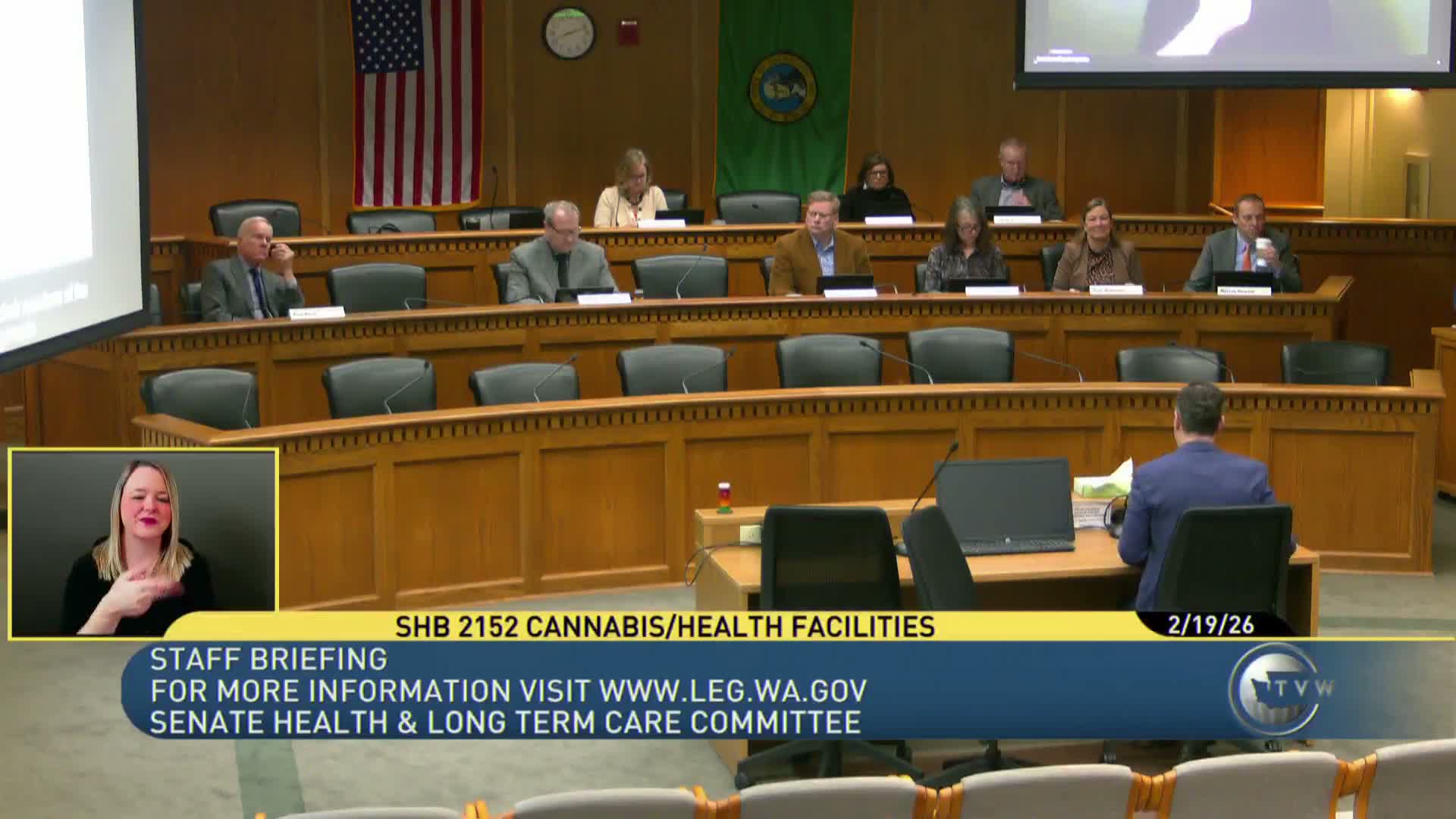
House Bill 2,152 returned to the Senate Health and Long‑Term Care Committee on Feb. 19 for public testimony after staff and the prime sponsor introduced the measure.
Staff summarized the bill’s core provisions: beginning in 2027, under certain conditions hospitals, nursing homes and hospice centers must allow medical cannabis use by qualifying patients with a terminal condition while on premises; the requirement excludes emergency departments and non‑admitted visitors. The bill requires facility policies that bar smoking or vaping, require secure locked storage and documentation in the medical record, and assign responsibility for acquiring, administering and removing cannabis to the patient or the patient’s designated provider. Facility staff would be prohibited from administering or retrieving cannabis, and facilities could suspend compliance if federal enforcement action threatened licensure.
Representative Shelly Klobuch, prime sponsor, framed the bill through a constituent story: she described a patient, Ryan, whose father said medical cannabis allowed him to manage symptoms and meaningfully engage in final conversations. Klobuch said the bill was developed with the hospital association and includes safeguards that balance facilities’ regulatory needs with patient-centered care.
A long roster of public witnesses testified in support, including patients’ families, nonprofit clinics, nurses and cannabis industry representatives who described hospice‑care benefits and urged the committee to pass the bill with the proposed guardrails. Testimony emphasized secure storage, advance documentation, prohibition of smoking/vaping and that facility staff would not handle the cannabis. No organized proponent asked to modify the requirement that staff not administer cannabis; one advocate asked for allowance of multiple caregivers at end of life.
The committee closed testimony on HB 2,152 after in‑person and remote witnesses and set the bill aside for further committee consideration; no final vote occurred that day.
Staff summarized the bill’s core provisions: beginning in 2027, under certain conditions hospitals, nursing homes and hospice centers must allow medical cannabis use by qualifying patients with a terminal condition while on premises; the requirement excludes emergency departments and non‑admitted visitors. The bill requires facility policies that bar smoking or vaping, require secure locked storage and documentation in the medical record, and assign responsibility for acquiring, administering and removing cannabis to the patient or the patient’s designated provider. Facility staff would be prohibited from administering or retrieving cannabis, and facilities could suspend compliance if federal enforcement action threatened licensure.
Representative Shelly Klobuch, prime sponsor, framed the bill through a constituent story: she described a patient, Ryan, whose father said medical cannabis allowed him to manage symptoms and meaningfully engage in final conversations. Klobuch said the bill was developed with the hospital association and includes safeguards that balance facilities’ regulatory needs with patient-centered care.
A long roster of public witnesses testified in support, including patients’ families, nonprofit clinics, nurses and cannabis industry representatives who described hospice‑care benefits and urged the committee to pass the bill with the proposed guardrails. Testimony emphasized secure storage, advance documentation, prohibition of smoking/vaping and that facility staff would not handle the cannabis. No organized proponent asked to modify the requirement that staff not administer cannabis; one advocate asked for allowance of multiple caregivers at end of life.
The committee closed testimony on HB 2,152 after in‑person and remote witnesses and set the bill aside for further committee consideration; no final vote occurred that day.
Don't Miss a Word: See the Full Meeting!
Go beyond summaries. Unlock every video, transcript, and key insight with a Founder Membership.
✓
Get instant access to full meeting videos
✓
Search and clip any phrase from complete transcripts
✓
Receive AI-powered summaries & custom alerts
✓
Enjoy lifetime, unrestricted access to government data
30-day money-back guarantee
