Bill would bar property covenants that keep groceries, pharmacies out of communities, sponsors say
February 19, 2026 | Legislative Sessions, Washington
This article was created by AI summarizing key points discussed. AI makes mistakes, so for full details and context, please refer to the video of the full meeting. Please report any errors so we can fix them. Report an error »
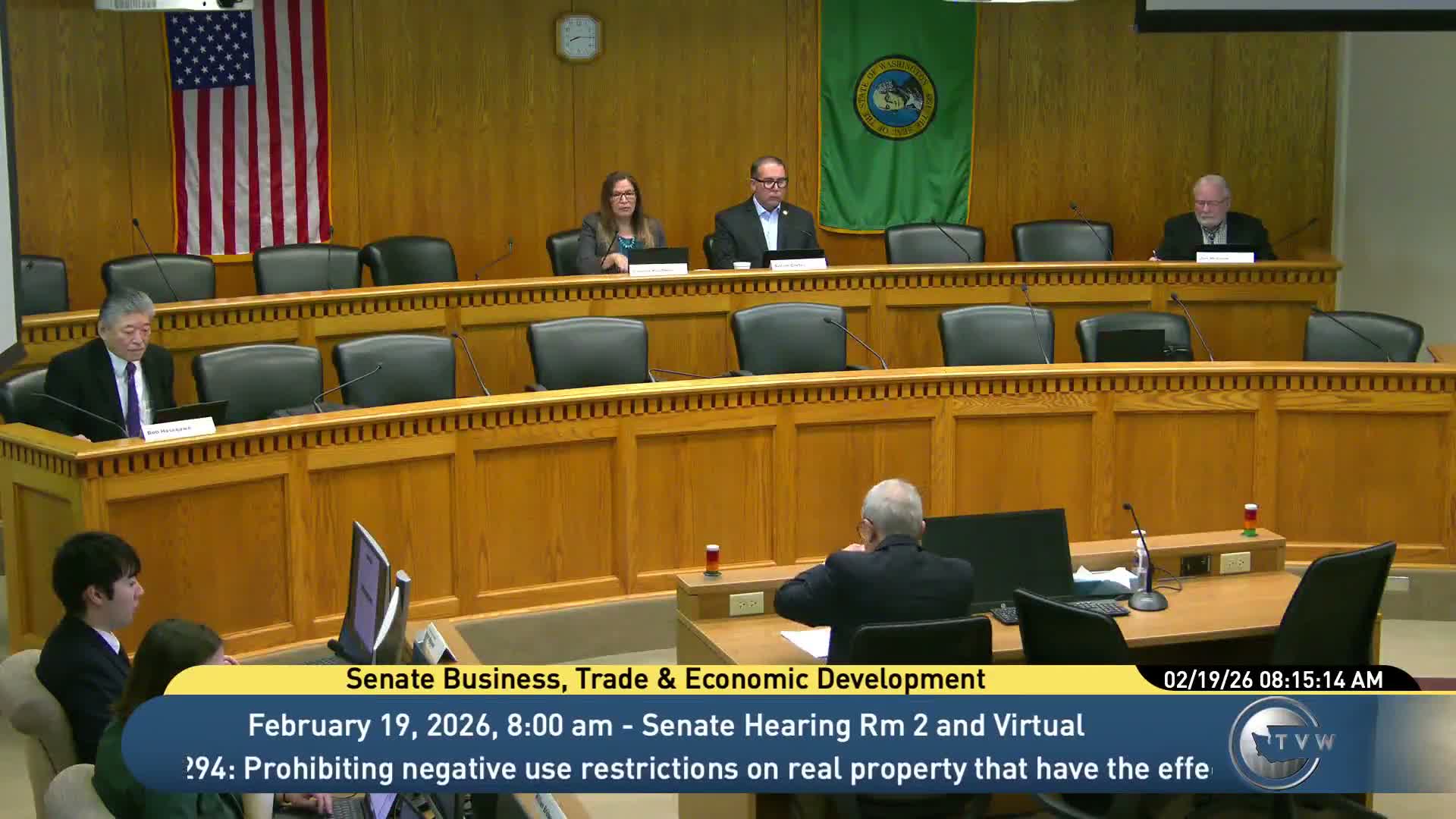
Olympia, Feb. 19 — The Senate Business Committee heard engrossed House Bill 2,294, which would declare private negative‑use restrictions that bar grocery stores or pharmacies to be against public policy, void and unenforceable going forward.
Committee staff summarized the bill as targeting "negative use restrictions" (for example, deed restrictions or covenants) that prevent use of property for grocery stores, drugstores or pharmacies. The bill contains exceptions: agreements entered before the effective date remain enforceable; short, time‑limited restrictions are permitted when a store relocates within two miles (limited to two years) or when the owner is in a retail shopping center (limited to one year). The bill also requires a party that enters such an agreement to notify the attorney general and relevant local jurisdiction within 10 days, and gives the attorney general or a city, town, or county authority to seek judicial enforcement.
Representative Daria Farivar (46th LD), sponsor, said the bill responds to grocery and pharmacy closures in communities such as Lake City and is intended to ensure a departing retailer cannot block a replacement that serves the neighborhood. "I fundamentally believe at the end of the day that your zip code should not determine whether or not you have access to fresh and healthy food," Farivar said.
Molly Poffenroth, government affairs director for the Washington Food Industry Association, testified in support and said independent grocers generally do not use covenants but face challenges accessing sites where competitors left. She said the bill will help protect independent stores and communities during affordability pressures.
Brandon Huskeeper of the Northwest Grocery Retail Association cautioned that restrictive covenants are sometimes used to protect investments in adjacent stores and that the bill could affect those protections. He acknowledged language in the engrossed bill that allows limited, time‑bound covenants for relocations, but asked sponsors to tighten language in "section 2" relating to retail centers and offered to work with the sponsor to perfect the bill.
The committee took public testimony and asked staff and witnesses clarifying questions. No committee vote was taken on HB 2294 during this meeting.
The bill was discussed in the context of similar local ordinances already enacted in some Washington jurisdictions (Seattle, Bellingham, Kent), which sponsors cited as models for protecting neighborhoods when stores close.
Committee staff summarized the bill as targeting "negative use restrictions" (for example, deed restrictions or covenants) that prevent use of property for grocery stores, drugstores or pharmacies. The bill contains exceptions: agreements entered before the effective date remain enforceable; short, time‑limited restrictions are permitted when a store relocates within two miles (limited to two years) or when the owner is in a retail shopping center (limited to one year). The bill also requires a party that enters such an agreement to notify the attorney general and relevant local jurisdiction within 10 days, and gives the attorney general or a city, town, or county authority to seek judicial enforcement.
Representative Daria Farivar (46th LD), sponsor, said the bill responds to grocery and pharmacy closures in communities such as Lake City and is intended to ensure a departing retailer cannot block a replacement that serves the neighborhood. "I fundamentally believe at the end of the day that your zip code should not determine whether or not you have access to fresh and healthy food," Farivar said.
Molly Poffenroth, government affairs director for the Washington Food Industry Association, testified in support and said independent grocers generally do not use covenants but face challenges accessing sites where competitors left. She said the bill will help protect independent stores and communities during affordability pressures.
Brandon Huskeeper of the Northwest Grocery Retail Association cautioned that restrictive covenants are sometimes used to protect investments in adjacent stores and that the bill could affect those protections. He acknowledged language in the engrossed bill that allows limited, time‑bound covenants for relocations, but asked sponsors to tighten language in "section 2" relating to retail centers and offered to work with the sponsor to perfect the bill.
The committee took public testimony and asked staff and witnesses clarifying questions. No committee vote was taken on HB 2294 during this meeting.
The bill was discussed in the context of similar local ordinances already enacted in some Washington jurisdictions (Seattle, Bellingham, Kent), which sponsors cited as models for protecting neighborhoods when stores close.
View the Full Meeting & All Its Details
This article offers just a summary. Unlock complete video, transcripts, and insights as a Founder Member.
✓
Watch full, unedited meeting videos
✓
Search every word spoken in unlimited transcripts
✓
AI summaries & real-time alerts (all government levels)
✓
Permanent access to expanding government content
30-day money-back guarantee
