Rural hospitals urge flexibility for interfacility transports; EMS and nurses raise safety concerns
February 19, 2026 | Legislative Sessions, Washington
This article was created by AI summarizing key points discussed. AI makes mistakes, so for full details and context, please refer to the video of the full meeting. Please report any errors so we can fix them. Report an error »
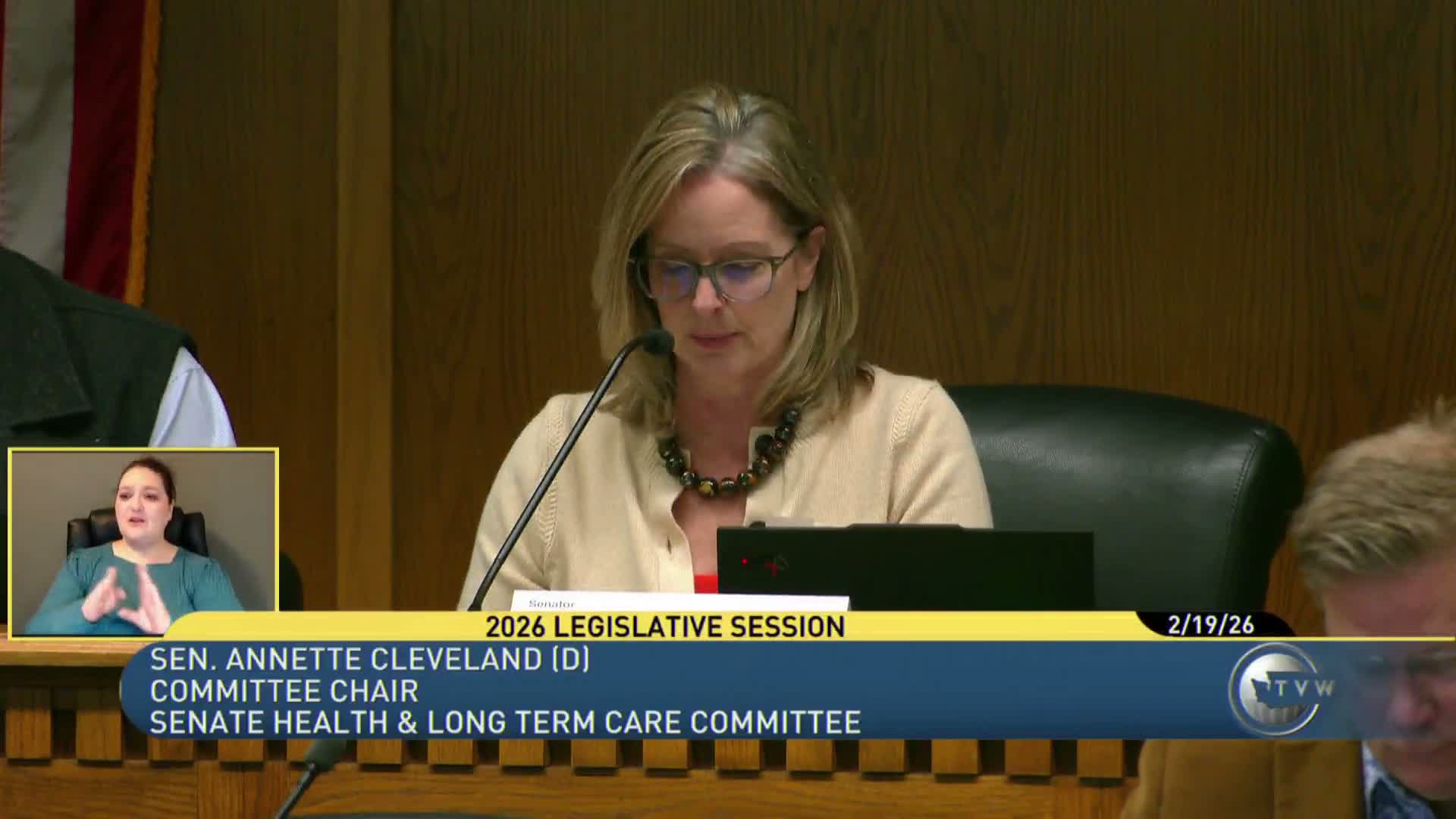
House Bill 2,110 — which passed the House unanimously — drew sharply divided testimony on Feb. 19 before the Senate Health and Long‑Term Care Committee.
Staff explained the bill permits a registered nurse who lacks an EMT certification to be considered sufficient personnel for an interfacility specialty care transport when an EMT is on the ambulance, the RN has appropriate competencies, and paramedics or EMT‑certified RNs are not available. The RN must follow medical direction of the sending or receiving physician and practice within the State Board of Nursing scope.
Rural hospital leaders and CEOs testified they routinely lack paramedics or EMT‑certified nurses for transfers and that the measure would reduce dangerous delays for time‑sensitive conditions such as stroke and cardiac events. "Allowing an RN to transfer a patient would significantly reduce unnecessary delays," said Kelly Thompson, chief nursing officer at a rural hospital, citing 90‑minute waits for outside paramedic crews.
The Washington State Nurses Association and several EMS professionals opposed the bill in its current form, urging mandatory ("shall") coordination and specific training requirements so nurses assigned to transports are competent with ambulance equipment and supplies. Paramedics and critical‑care transport providers warned that some interfacility transfers are critical care in practice and require advanced prehospital skills not within an RN’s independent scope in the field.
The committee recorded broad pro testimony numerically (pro 89, con 3 in the witness summary), but the record shows substantive concerns about how the statutory language would be implemented and whether additional training or accountability should be required. No committee vote on the bill was recorded on Feb. 19.
Staff explained the bill permits a registered nurse who lacks an EMT certification to be considered sufficient personnel for an interfacility specialty care transport when an EMT is on the ambulance, the RN has appropriate competencies, and paramedics or EMT‑certified RNs are not available. The RN must follow medical direction of the sending or receiving physician and practice within the State Board of Nursing scope.
Rural hospital leaders and CEOs testified they routinely lack paramedics or EMT‑certified nurses for transfers and that the measure would reduce dangerous delays for time‑sensitive conditions such as stroke and cardiac events. "Allowing an RN to transfer a patient would significantly reduce unnecessary delays," said Kelly Thompson, chief nursing officer at a rural hospital, citing 90‑minute waits for outside paramedic crews.
The Washington State Nurses Association and several EMS professionals opposed the bill in its current form, urging mandatory ("shall") coordination and specific training requirements so nurses assigned to transports are competent with ambulance equipment and supplies. Paramedics and critical‑care transport providers warned that some interfacility transfers are critical care in practice and require advanced prehospital skills not within an RN’s independent scope in the field.
The committee recorded broad pro testimony numerically (pro 89, con 3 in the witness summary), but the record shows substantive concerns about how the statutory language would be implemented and whether additional training or accountability should be required. No committee vote on the bill was recorded on Feb. 19.
View the Full Meeting & All Its Details
This article offers just a summary. Unlock complete video, transcripts, and insights as a Founder Member.
✓
Watch full, unedited meeting videos
✓
Search every word spoken in unlimited transcripts
✓
AI summaries & real-time alerts (all government levels)
✓
Permanent access to expanding government content
30-day money-back guarantee
