Committee adopts emergency-backup carve-outs and reports CETA expansion bill out of committee amid heated debate
February 19, 2026 | Legislative Sessions, Washington
This article was created by AI summarizing key points discussed. AI makes mistakes, so for full details and context, please refer to the video of the full meeting. Please report any errors so we can fix them. Report an error »
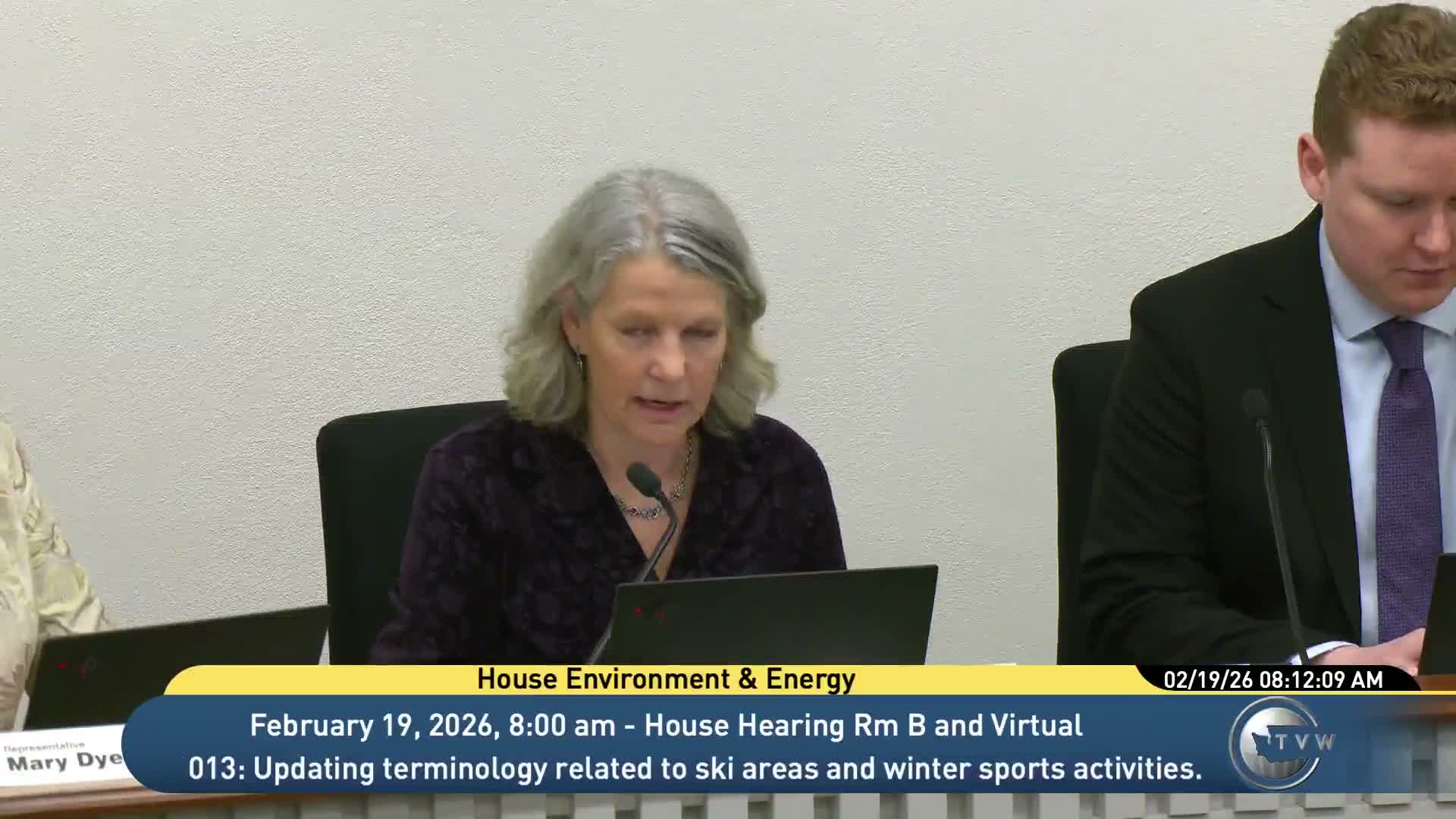
A legislative committee advanced Substitute Senate Bill 5982 with amendments after extended debate on whether the Clean Energy Transformation Act should cover certain port districts and behind-the-meter generation.
Megan McFadden, committee staff, said the bill expands the types of entities subject to CETA to include some port districts that distribute electricity, certain consumer-owned utilities and nonresidential customers that purchase electricity from non-utilities, with specified exceptions. The committee considered three amendments in its executive bind-in book.
Amendment MCPH170 (sponsored in the bill text by Rep. Ibarra) would have exempted some cogeneration facilities that turn waste into energy. Proponents described it as supporting industrial symbiosis and existing on-site energy producers; opponents said it would allow continued fossil-fuel use where renewable alternatives exist. That amendment did not pass on a voice vote.
Representative Dye introduced amendment MCPH171 to exempt electricity used solely for emergency backup from an affected market customer's CETA responsibility and to clarify how retail electric load is calculated. Dye framed the amendment as necessary to keep hospitals, critical industries and homes powered during emergencies. The committee adopted MCPH171 on a voice vote.
Amendment MCPH173, offered by Representative Dolio, was described as similar to MCPH171 but explicitly constrained backup use to "de minimis" fossil-fuel quantities and delegated the definition of "de minimis" to UTC rulemaking; the committee adopted MCPH173 on a voice vote.
Members debated the bill at length. Supporters, including Representatives Rammell and others, argued the measure closes a loophole and creates a level playing field for clean-energy development; critics, including Representatives Dye, Barnow and Guevara, warned the change could increase costs, reduce competitiveness and drive away investment in economic-development projects such as ports and data centers.
The committee completed a roll-call-style tally after debate; the transcript records individual yes/no votes and staff announced that the bill was reported out of committee with a due-pass-as-amended recommendation (staff announced "12 aye, [nays not clearly recorded in the transcript], and 1 excused"). The committee scheduled no floor action in the provided segments.
Megan McFadden, committee staff, said the bill expands the types of entities subject to CETA to include some port districts that distribute electricity, certain consumer-owned utilities and nonresidential customers that purchase electricity from non-utilities, with specified exceptions. The committee considered three amendments in its executive bind-in book.
Amendment MCPH170 (sponsored in the bill text by Rep. Ibarra) would have exempted some cogeneration facilities that turn waste into energy. Proponents described it as supporting industrial symbiosis and existing on-site energy producers; opponents said it would allow continued fossil-fuel use where renewable alternatives exist. That amendment did not pass on a voice vote.
Representative Dye introduced amendment MCPH171 to exempt electricity used solely for emergency backup from an affected market customer's CETA responsibility and to clarify how retail electric load is calculated. Dye framed the amendment as necessary to keep hospitals, critical industries and homes powered during emergencies. The committee adopted MCPH171 on a voice vote.
Amendment MCPH173, offered by Representative Dolio, was described as similar to MCPH171 but explicitly constrained backup use to "de minimis" fossil-fuel quantities and delegated the definition of "de minimis" to UTC rulemaking; the committee adopted MCPH173 on a voice vote.
Members debated the bill at length. Supporters, including Representatives Rammell and others, argued the measure closes a loophole and creates a level playing field for clean-energy development; critics, including Representatives Dye, Barnow and Guevara, warned the change could increase costs, reduce competitiveness and drive away investment in economic-development projects such as ports and data centers.
The committee completed a roll-call-style tally after debate; the transcript records individual yes/no votes and staff announced that the bill was reported out of committee with a due-pass-as-amended recommendation (staff announced "12 aye, [nays not clearly recorded in the transcript], and 1 excused"). The committee scheduled no floor action in the provided segments.
View the Full Meeting & All Its Details
This article offers just a summary. Unlock complete video, transcripts, and insights as a Founder Member.
✓
Watch full, unedited meeting videos
✓
Search every word spoken in unlimited transcripts
✓
AI summaries & real-time alerts (all government levels)
✓
Permanent access to expanding government content
30-day money-back guarantee
