Committee moves to widen aggravated-assault statute to cover simulated weapons amid debate over scope
February 19, 2026 | 2026 Legislature SD, South Dakota
This article was created by AI summarizing key points discussed. AI makes mistakes, so for full details and context, please refer to the video of the full meeting. Please report any errors so we can fix them. Report an error »
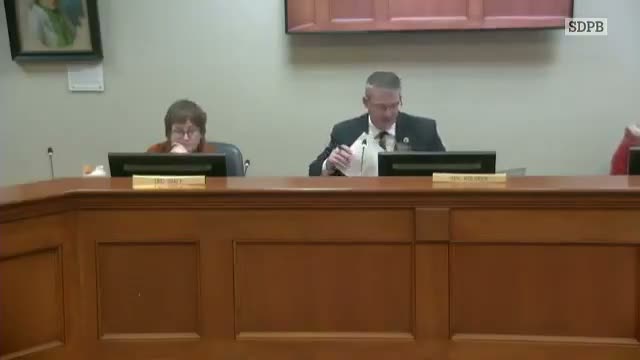
Representative David Cole opened discussion of House Bill 1062 by saying the measure aims to make aggravated assault apply when a person uses “a physical object simulating a deadly weapon to intimidate and put another person in fear of imminent serious bodily harm.”
Proponents including law-enforcement and prosecuting officials told the committee that realistic-looking airsoft and BB guns are increasingly available and are being used in roadside and other incidents to terrorize victims. Jenna Severn of the South Dakota Police Chiefs Association described a Jan. 28 Rapid City incident in which officers recovered a BB gun “made to look like a real handgun” after a high-risk traffic stop; she said upgrading the offense would also help prevent convicted offenders from legally possessing real firearms in the future.
Opponents, led by Tara Larson of the South Dakota Association of Criminal Defense Lawyers, warned that without a narrower qualifier the bill could make ordinary juvenile behavior or accidental conduct a class-3 felony. Larson said the association had requested an amendment inserting the word "realistic" before "deadly weapon" but that proponents declined, arguing case law and intent requirements already limit overreach.
Proponents countered that prosecutors must still prove intent and that historic sentencing in aggravated-assault cases shows average terms well under the statutory maximum; they argued prosecutorial discretion and existing case law would mitigate unfair application.
Committee members debated the tradeoff between preventing intimidation with realistic-looking weapons and avoiding overbroad felony exposure for minors. After substitute motions and further discussion, the committee voted on a recorded roll-call and advanced HB1062 to the floor (recorded committee tally: 4 ayes, 3 nays).
What’s next: HB1062 will be scheduled for further consideration on the chamber floor; members signaled openness to clarifying language but did not adopt the proposed "realistic" insertion in committee.
Proponents including law-enforcement and prosecuting officials told the committee that realistic-looking airsoft and BB guns are increasingly available and are being used in roadside and other incidents to terrorize victims. Jenna Severn of the South Dakota Police Chiefs Association described a Jan. 28 Rapid City incident in which officers recovered a BB gun “made to look like a real handgun” after a high-risk traffic stop; she said upgrading the offense would also help prevent convicted offenders from legally possessing real firearms in the future.
Opponents, led by Tara Larson of the South Dakota Association of Criminal Defense Lawyers, warned that without a narrower qualifier the bill could make ordinary juvenile behavior or accidental conduct a class-3 felony. Larson said the association had requested an amendment inserting the word "realistic" before "deadly weapon" but that proponents declined, arguing case law and intent requirements already limit overreach.
Proponents countered that prosecutors must still prove intent and that historic sentencing in aggravated-assault cases shows average terms well under the statutory maximum; they argued prosecutorial discretion and existing case law would mitigate unfair application.
Committee members debated the tradeoff between preventing intimidation with realistic-looking weapons and avoiding overbroad felony exposure for minors. After substitute motions and further discussion, the committee voted on a recorded roll-call and advanced HB1062 to the floor (recorded committee tally: 4 ayes, 3 nays).
What’s next: HB1062 will be scheduled for further consideration on the chamber floor; members signaled openness to clarifying language but did not adopt the proposed "realistic" insertion in committee.
View the Full Meeting & All Its Details
This article offers just a summary. Unlock complete video, transcripts, and insights as a Founder Member.
✓
Watch full, unedited meeting videos
✓
Search every word spoken in unlimited transcripts
✓
AI summaries & real-time alerts (all government levels)
✓
Permanent access to expanding government content
30-day money-back guarantee
