Washington House adopts resolution honoring Japanese Americans incarcerated during World War II
February 19, 2026 | Legislative Sessions, Washington
This article was created by AI summarizing key points discussed. AI makes mistakes, so for full details and context, please refer to the video of the full meeting. Please report any errors so we can fix them. Report an error »
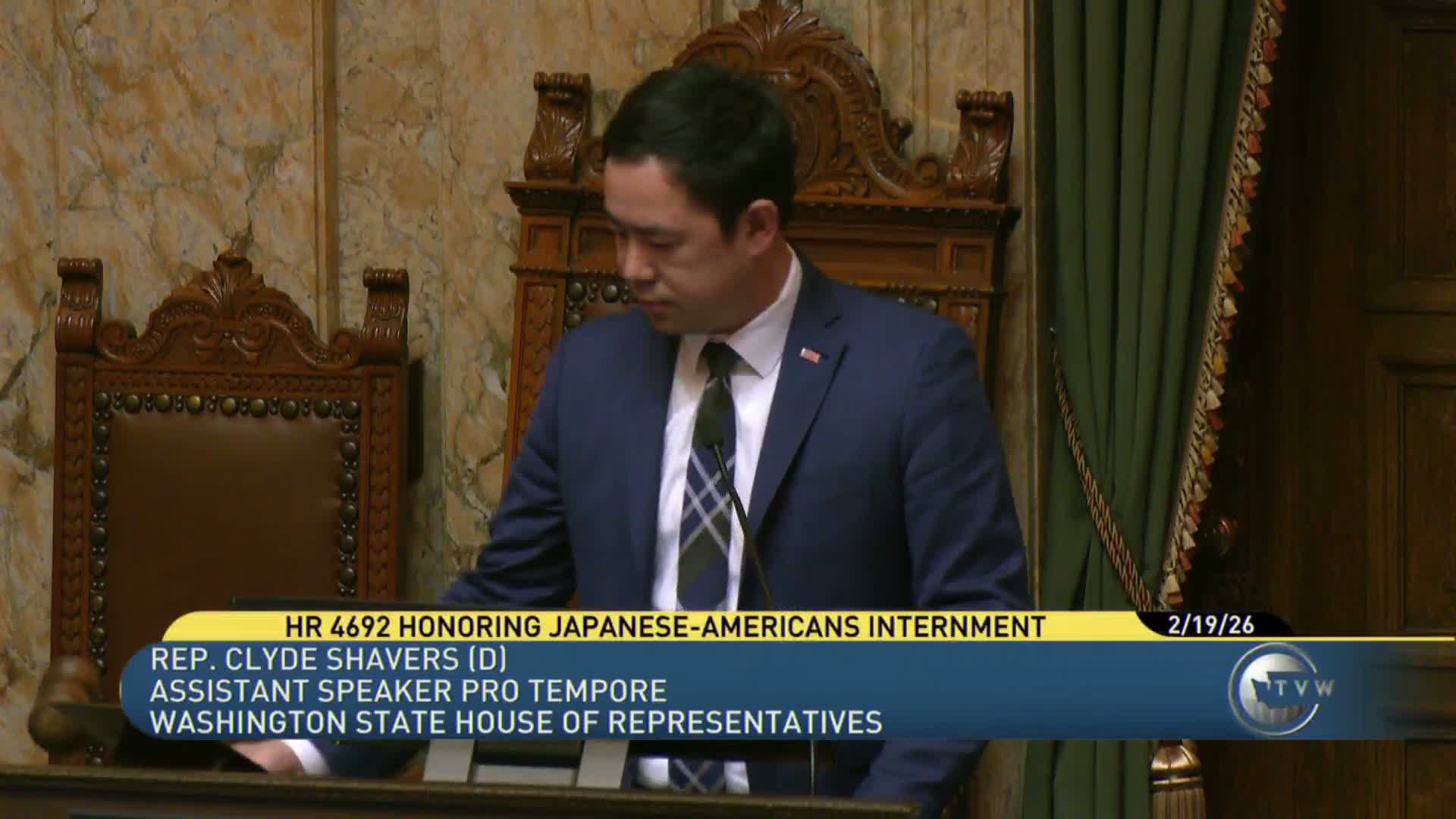
The Washington State House of Representatives on Friday adopted House Resolution 4692, a Day of Remembrance measure recognizing the anniversary of Executive Order 9066 and honoring Japanese Americans who were forcibly removed and incarcerated during World War II.
Representative Nola Burnett moved adoption of the resolution, and the House approved it by voice vote. The resolution recounts that President Franklin D. Roosevelt's Executive Order 9066 led to the forcible removal and incarceration of more than 120,000 people of Japanese ancestry, including roughly 12,000 Washington residents, and notes later findings that the policy was driven by racial prejudice and war hysteria.
The measure recalls the formation of segregated military units composed of Japanese Americans, including the 442nd Regimental Combat Team, and cites the federal Civil Liberties Act of 1988, which offered an apology and reparations. It directs that copies of the resolution be transmitted to community groups including the Nisei Veterans Committee, Densho, the Japanese American Citizens League and the Wing Luke Museum.
Members of the House delivered personal remarks supporting the resolution. Representative Burnett said remembrance "is not an abstract idea" and tied the measure to family history, urging officials to ensure that "liberty, due process, and equal protection are not negotiable even in times of fear or crisis." Representative Rood described conditions at Manzanar and quoted survivors: "I felt like a second class citizen to be herded onto the boat by soldiers with bayonets." Representative Stonier recalled Bainbridge Island and Camp Harmony, and Representative Jacobson emphasized the scale of the removals and the subsequent military service and sacrifices of Japanese American units.
The presiding officer announced the resolution adopted after a voice vote. The House also recognized visiting guests including Secretary of State Steve Hobbs, Pierce County Council Member Brian Yambe and former incarcerees Frank and Penny Fukui.
The resolution and members' remarks place the state observance in historical context and instruct the chief clerk to transmit copies to named organizations; no additional policy or funding action was taken at the session.
Representative Nola Burnett moved adoption of the resolution, and the House approved it by voice vote. The resolution recounts that President Franklin D. Roosevelt's Executive Order 9066 led to the forcible removal and incarceration of more than 120,000 people of Japanese ancestry, including roughly 12,000 Washington residents, and notes later findings that the policy was driven by racial prejudice and war hysteria.
The measure recalls the formation of segregated military units composed of Japanese Americans, including the 442nd Regimental Combat Team, and cites the federal Civil Liberties Act of 1988, which offered an apology and reparations. It directs that copies of the resolution be transmitted to community groups including the Nisei Veterans Committee, Densho, the Japanese American Citizens League and the Wing Luke Museum.
Members of the House delivered personal remarks supporting the resolution. Representative Burnett said remembrance "is not an abstract idea" and tied the measure to family history, urging officials to ensure that "liberty, due process, and equal protection are not negotiable even in times of fear or crisis." Representative Rood described conditions at Manzanar and quoted survivors: "I felt like a second class citizen to be herded onto the boat by soldiers with bayonets." Representative Stonier recalled Bainbridge Island and Camp Harmony, and Representative Jacobson emphasized the scale of the removals and the subsequent military service and sacrifices of Japanese American units.
The presiding officer announced the resolution adopted after a voice vote. The House also recognized visiting guests including Secretary of State Steve Hobbs, Pierce County Council Member Brian Yambe and former incarcerees Frank and Penny Fukui.
The resolution and members' remarks place the state observance in historical context and instruct the chief clerk to transmit copies to named organizations; no additional policy or funding action was taken at the session.
View the Full Meeting & All Its Details
This article offers just a summary. Unlock complete video, transcripts, and insights as a Founder Member.
✓
Watch full, unedited meeting videos
✓
Search every word spoken in unlimited transcripts
✓
AI summaries & real-time alerts (all government levels)
✓
Permanent access to expanding government content
30-day money-back guarantee
