Committee reviews bill to ban retail sale of nitrous oxide canisters aimed at recreational use
February 19, 2026 | Legislative Sessions, Washington
This article was created by AI summarizing key points discussed. AI makes mistakes, so for full details and context, please refer to the video of the full meeting. Please report any errors so we can fix them. Report an error »
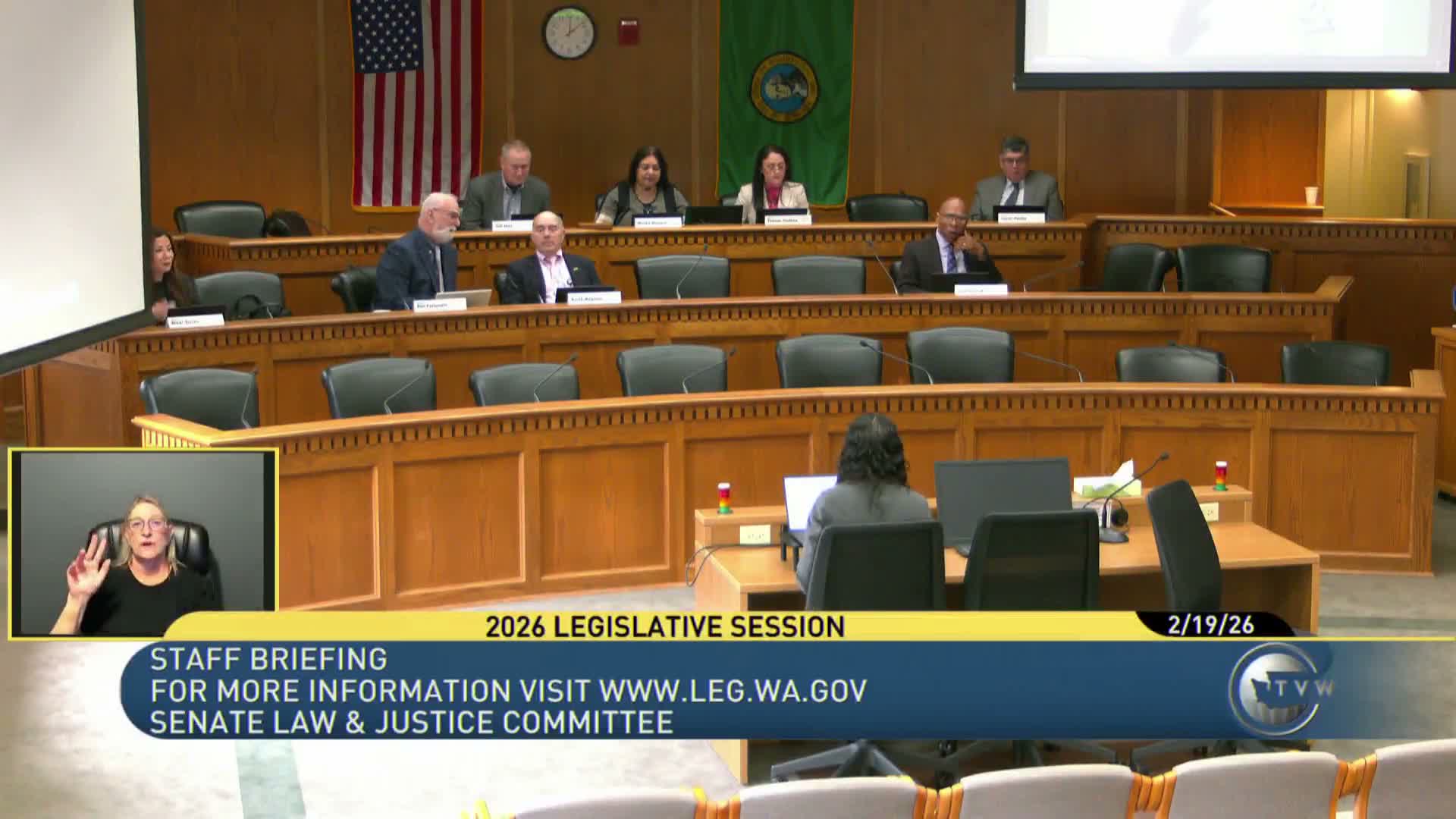
Engrossed substitute House Bill 2,532 drew vocal support from tribal leaders, public‑health officials and local prosecutors at the Feb. 19 Law and Justice Committee hearing. The bill would make it a gross misdemeanor to sell or distribute canisters, devices or tanks exclusively containing nitrous oxide for recreational use while maintaining exemptions for medical, dental, veterinary, food‑propellant and industrial uses.
Staff counsel Maya Aita described nitrous oxide as having legitimate medical and commercial uses but said heavy recreational use is tied to cardiovascular and neurological harms. She told the committee the bill does not make nitrous oxide a controlled substance and that it exempts legitimate supply chains for medical, veterinary, dental, manufacturing and automotive uses. The staff briefing noted a fiscal note was requested for the substitute.
Representative Joe Timmons, the prime sponsor, said retail products—often colorful, flavored and marketed in convenience or smoke shops—are readily accessible to youth and are linked to increased poison center calls and EMS responses. "I purchased one of these products 5 blocks from my home," Timmons said, describing packaging that appealed to children and tastes "like Skittles." Tribal leaders from Suquamish and Jamestown S'Klallam testified they have seen canisters on tribal lands, described local bans and outreach, and linked the product to community harm. Public‑health and law enforcement witnesses described national increases in nitrous‑related emergency calls and fatalities and urged the state to close the retail pipeline.
Witnesses and lawmakers asked detailed implementation questions—how retail sellers would verify legitimate buyers (questions about identification and proof of professional status), how the bill treats automotive supplies purchased for legitimate mechanical uses, and whether making distribution a gross misdemeanor would be enforceable. Staff said the bill is silent on some sale mechanics and that legitimate suppliers typically use medical/distribution pathways separate from retail channels. The committee concluded public testimony and did not vote on the measure on Feb. 19.
Staff counsel Maya Aita described nitrous oxide as having legitimate medical and commercial uses but said heavy recreational use is tied to cardiovascular and neurological harms. She told the committee the bill does not make nitrous oxide a controlled substance and that it exempts legitimate supply chains for medical, veterinary, dental, manufacturing and automotive uses. The staff briefing noted a fiscal note was requested for the substitute.
Representative Joe Timmons, the prime sponsor, said retail products—often colorful, flavored and marketed in convenience or smoke shops—are readily accessible to youth and are linked to increased poison center calls and EMS responses. "I purchased one of these products 5 blocks from my home," Timmons said, describing packaging that appealed to children and tastes "like Skittles." Tribal leaders from Suquamish and Jamestown S'Klallam testified they have seen canisters on tribal lands, described local bans and outreach, and linked the product to community harm. Public‑health and law enforcement witnesses described national increases in nitrous‑related emergency calls and fatalities and urged the state to close the retail pipeline.
Witnesses and lawmakers asked detailed implementation questions—how retail sellers would verify legitimate buyers (questions about identification and proof of professional status), how the bill treats automotive supplies purchased for legitimate mechanical uses, and whether making distribution a gross misdemeanor would be enforceable. Staff said the bill is silent on some sale mechanics and that legitimate suppliers typically use medical/distribution pathways separate from retail channels. The committee concluded public testimony and did not vote on the measure on Feb. 19.
View the Full Meeting & All Its Details
This article offers just a summary. Unlock complete video, transcripts, and insights as a Founder Member.
✓
Watch full, unedited meeting videos
✓
Search every word spoken in unlimited transcripts
✓
AI summaries & real-time alerts (all government levels)
✓
Permanent access to expanding government content
30-day money-back guarantee
